










Opinion
The winners in AI are those who build ecosystems around their technology
"Market-defining companies did not try to control every detail. They built platforms others wanted to join. In the age of artificial intelligence, this principle matters more than ever," writes Zeev Farbman, co-founder and CEO of Lightricks.
The real race in AI is no longer about who builds the most powerful model, it is about who is turning technology into a foundation that others can build upon. In a world where advanced capabilities are rapidly becoming accessible, competitive advantage shifts away from the model itself and toward what it enables: who can use it, extend it, integrate it into daily work, and generate lasting value around it.
This is not a new story. In the history of tech, long-term winners were rarely those who built the most impressive standalone tools. They were the ones who built systems around them. Apple did not win only because of the iPhone, but because of the App Store. Google did not create Android to sell an operating system, but to build an ecosystem of manufacturers, developers, and services. AWS did not become dominant because of a single technology, but because it provided a platform that enabled thousands of companies to grow on top of it.
The same shift is now unfolding in AI. Closedness is no longer a moat. It has become a constraint. Companies that try to keep all the value to themselves quickly discover that the world is moving faster than they are. Those that allow others to build, extend, share knowledge, and implement solutions become the center of gravity of the market.
The few companies that develop AI models and the infrastructure behind today’s most visible products face a fundamental choice. This choice is not technological, but conceptual. It is the choice between preserving full control or creating a force larger than themselves. Between guarding the model as a secret and turning it into a foundation others can build on.
Full control can sound appealing. Everything is governed tightly, everything flows through one company. In reality, this approach slows progress. When a model is closed, every adaptation, extension, or new idea depends on a single organization. The world simply moves too fast for that model to keep up.
An AI model can be thought of like a cake. In the closed approach, the company serves a cake. You can consume it, but the recipe stays in the kitchen. In a open approach, the company provides both the cake and the recipe. Others can bake it themselves, modify it, add new ingredients, and create outcomes that were never anticipated. This is how ecosystems form. Innovation no longer comes from one team or one roadmap. It accumulates from every direction and becomes far greater than the sum of its parts.
This gap between closed and open approaches is becoming sharper now, because AI has entered a new stage. The question is no longer what can be demonstrated, but how AI functions day to day inside real businesses. Cost, reliability, regulation, privacy, and dependence on a single vendor suddenly matter. At this stage, the weaknesses of closed solutions become clear. Every change becomes a negotiation, and growth brings operational uncertainty.
Open models offer a more flexible path. They allow organizations to start small, experiment, learn, and scale without replacing infrastructure or losing control. They adapt more easily to changing realities and real-world business constraints. This is where the true advantage emerges. A company that keeps its model closed must do nearly everything alone. A company that builds an open platform effectively recruits the entire market. Value does not leak outward. It accumulates around the infrastructure and the company that enables it.
With this understanding, we chose to release LTX-2, our advanced video model, as fully open source. Not to lead a technological debate, but to enable others to integrate this technology into their own work on their own terms, at their own pace, and within their own contexts. This openness drives broader adoption, accelerates research and experimentation, and creates an ecosystem where knowledge, use cases, and capabilities evolve faster than any single organization could achieve alone.
Market-defining companies did not try to control every detail. They built platforms others wanted to join. In the age of artificial intelligence, this principle matters more than ever. Advantage is no longer measured only by what a model can do, but by what it enables others to build. The real race in AI is not a race for technology alone. It is a race for openness, adoption, and the ability to turn one success into an entire world.
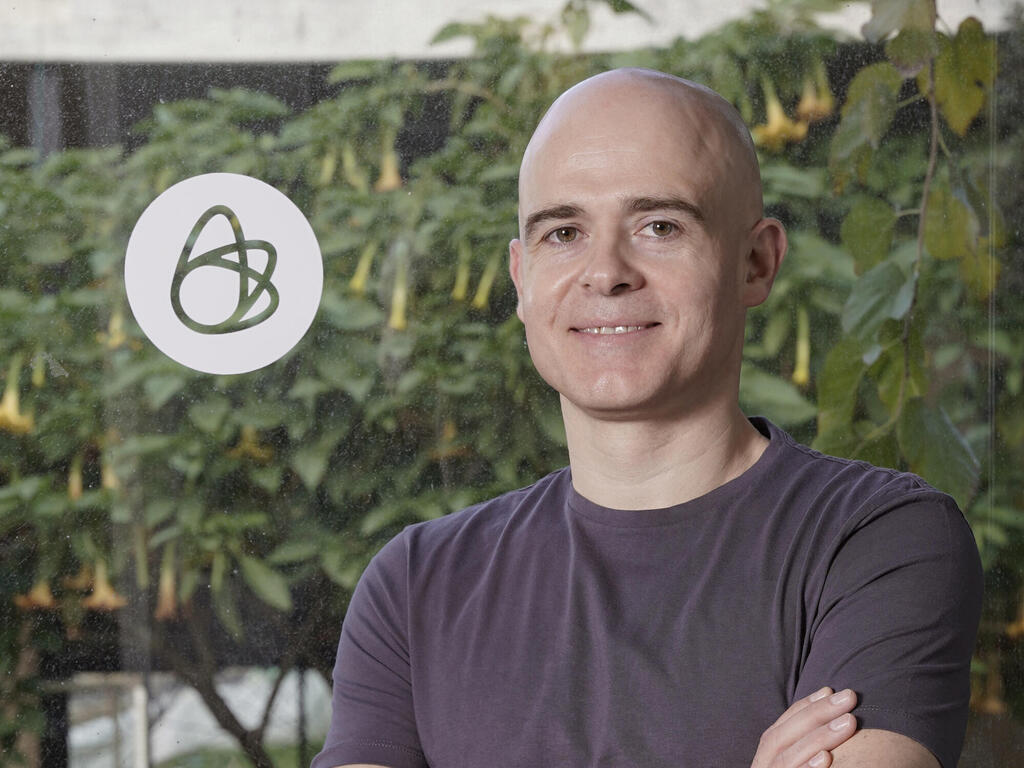
The author of the article is Dr. Zeev Farbman, co-founder and CEO of Lightricks.



