










From yellow list to gold club: How Israel won unrestricted access to the AI supply chain
Trump’s Pax Silica pact reshapes Israel’s technological and economic future.
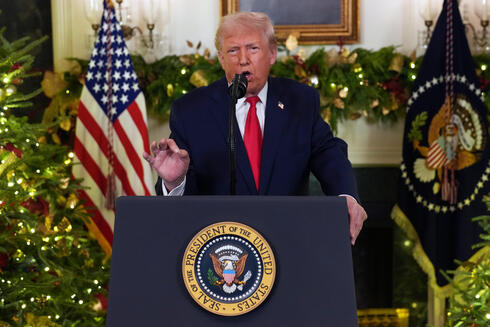
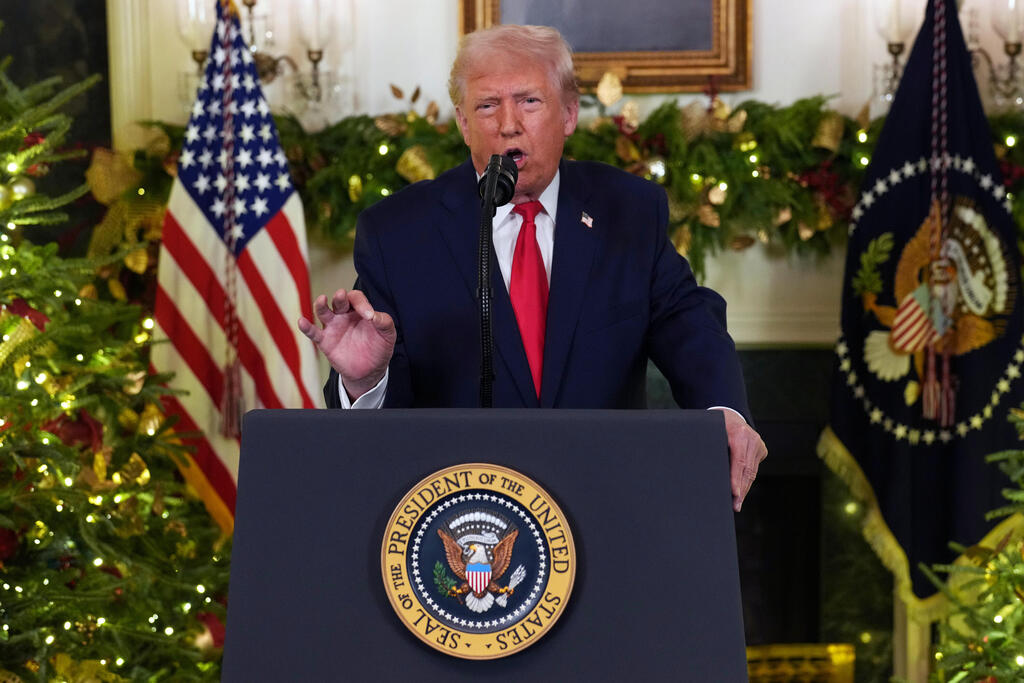
In a world increasingly divided into geopolitical and geo-economic blocs, the United States versus China, President Donald Trump has embraced Israel and placed it at the heart of one of his administration’s most consequential strategic initiatives shaping the AI era: the Pax Silica coalition.
The goal is to establish a new alliance centered on silicon, the foundation of advanced chips, that will determine supply chains, innovation hubs, and the balance of economic power in the 21st century. Under an agreement signed last Friday in Washington, Israel joined an exclusive group of just nine countries: Japan, South Korea, the Netherlands, Singapore, the United Kingdom, Australia, the United Arab Emirates, and the United States.
The name itself reflects the ambition. Pax, echoing Pax Americana, signals stability and shared rules; Silica refers to silicon, the raw material underlying semiconductors and artificial intelligence. Together, Pax Silica represents a coalition of trusted states committed to deep cooperation across the AI stack: chips, research and development, server farms, standard-setting, data centers, raw materials, and core infrastructure.
In practical terms, it is a closed club in which everything that feeds the AI industry - from silicon wafers to frontier models - can flow freely between members, without export barriers or licensing restrictions.
This marks a dramatic reversal of policy. Under the Biden administration, Israel was placed on the so-called “yellow list”: countries permitted to purchase advanced AI technologies, but only under export controls, licenses, and case-by-case approvals. Israel was not on the “red list,” reserved for adversaries such as Iran, but neither was it on the “green list,” which allows unrestricted cooperation.
For a country that aspires to lead in artificial intelligence, this status imposed real costs. Israeli industry, including the defense sector, depends critically on access to advanced chips and computing power. The restrictions under discussion in Washington threatened to slow development and hand an advantage to European countries and U.S. allies such as Australia and New Zealand, which enjoyed freer access.
The Trump administration has now redrawn the map. Israel is no longer in a restricted category, but has been granted entry into what officials describe privately as the “gold club.”
For Israel’s economy, the implications are profound. High-tech, and AI in particular, is the country’s primary growth engine, driving exports, tax revenues, and productivity. Membership in Pax Silica secures access to advanced chips and supercomputing infrastructure, positions Israel as a central node in global AI infrastructure, and enhances its appeal to foreign investors and multinational technology companies.
The timing is not accidental. Israel’s inclusion dovetails with Nvidia’s decision to build a major campus in Kiryat Tivon and a new server farm, developments recently revealed by Calcalist. Together, they signal Israel’s elevation from a startup ecosystem to a core infrastructure hub in the AI economy.
The agreement was signed on Israel’s behalf by Prime Minister Benjamin Netanyahu’s economic adviser, Avi Simhon. Behind the scenes, key roles were played by Dr. Shmuel Abramson, chief economist responsible for Israel’s international economic agreements, and Noach Hacker, Minister of Economic Affairs at the Israeli Embassy in Washington DC.
The Washington ceremony was also attended by Erez Eskel, the newly appointed head of the National AI Directorate, a controversial appointment made without a public tender. Eskel, formerly head of the Digital Transformation Administration and a commander of Unit 9900 in the IDF Intelligence Directorate, holds degrees in law and Middle Eastern studies, but no formal scientific training.
Concerns over the direction of Israel’s AI governance are growing. Dr. Shlomit Wegman, former head of the Israel Money Laundering Authority and a senior AI researcher at Harvard University, warned that recently published tenders for senior positions under Eskel appear narrowly tailored.
“The requirements, including senior management experience in organizations of at least 700 employees and background in public policy, significantly narrow the candidate pool,” Wegman said. “They favor candidates from the civil service and security establishment, make it harder to recruit talent from the private sector, and disproportionately exclude women from leadership roles in AI.”
Wegman argued that this represents a strategic misstep, especially after the Nagel Committee warned that Israel was already falling behind global competitors in artificial intelligence. These warnings, she said, have reached Prime Minister Netanyahu and senior economic officials. Whether they will shape policy remains to be seen.



