










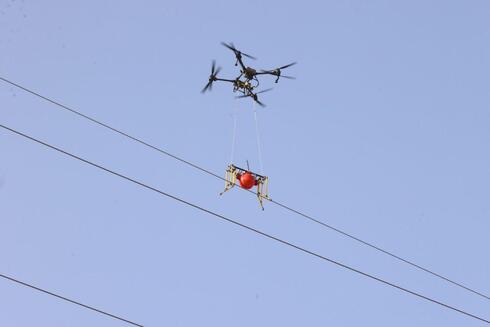
Israel develops drone robot to replace helicopters on power lines
IEC unveils what it says is a world-first system for installing aviation warning balls on transmission cables.
Israel’s state-owned electricity company has developed what it says is the world’s first drone-mounted robotic system capable of installing and removing warning balls on high-voltage transmission lines without the use of helicopters or elevated work platforms, marking an unusual intersection of infrastructure maintenance, aviation safety and robotics.
The new system, developed by Israel Electric Corporation in collaboration with Israeli company Kronos, is designed to automate one of the more hazardous and logistically complex tasks involved in maintaining the national electricity grid: attaching large orange warning spheres to overhead transmission line ground wires.
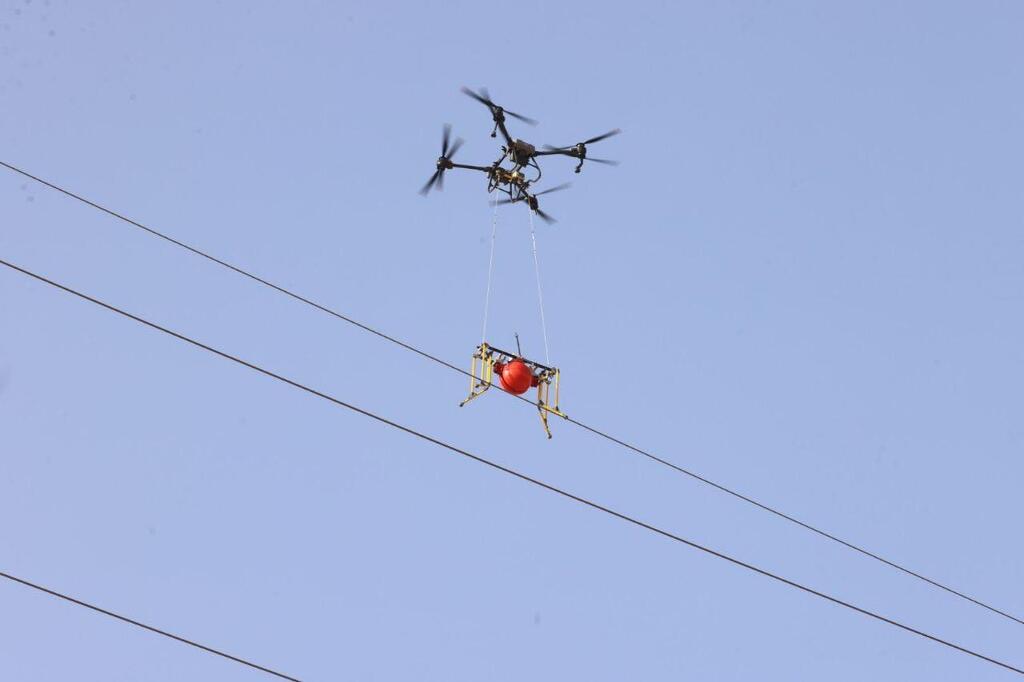
The brightly colored warning balls, installed at heights ranging from 20 to 70 meters, are intended to alert low-flying civilian and military aircraft to the presence of power lines, particularly in open terrain and agricultural areas. The installations are required under regulations set by aviation authorities and the military.
Until now, the work was typically carried out using helicopters or aerial lifts, requiring crews to operate at significant heights near live high-voltage infrastructure. According to the company, the traditional process involved substantial operational costs, complicated logistics and elevated safety risks for workers.
At the center of the new system is a robotic payload mounted on a drone, paired with a redesigned warning ball equipped with an automated “Click Clamp” mechanism. The technology allows operators on the ground to remotely attach or remove the warning balls from transmission wires in real time, without physical contact from field crews.
The company said the system is expected to gradually replace conventional installation methods, reducing dependence on heavy equipment while streamlining maintenance operations across the transmission network.



