












“I Tried to Understand What the Childhood That Shaped Elon Musk Looked Like”
Elon Musk’s obsession with science fiction books, his connection to space, and his vision of turning imaginary ideas into reality have, in recent years, become one of the most fascinating stories in the world of technology. For artist Ana Kogan, they also became the raw material for an extraordinary work of art
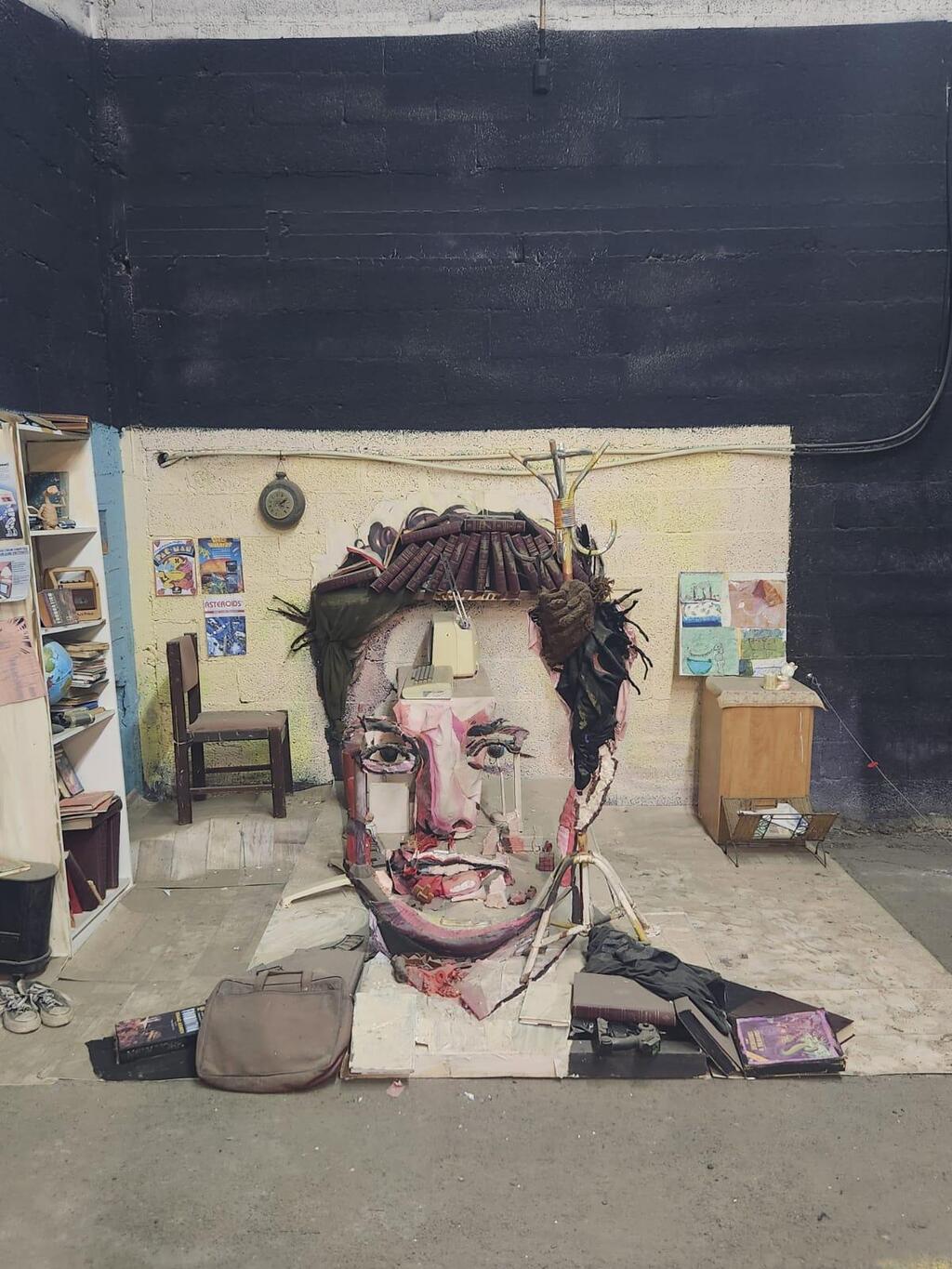
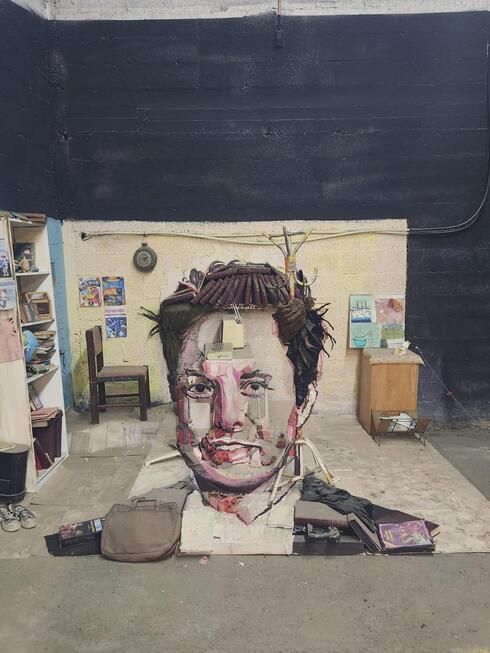
At first glance, visitors to The Spark exhibition see a collection of books, objects, and scattered items arranged like the room of a young boy. But then, as they shift slightly to the side, Elon Musk’s portrait suddenly emerges from the visual chaos. That moment, when the image is “revealed,” is exactly the experience Ana Kogan set out to create.
Behind the work are months of obsessive research, including watching rare interviews, collecting hundreds of childhood photos of Musk, searching eBay for original objects, and trying to understand which ideas, books, and experiences transformed a boy from South Africa into one of the most influential people in the world.
How did the idea of creating a work about Elon Musk begin?
“I participate almost every year in exhibitions curated by Yaara Sachs, who organizes large pop-up exhibitions attended by thousands of people,” Kogan says. “This year, the exhibition is called The Spark, and I felt that I wanted to create something people in Israel are less used to seeing.”
“I work a lot with optical illusions and public-space art, and I’ve always been fascinated by the world of anamorphosis, meaning artworks that change depending on the angle from which they are viewed. Artists abroad have been working with this language for years, and I wanted to take it to a more personal place.”
And what drew you specifically to Musk as a subject?
“First of all, it was important for me to choose someone very recognizable, but not political,” she says. “I was interested in someone associated with innovation, curiosity, and a passion for the future and for space. Musk exists within a world that sometimes feels like science fiction, and that connected deeply with my artistic language”.
But the deeper Kogan went into researching him, the more she discovered that the truly fascinating part wasn’t just the technology or the companies he founded.
“I started watching countless interviews with him, and I noticed that he constantly returns to books. He talks about how books were an incredibly significant part of his childhood and of the person he eventually became.”

Were the books the key, for you, to understanding him?
“Absolutely,” she says. “He grew up in South Africa during a very complicated period, and his personal life wasn’t easy either. Books were an escape for him. He talks about how they helped him understand meaning, understand how the world works, and even find direction in life.”
Among the books that repeatedly surfaced throughout her research were The Hitchhiker’s Guide to the Galaxy, Isaac Asimov’s Foundation series, and the novels of Robert Heinlein.
“What amazed me was realizing that, in many ways, he has spent his entire life trying to turn those books into reality,” she says. “When you look at SpaceX, Mars, and his vision for the future, you can clearly see the influence of the science fiction books he read as a child.”
The work itself is made up of real objects from his life. How do you even begin a process like that?
“That’s where the real obsession began,” she laughs. “I probably collected every childhood photo of Elon Musk that exists online. I literally sat there zooming into every image to understand what objects surrounded him, what computer he had, which books, which items.”
Some of the objects were specially ordered from eBay, while others were recreated by hand after she was unable to find them.
“For example, I found the exact model of one of his first computers, the Commodore VIC-20. It was important for me to reach the highest possible level of accuracy, because for me every object within the work tells a different part of his story.”
And in the end, what do you want people to feel when they stand in front of the piece?
“That beyond Elon Musk himself, they’ll think about ideas,” she says. “About how imagination, books, technology, and childhood experiences can shape a person and influence the world.”
In recent years, Kogan has also incorporated AI and technological tools into her work, but for her, it is precisely the connection between human research and manual craftsmanship that gives the piece its depth.
“In the end, technology is only a tool,” she concludes. “What truly interests me is how to take an abstract idea, memories, and objects, and turn them into a story that people can feel.”



