











“Iran may decide: If all that didn’t work, we should proceed like North Korea”
Ariel Levite says Iran’s leaders may conclude only nuclear weapons can deter their enemies.
Dr. Ariel (Eli) Levite (72) is one of the world's leading experts in the fields of nuclear proliferation and strategy. His career has ranged from academic research to positions at the decision-making centers of the Israeli defense establishment: he served as Principal Deputy Director General (Policy) of the Atomic Energy Commission and Head of the Strategic Division at the Ministry of Defense, and was one of the founders of the National Security Council and its Deputy National Security Advisor for Defense Policy. He holds a Ph.D. in Government from Cornell University, serves as a Senior Research Fellow at the Carnegie Endowment, one of the world's most influential research institutes in the field of nuclear policy, and is also a Senior Research Fellow at Harvard University's Belfer Center for Science and International Affairs. His unique background provides him with in-depth familiarity with the nuclear field from an intelligence-operational perspective, from the diplomatic arena in which safeguards agreements are formulated, and from strategic research that attempts to understand how countries approach building a nuclear bomb, and how they can be discouraged or stopped.
In a conversation with him on Monday of this week, he expressed grave concern that the euphoria created by the opening blow of the war, the assassination of Iran's Supreme Leader, Ali Khamenei, could ultimately turn out to be a Pyrrhic victory.

Khamenei was a murderous dictator who destabilized the entire region. Why wouldn't we be happy that he is gone?
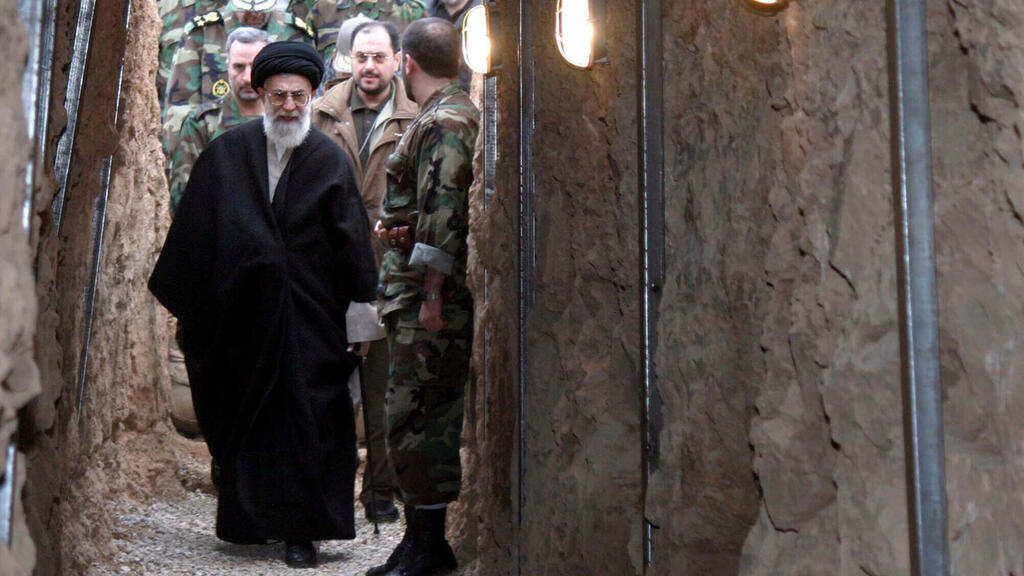
"For years, the Iranians developed capabilities and advanced toward a bomb, but Khamenei had a clear red line: do not cross the threshold of producing a nuclear weapon. Reaching the threshold of capability, yes, but not actually building a bomb. I fear that this limit could disappear the day after."
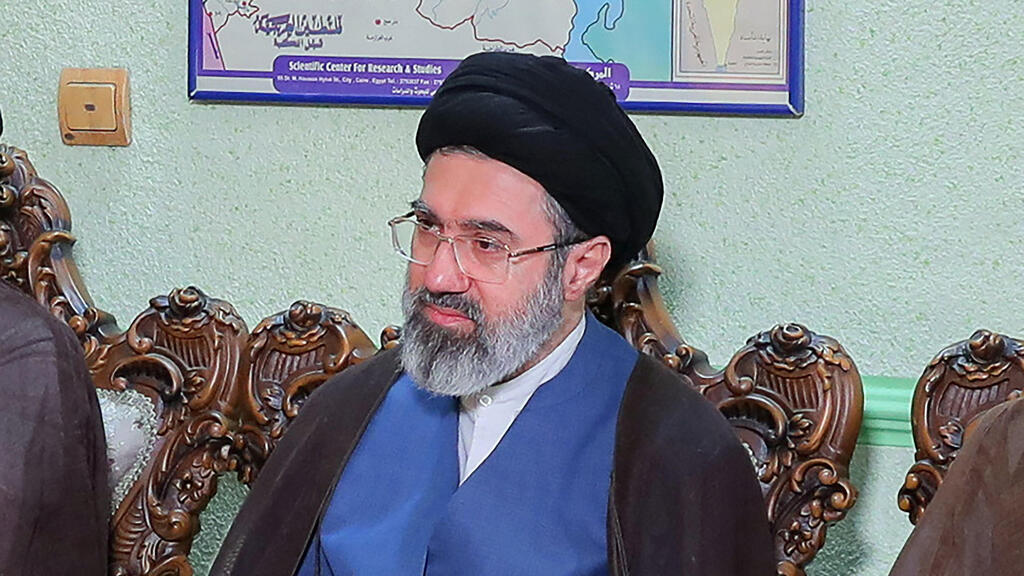
“A new leadership led by Mojtaba might look around and say to itself: We tried to be a nuclear threshold state and that didn’t deter anyone. We tried to rely on a large and sophisticated missile array and that didn’t deter either. We tried to threaten to expand the war to the entire region and that also didn’t work . So if all that didn’t work, we should proceed, like North Korea, to obtain the ultimate deterrent, nuclear weapons.”
How likely is it that the extreme escalation scenario will actually happen?
"Trying to predict how an heir will behave is always a problematic gamble, but here the starting conditions are particularly worrying. It's not just the son's close proximity to the Revolutionary Guards; the man carries a heavy traumatic burden of loss, he lost his father, mother, wife, and sister, and son, was reportedly also injured himself in the decapitation attempt. These are difficult starting conditions for any leader. Is such a person capable of understanding that Iran's future lies on a different path? Anything is possible, especially because it remains a mystery. We don't have an intellectual 'fingerprint' of Mojtaba Khamenei, he hasn't published articles, hasn't given lectures, and has kept an extremely low profile. Everything we know is based on circumstantial evidence: he was his father's special-missions man, the one who called the shots. The bottom line? We don't have much reason for optimism."
Give an example of such special tasks.
"Although the son did not officially manage hold a formal office , he did perform held two critical functions. The first was the role of gatekeeper to the supreme Leader; those who wanted to reach the father had to go through the son. The second was operational, he functioned as an informal coordinator of various arms of the system. And he has been extremely close with the IRGC. These are the facts we know. Beyond that, the man remains an enigma. He never expressed himself publicly in a way that would allow us to understand his views, so all that remains for us is to infer his outlook from the available contextual information."
Could it be that without Khamenei's almost mythical authority, the system will simply crumble because the heir will not be able to fill shoes that are too big for him?
"This speculation stems from two main reasons. The first is the enormous pressure the regime is under. History shows that in extreme situations, such as around Hitler, for example, there have been coup attempts by generals who realized that the prevailing madness simply could not continue. It is not an imaginary scenario that people at the top might say they are not willing to continue provoking the Americans.
"On the other hand, there is the opposite argument: that unity in the ranks must be maintained, otherwise everyone will be hanged separately. As soon as unity breaks down, the Americans will exploit the crack and eliminate the regime. These are two forces that clash with each other. The legacy of Khamenei Sr. was unequivocal: weakness must not be shown for invites more pressure for concessions. Therefore, when you look at what the heir inherited from his father and the culture absorbed by his environment, the line is clear: you don't give in under pressure."
Are there differences of opinion within the Iranian leadership regarding whether to accept the dictates of the Americans?
"There is a tough internal debate there. There will be those who ask whether, without a deal, everything is lost. But they are confronted by others who believe that if Trump presents Iran with an ultimatum of complete surrender or destruction, it is not permissible to give in to him. I expect that in the first phase we will see fierce internal debates, but outwardly Iran will try to project a unified line.
"Right now, the only one trying to promote a somewhat less confrontational approach is President Masoud Pezeshkian, but he lacks real influence. He apologizes to the Gulf states and is immediately forced to back down under pressure from the Secretary of the National Security Council, Ali Larijani, who makes it clear to him that he has simply lost his bearings."
And at the same time, they are isolated in the world.
"The hope of relying on other powers has turned out to be an illusion for them. Russia and China are ready to deliver strong speeches in their favor in diplomatic arenas, but they do not lift a finger in practice. Khamenei, for all his ideological rigidity, was also a relatively cautious leader who was careful not to stretch the boundaries to the limit. His son may be completely different: less experienced, with less established authority, and with a deep personal motive for revenge after a war in which many of his family members were killed. In such a situation, an explosive combination may arise: a sense of acute vulnerability, recognition that all the deterrent mechanisms built so far have failed, and alongside that an urge for revenge.
"Here comes the example that hovers over any nuclear discussion in the region: North Korea. For many in Iran, it is proof that a country that possesses the bomb enjoys almost complete immunity. It is a fact that Muammar Gaddafi and Saddam Hussein were overthrown, but Pyongyang remained standing."
We are more than a week and a half into the war. Can we say anything about the possible outcomes at this point?
"If military pressure leads to a change of regime in Iran and the rise of a more moderate leadership, the result could be the opening of a new page in relations with the West. But if the regime remains intact, wounded, humiliated, and imbued with a desire for revenge, the result could be the opposite: a more dangerous strategic reality than before the war."
Let's go back. When did Iran begin to be interested in the nuclear field?
"The roots of Iran's interest in the nuclear field in general, and nuclear weapons in particular, began in the 1960s during the Shah's era, when the country benefited from extensive international technology and assistance. However, the clearest interest in nuclear weapons the field emerged precisely after the Iran-Iraq War, when the Iranians experienced the use of chemical weapons and saw that the world largely stood by. From their perspective, from that moment on, the logic was simple: a country that is unable to deter remains exposed."
Then their nuclear program was exposed in 2002, and a year later the United States invaded Iraq.
“Tehran came under pressure after these two events. They froze certain parts of the program and made concessions to European countries, but later, under severe sanctions from the Security Council and very worrying reports from the International Atomic Energy Agency about their program, a path of agreements with the West also emerged. First came an interim agreement (JPOA) in 2013 and then the comprehensive agreement (JCPOA) of 2015. But in 2018, when president Donald Trump unilaterally withdrew from the agreement and reimposed sanctions, the Iranians saw this as confirmation of their old suspicion, that the United States was not a reliable partner.
"The result was that the Iranians accelerated their nuclear program again starting in 2019. They greatly increased their stockpile of enriched uranium, improved enrichment technologies, shortened timelines, and developed the ability to move relatively quickly from low enriched material to uranium enriched to 60%, which is very close to material at the level required to build nuclear weapons, 90%. This is how they reached a stockpile of about 440 kg of uranium enriched to 60%, which is enough, after quick further enrichment, for about 11 bombs, along with a much larger amount at lower enrichment levels.
"In June 2025, Iran was a threshold state that could, if it decided, approach the final line in a very short period of time, building a nuclear explosive device within a few weeks and a first crude bomb within months."
At the end of the war, we were told that their nuclear capabilities had been severely damaged.
"Israel and the United States struck the enrichment facilities at Natanz and Fordow, the uranium-to-metal conversion facility in Isfahan, scientists involved in weapons development, parts of the missile infrastructure, and other components of the system. These attacks set back the entire nuclear program, but not necessarily the timeline for producing a small number of simple nuclear warheads, which remained largely unchanged.
"At the time, the Americans did not enter the war in the broad sense, but rather carried out a much more limited operation: mostly using deep-penetrating bombs against three major nuclear sites that were more difficult for Israel to destroy. Much of the enriched material remained buried but recoverable at the Isfahan facility.
"Then, in an almost equally decisive act, Washington stopped Israel at the last moment from inflicting a much more serious blow on the regime and its leadership. In other words, the United States helped Israel damage the infrastructure of the nuclear program, but did not allow it to turn the campaign into a declared move to overthrow the regime."
And then what happened?
"In the first phase, it seemed like a success. Both Jerusalem and Washington were satisfied until they sobered up and realized that the feared 'grand plan' had indeed been severely damaged, but that remnants of this capability remained, and that they became at the heart of the problem. A significant stockpile of highly enriched fissile material, about 440 kilograms in containers that can be extracted from the tunnel, loaded onto a small truck, enriched further and cast into metal , remained in Iran. It was not destroyed. It was not taken. It was not removed.
"It is not immediately accessible, because some of it is buried in damaged sites and their entrances were blocked, but it is there. Removing it would require engineering effort and excavation work that involves the risk of intelligence exposure, but it is not impossible. It is simply more difficult and operationally dangerous."
That sounds somewhat concerning.
"Yes. A dangerous interim situation has arisen. On the one hand, the Iranians are not enriching and are not openly accessing the material. On the other hand, the international community cannot continuously verify what is happening with it, except through intelligence surveillance. President Trump was right in only one sense: the program has taken a severe hit. But from there to the claim that the threat has been eliminated for many years, the distance is great. However, there is one very significant component that has changed since June 2025 in favor of the West: deterrence against the resumption of enrichment activity and weaponization."
So how do you explain that Iran was unable to prevent this attack?
"Trump has drawn a clearer red line than any of his predecessors. If presidents Obama and Biden said that Iran will not have nuclear weapons, Trump sent a sharper and more explicit message: you will not have a real possibility of achieving one without paying a heavy price immediately. This fear probably caused the Iranians to avoid any real attempt to resume uranium enrichment or rebuild the enrichment facilities that were damaged until the outbreak of the war in Febrauary 2026.
"Since the war in June, they have learned lessons and invested enormous effort in producing additional missiles and improving their methods of operation, dispersion, camouflage, and survivability. At the same time, they have developed a strategy of threatening the Gulf states, signaling more openly their willingness to act against American bases in the region and against other countries besides Israel, increasing subversion and terrorist attacks, and even threatening closure of the Strait of Hormuz, the world's energy artery, once again."
In other words, the aggression was not frozen but changed form.
"In Iran's view, all of this was intended to deter the United States and Israel from further aggression against it, even at the cost of posing another serious threat to other countries. The threat had another dimension, the brutal suppression of the popular uprising in December. This event also changed the thinking in Washington. Trump, who had long focused on the nuclear issue, began to speak in broader terms of regime change: not only limiting weapons production, but also encouraging a change of leadership. Not only negotiations, but also hints that the United States would assist the regime's opponents."
In parallel with the latest escalation, the United States was negotiating with the Iranians, and it seemed that they were willing to reach a compromise on the nuclear issue.
"The Iranians were only willing to discuss temporary limitations on their ability to develop a bomb, that is, high level enrichment and related inspection arrangements, and not nuclear development in general, missiles, or regional subversion, and certainly not the future of the regime or how it treats its opponents. The gap was enormous: Tehran said, 'We will prove that we are not producing weapons,' and Washington replied, 'That is not enough. We want to ensure that you cannot produce weapons, even if you want to.'"
And the Iranians didn't understand that?
"They were perhaps willing to be flexible regarding lower enrichment levels, stockpiles, and inspection regimes, but in return they wanted sanctions lifted and guarantees that they would not be attacked again. But deep down, the meaning of such an agreement is that the ayatollahs' regime will survive, because lifting sanctions would strengthen it. This sharpened the Americans' dilemma, which ultimately led to war: is it even possible to live with this regime, even if it accepts some restrictions in the nuclear field?"
At no point did the regime consider it worthwhile to be less murderous and destabilizing externally, and less repressive and fundamentalist internally, if it wanted to attract less attention from the West?
"The regime refuses to retreat from its hostility toward the West and Israel, from its insistence on developing the nuclear and missile programs, from sustaining itself through missile deployments in the region, and of course from suppressing the local population, because from its perspective, such retreats pose a substantial risk to its continued very existence. Therefore, neither the Supreme Leader, who was eliminated, nor his ideological allies in the religious and security establishment were willing to compromise on domestic or foreign policy."
How do you think this war will end?
"I have already discussed the likely scenario of the current leadership remaining in power and seeking the bomb as soon as it can. So let’s consider several more favorable scenarios.
"In one such scenario, military pressure will lead to a change of government and ideally the rise of a more moderate leadership, or at least one willing to reach a new agreement with the West and open up the country. But we must remember that for many within the regime, this is a very expensive gamble, with no guarantee of success and no certainty that the reality that follows will be better for them.
"In the second scenario, the current leadership of Iran will negotiate a tough agreement stating unequivocally: no enrichment, no reconstruction of the facilities, no progress on the weapons track, and in return the United States will commit not to attack again, ease sanctions. and perhaps ultimately lift some of them.
"The third scenario, which is probably the most practical in the short term, is an American dictate. Instead of a bilateral agreement, new rules of the game will be imposed on Iran: you don't touch the enriched uranium, you don't rebuild facilities, you don't advance weapons development, and you don't develop long-range missiles. If you comply, we won't attack. If you violate these conditions, the Uncle Sam will come to revisit you.
"I believe reaching an agreement is preferable to a deeper military gamble, which could drag everyone into the mud and still end without the desired result. After all, Trump can craft a speech at any moment claiming that a complete victory has already been achieved: we hit the nuclear facility, we hit the regime, we protected our allies, we proved our strength, and we did it without boots on the ground. But after such a speech, a much less comfortable reality may remain: a wounded, humiliated, vengeful Iran, with fissile material buried in the ground but accessible, with the Iranians possessing knowledge necessary to produce a nuclear bomb, and with a stronger motivation than ever to seek the ultimate deterrent."
First published: 11:38, 12.03.26



