










“By 2028, there will be 1.3 billion AI agents worldwide”
"Organizations that do not adopt AI will be left behind,” Michal Braverman-Blumenstyk, Managing Director of Microsoft's Israel R&D Center, warned at Calcalist's Tech TLV conference.
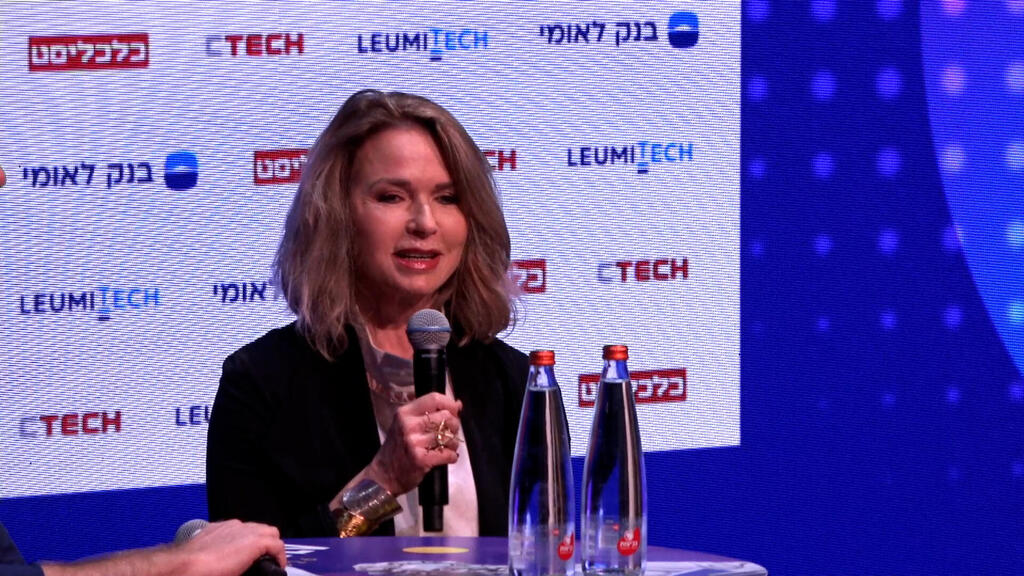
“When I was a student in the direct doctoral program at Columbia University, I specialized in AI, that was 30 years ago. It was a fascinating but largely theoretical field; of course, it wasn’t even called AI back then. Still, it is a discipline I worked in many years ago,” said Michal Braverman-Blumenstyk, Corporate Vice President at Microsoft, Managing Director of Israel R&D Center and CTO of Microsoft Security, in a conversation with Calcalist reporter Amir Kurz at Calcalist’s Tech TLV conference, held in collaboration with Leumi.
Everyone is talking about AI, were you already in the field three decades ago?
“I decided not to complete my doctorate at the time; it was the right decision for me. It is very exciting that today I am deeply involved in generative AI, and that the R&D center is leading some of the company’s most important products. As for Israel, I believe our work is impacting hundreds of millions of customers. The AI revolution is the most significant technological transformation we have experienced, or will experience, in our lifetimes. Every technological revolution is accompanied by fear, yet all previous revolutions ultimately created more jobs and entirely new professions. The speed of this revolution is unprecedented. We are already using the third generation of the technology and working with AI agents, digital assistants, so organizations are becoming hybrid entities that combine humans and AI. Organizations that fail to adopt this revolution will be left behind, while those that do will become far more productive. By 2028, there will be 1.3 billion AI agents worldwide. An organization that builds a hybrid model based on people and AI agents will open a huge gap over competitors that do not.”
Where do AI and cybersecurity intersect?
“Cybersecurity is my passion and a field I’ve been involved in for many years. The AI revolution must be built on trust, organizations and individuals need to feel confident rather than afraid, and cyber plays a crucial role in that. AI technology introduces many new attack vectors. Attackers are becoming more productive thanks to AI, and defense systems must adapt accordingly. We see three types of AI in this domain: first, AI for security, automation of security operations; second, security for AI, because systems designed three years ago are already outdated, like defending with a bow and arrow against a missile; and third, AI-based attacks, which can only be countered with AI. Targeted phishing, for example, is becoming more effective and more damaging as attackers learn personal information from social media. What is happening now is the ability to launch attacks at industrial scale, and it is impossible to defend against them without AI.”
What must Israel do to become an AI powerhouse?
“We have an ecosystem, talent, and resources. Let’s not forget that Israel is already a global leader in cybersecurity, and we have the potential to lead in AI as well. The private sector is performing beautifully, we are ranked fourth in the world in investment and have strong entrepreneurship. But that is not enough. As a country, we need a systematic strategic plan. Seventy countries already have such plans. We must act in academia, education, resource allocation, and the security establishment. There is a lot to be done, but I am optimistic because we have the assets to get there.”
What new developments have emerged from the R&D center in Israel?
“We have grown significantly and now employ more than 3,000 people. Over the past three and a half years, we have defined ourselves as an AI center of excellence, and today we are impacting hundreds of millions of customers worldwide.”



