










Israel desperately needs another airport. So why can’t it build one?
Ben Gurion is nearing its capacity limits and recent disruptions have exposed the risks of relying on a single major airport. Yet after more than 17 years of planning, Israel is still debating where to build a new one, who should operate it and who will pay.
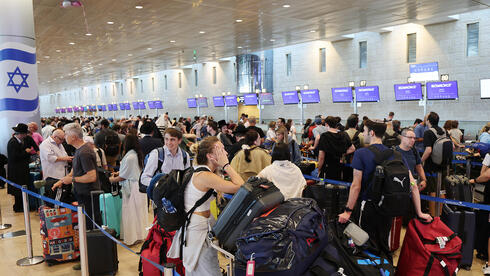
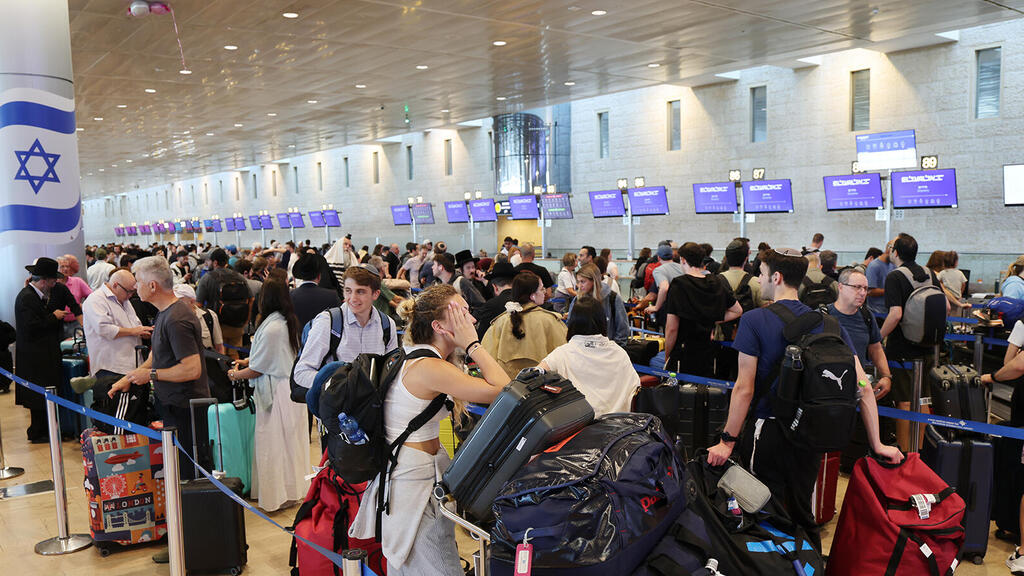
The need for another airport in Israel is hardly controversial. Ben Gurion Airport is approaching its capacity limits, demand for flights continues to rise, and the country’s dependence on a single major airport is increasingly becoming both an economic and an aviation risk. The government itself has warned that insufficient capacity could reduce the supply of flights and push up ticket prices.
The need for additional capacity has been particularly evident in recent days. Congestion in European airports was compounded by the presence of American refueling aircraft and infrastructure constraints at Ben Gurion, contributing to significant delays and turning August into a nightmare for many Israelis trying to fly.
And yet, more than 17 years after the government began promoting a supplementary airport, Israel still does not have one. Even in 2026, the government is still debating the most basic questions: Where should it be built? Who should build and operate it? How should it be financed? And, perhaps most importantly, will Israelis and international airlines actually use it?
Here are five of the biggest questions facing the project.
1. North or south?
For years, the debate over the location of a supplementary airport centered on two main alternatives: Ramat David in the north and Nevatim in the south.
In January 2024, the government decided to advance both options while determining that the supplementary airport would be established and operated in cooperation with the private sector.
The decision triggered protests in Ramat David, where residents argued that an airport would damage their quality of life, disrupt agriculture and harm the area’s sensitive ecological balance. In Nevatim, by contrast, local authorities initially welcomed the prospect.
But the decision to prioritize Ramat David led southern communities to launch their own campaign, ultimately helping push Nevatim higher on the government’s agenda.
Then, in February of this year, the picture changed again. The government decided to replace Nevatim with Ziklag in the Negev while continuing to advance Ramat David. The decision stated that both sites would move forward “in parallel and without delay.”
After years of asking “Ramat David or Nevatim?”, Israel now has a third location in the equation.
The result is a sense that, rather than resolving the dispute, the government is advancing multiple options simultaneously in an effort to avoid choosing between competing interests.
But changing the proposed location is not simply a matter of moving a dot on a map. Each option requires a fresh examination of planning, transportation infrastructure, environmental impacts, security requirements and the economic model for the airport.
2. What are the security considerations?
A civilian airport requires extensive airspace, flight paths and coordination with military aviation. That is one of the main reasons the location debate has dragged on for years.
At Nevatim, where a military airbase already operates, the question of integrating civilian and Air Force activity has been central to the debate. In fact, strong opposition from the IDF was ultimately a major factor in removing Nevatim from consideration.
Earlier this year, Nevatim was replaced by Ziklag. The latest planning documents state that discussions are underway with the Defense Ministry and the Air Force regarding aviation, construction and operational issues.
But Ziklag also raises another question: It is located within the same airspace as Ben Gurion Airport, meaning the two airports could constrain one another in terms of flight paths. That could limit the extent to which Ziklag would provide a genuine alternative to Ben Gurion.
Ramat David, meanwhile, is not free of security concerns either. Any decision regarding the site will still require coordination with the Defense Ministry and the military.
3. Who will build and operate the airport?
The northern and southern options are being advanced in parallel, at least on paper. But the question of who will actually build and operate the airport remains unresolved.
In January 2024, the government decided that construction and operation would be carried out in cooperation with the private sector.
The Finance Ministry is promoting a model under which a private concessionaire would build and operate the airport under the supervision of the Airports Authority, a structure used in various forms around the world.
The ministry argues that private-sector involvement could make the process more efficient, reduce construction and operating costs and ultimately encourage greater competition in Israel’s aviation market. It also argues that private participation could improve service while reducing the financial burden on the state.
The Airports Authority does not necessarily share that view.
During discussions in the Knesset Economic Affairs Committee, the authority argued that fundamental issues remained unresolved in the proposed legislation and that it was therefore unclear whether private companies would even be willing to participate in a tender.
Its broader argument is that aviation infrastructure is not simply a commercial enterprise. The country’s main gateways cannot necessarily be treated like ordinary private businesses, particularly at a time when a missile attack can lead to the closure of Israel’s airspace.
The Finance Ministry, meanwhile, has warned that delays could contribute to higher ticket prices once Ben Gurion reaches its capacity limits.
Its compromise proposal is to allow the Airports Authority itself to compete in the tender.
Ultimately, the debate is about more than who gets to build the airport. It is also about who bears the business risk, who sets prices, who receives the revenues and who is responsible when actual demand differs significantly from forecasts.
4. Who will pay?
An international airport is a multibillion-shekel infrastructure project, making the location debate inseparable from the question of financing.
The state could finance the project itself, bring in a private concessionaire or combine public and private funding.
As of 2026, the government is moving toward a concession model. Its economic plan argues that private financing would allow the state to develop additional airports in parallel rather than bearing the full cost of construction and operation itself.
That assumption, however, raises an obvious question: If Israel has struggled for more than 17 years to develop even one supplementary airport, how realistic is it to expect multiple projects to move forward simultaneously?
Even under a concession model, the state would still have to provide extensive support. It would need to regulate the airport, define the concessionaire’s rights and obligations, determine which risks it is prepared to assume and provide or coordinate supporting infrastructure.
That infrastructure could include roads, rail connections, security systems and public transportation.
And the airport would be competing for government attention and resources with some of Israel’s largest infrastructure projects, including the metro, light rail, desalination facilities, server farms and power plants.
The question is therefore not simply whether Israel can afford another airport. It is whether the government can prioritize and execute such a project alongside everything else competing for public resources.
5. How many Israelis will actually use it?
Perhaps the biggest financial risk is also the hardest to calculate.
Airport infrastructure is planned decades in advance, but Israel’s aviation market has been unusually volatile in recent years. The coronavirus pandemic, wars, periods in which the country’s airspace was closed, the withdrawal of foreign airlines and sharp rebounds in demand have made long-term forecasting exceptionally difficult.
That creates a fundamental risk.
If a new airport is built on the assumption of very strong passenger growth, the state and concessionaire could end up with an expensive piece of infrastructure that is underused.
If the forecast is too conservative, Israel could once again find itself with overcrowded airports at precisely the moment when there is no capacity left to expand.
The government itself has warned that Ben Gurion’s future capacity could eventually become a constraint on the number of passengers Israel can handle, potentially pushing up airfares.
There is another problem: Will airlines and passengers actually want to use the new airport?
Ramon Airport provides a cautionary example. Its relatively low passenger volumes have demonstrated the difficulty of persuading international airlines to operate from a distant airport, particularly in a country as geographically small as Israel.
Passengers, too, have little incentive to make a long journey to an alternative airport when Ben Gurion is closer to the country’s main population centers.
That means an airport far from central Israel may require more than a runway and a terminal. The government may also have to offer incentives to airlines and passengers willing to use it.



