








Analysis
Jensen Huang’s biggest threat may not be the scandal, but the damage to his credibility
The Nvidia CEO has admitted to an affair with a woman reportedly suspected of working for Chinese intelligence. But the more serious questions concern the company’s initial response, the trust of its board and the credibility that has helped sustain the AI investment boom.
For the past four years, Jensen Huang has been one of the biggest stars in Silicon Valley and the global economy. Nvidia’s AI chips have become among the most sought-after products in the world, providing the foundation on which companies such as OpenAI, Anthropic and Google are building the AI revolution. With his charismatic personality, distinctive appearance and extraordinary personal backstory, Huang has come to embody the elusive American Dream. Born in Taiwan, he was sent by his parents to the United States in search of a better life. By mistake, he ended up at a boarding school for troubled youth, where he scrubbed toilets. Years later, he co-founded Nvidia at a Denny’s restaurant. And that is only part of his story.
Over the past two years, Huang has become the most prominent champion of the AI revolution, frequently using Nvidia’s financial and technological resources to fund and accelerate its development, even when investors remained skeptical. He has navigated challenges ranging from an unpredictable president in the White House and restrictions on chip exports to China to competitors eager to capture a share of Nvidia’s market. Along the way, he has helped propel the company’s market capitalization from roughly $300 billion on the eve of the AI boom to more than $4.5 trillion.
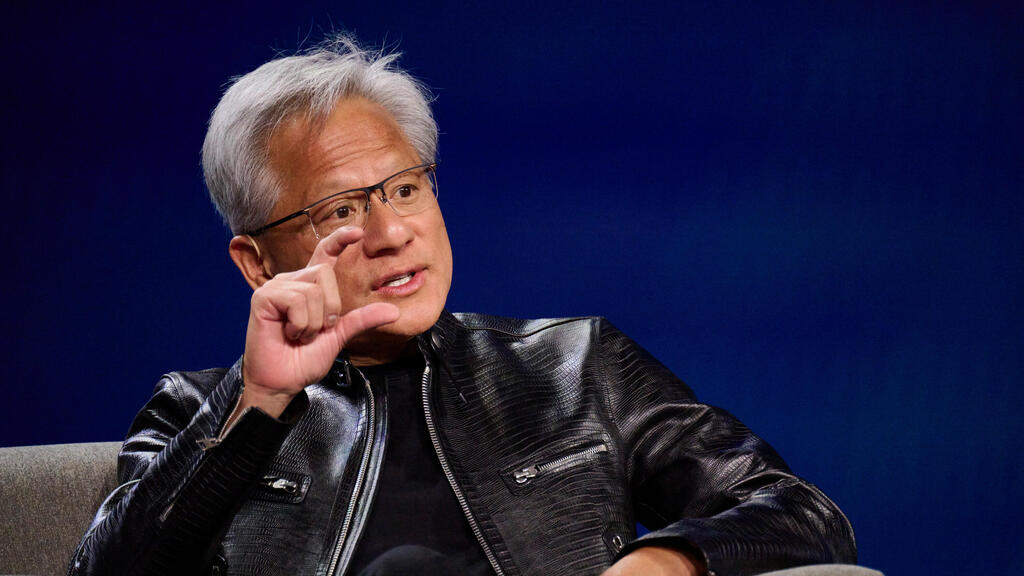
Huang now presides over an empire he built over decades, steering Nvidia through periods when it came close to bankruptcy and championing a vision that few understood until recent years. Yet he may now be facing his greatest leadership challenge, one that could ultimately cost him control of the company he founded. The threat does not stem from poor business decisions, a market crash or even the espionage-and-romance scandal in which he has become embroiled. Rather, it stems from how Huang and Nvidia initially responded to reports about the affair, raising questions about their credibility that could prove far more damaging.
The details of the affair sound like something from a John le Carré novel. At some point over the past two years, Huang met a businesswoman of Chinese descent named Alice Huang, who is not related to him. She was a senior executive at Megaspeed, a Singapore-based data center company and Nvidia customer. Their relationship appears to have begun professionally, as Megaspeed purchases Nvidia chips for its data centers, before developing into a romance. On its own, this would be a familiar story of human frailty and infidelity by a prominent executive.
Then came the more troubling twist. U.S. intelligence officials reportedly suspect that Alice Huang was not simply a senior executive in the data center industry but an intelligence operative working on behalf of Beijing. The nature of her relationship with Jensen Huang has raised concerns that the Nvidia CEO may have been targeted because of his access to information of considerable interest to China. His regular interactions with President Donald Trump could also potentially expose him to sensitive information or give him an opportunity to influence decisions on matters important to Beijing.
In a particularly troubling development, Trump was reportedly briefed on the suspicions as early as 2025. Yet there has been no public indication that the briefing led to action to warn Huang or otherwise mitigate the potential risks. Nor has there been any public account of Huang receiving a defensive intelligence briefing of the kind sometimes given to Americans who may have been targeted by foreign intelligence services. The episode has unfolded with a pace and sense of bureaucratic inertia worthy of a John le Carré novel.
None of this necessarily poses an immediate threat to Huang’s position at Nvidia. Even highly intelligent and experienced people have fallen victim to sophisticated espionage operations involving romantic relationships. The affair could have serious consequences for his marriage and personal life, potentially including a costly divorce, but it is not in itself likely to disrupt Nvidia’s operations or automatically cost him control of the company. The experiences of Jeff Bezos and Bill Gates offer reminders that even highly publicized personal scandals do not necessarily end a business leader’s career.
The more serious problem is how Huang and Nvidia handled the initial reports. In late October, when The New York Times reported that Huang had been targeted in an alleged espionage operation, the article alluded to but did not explicitly describe a romantic relationship between him and Alice Huang. Nvidia responded that “Jensen’s interactions with Ms. Huang are not unusual or unexpected,” adding that “meetings with customers are part of a CEO’s job.” The company also said that Huang speaks with thousands of customer executives every year. When the Financial Times subsequently reported on the affair, Nvidia referred back to its earlier statement.
Huang himself also sought to characterize the relationship as entirely professional. In an interview with Bloomberg, he said that their interactions were “related to Megaspeed, and it was all completely normal and not unusual.”
It was only on Sunday, after the Financial Times report and other accounts brought the relationship into sharper focus, that Huang acknowledged the affair. In a memo to Nvidia employees, he wrote: “I owe my family and all of you an apology. I was unfaithful to my wife. My actions hurt her and our children. There is no excuse for what I did. I am deeply sorry.”
Huang went further, acknowledging that his conduct had affected his responsibilities to the company. “To my colleagues at NVIDIA, including those I have worked alongside for decades, and to our board, partners, and shareholders around the world: you deserve better from me,” he wrote. “I have fallen short of that responsibility. I am fully committed to NVIDIA and will work to earn back your confidence.”
The same day, Nvidia’s board announced an independent investigation into reports that Huang had been the target of a foreign intelligence effort. The investigation will be overseen by a committee of independent directors, assisted by outside independent counsel. The board said it had “no reason to believe that either national security or NVIDIA secrets were compromised,” but added that its inquiry would examine all available information. It also expressed confidence in Huang and his leadership team, while saying he had committed to cooperating fully.
The episode leaves two possible scenarios, neither of which is particularly reassuring. In the first, Huang concealed the affair from the public and misled Nvidia’s board, leaving its members unwittingly involved in an attempt to manage the fallout. In the second, he told the board the truth but allowed the company to issue statements that presented his relationship with Alice Huang as entirely professional.
If the first scenario is correct, Huang has potentially lost the trust of both the public and his own board, putting his position at risk. If the second is true, the problem extends beyond Huang to Nvidia itself. The company’s leadership would have knowingly used its communications machinery to give the public a misleading impression, raising serious questions about its credibility and governance. In that case, restoring trust could require more than an apology from Huang. It could also demand accountability from the board members who approved or tolerated the response.
As the Watergate scandal and Bill Clinton’s affair with Monica Lewinsky during his presidency demonstrated, the attempt to conceal a scandal can become more damaging than the underlying conduct. One of the foundations of Nvidia’s success has been the credibility and confidence Huang projects. When he argues that there is no AI bubble and that investors should not retreat from the sector, or that concerns about the dangers of AI are exaggerated, markets listen. His influence is built not only on Nvidia’s technological dominance but also on the public image he has cultivated over decades.
There are legitimate questions about the financial structure of the AI boom. Nvidia invests in companies that, in turn, use some of that capital to purchase its chips, potentially reinforcing demand and helping sustain the market. But Huang’s conviction in the AI revolution, combined with the trust he has earned among investors, has also played a significant role in maintaining confidence in the sector and tempering concerns about the scale of the investment cycle.
Now, the credibility on which that influence rests has been called into question. If Huang misled the public about a matter as personal and consequential as his relationship with Alice Huang, investors may begin to question his judgment and the reliability of his public statements more broadly. The next time he predicts that AI investment will accelerate or argues against restrictions on the development of advanced models, his words may carry considerably less weight.
What does this mean for Huang’s future at Nvidia, and for the company itself? It is too early to reach a definitive conclusion. Professor Jeffrey Sonnenfeld of the Yale School of Management, a leading expert on corporate leadership who knows Huang, believes the CEO’s chances of retaining his position are roughly 50-50. Speaking to TechCrunch, Sonnenfeld said Huang had previously been “revered and trusted by everybody in technology,” but described the episode as “remarkably poor judgment.” He added that “any employee in Nvidia other than him would be fired over this,” and warned that “the recklessness alone would mean an irretrievable loss of confidence.”
Even if Huang were forced to leave Nvidia, he would be unlikely to fade into obscurity. In 2010, Hewlett-Packard fired CEO Mark Hurd after he submitted inaccurate expense reports to conceal a personal relationship with a contractor. Oracle hired him about a month later. Huang, arguably the most successful technology founder and CEO of the past decade, would probably have little difficulty finding another prominent role or launching a new company. An enterprise associated with his name would likely have little trouble attracting billions of dollars in investment.
The greater risk would be to Nvidia itself. The company has no obvious successor to Huang. Its decentralized management structure, with virtually no middle management and approximately 60 executives reporting directly to the CEO, has concentrated an extraordinary amount of authority in his hands. There is no clear deputy or evident candidate ready to take his place. Huang’s deep personal identification with Nvidia, reminiscent of Steve Jobs’s relationship with Apple, also means that an abrupt leadership change without a carefully managed transition could trigger considerable internal upheaval.
That disruption could prove more damaging than the immediate loss of public confidence. For this reason, Huang may well remain in his position, with the expectation that both he and Nvidia can weather the crisis. The board’s public expression of confidence in him suggests that it is not currently seeking to remove him. But simply waiting for the controversy to subside will not be enough. The company will need to demonstrate that its governance structures can function independently of its founder and restore confidence in the way it oversees its leadership.
One possible step would be to appoint a chairman of the board. Nvidia currently has no chairman, with Huang serving as CEO and Stephen Neal holding the title of lead independent director. A formally appointed chairman with genuine authority could provide a stronger independent counterweight to Huang. The company also needs a clear succession plan, something that would be prudent regardless of the current controversy, given Huang’s age and the extent to which Nvidia depends on him. Other steps could include changes to management practices, greater corporate transparency and stronger independence for those responsible for internal oversight and controls.
For now, Huang and Nvidia continue to enjoy the support of prominent figures, some of whom have considerable financial interests in the continued expansion of the AI market. Investor Bill Ackman voiced his support on X, writing: “An alert: @JensenHuang is human. And he is an incredible human. Even incredible humans make mistakes. He takes full responsibility as he should. We should all support him and his family. Onward.”
Investor Jason Calacanis expressed a similar sentiment, arguing that the United States needed to win the AI race “for the sake of democracy and humanity.” “We are all in this together: the left, the right and the center. There is no time for infighting,” he wrote. “Jensen and NVIDIA’s technology are a critical target, and we need to protect them both.”
Shaun Maguire, a partner at Sequoia Capital, described Huang as “one of the greatest entrepreneurs of this generation,” while acknowledging that he had done something “incredibly dumb.” Maguire also called the episode “bad for America,” but argued that Huang’s departure would not serve the country’s interests. “Two mistakes don’t make a right, and I believe Jensen is irreplaceable for America’s AI leadership,” he wrote. Tesla CEO Elon Musk responded to Maguire’s post with a brief endorsement: “I agree.”
The more pointed criticism has focused either on the administration in Washington or on Beijing. Chris McGuire, a senior fellow at the Council on Foreign Relations, accused U.S. Commerce Department officials of failing to act despite reportedly receiving intelligence about Alice Huang. He questioned why Megaspeed continued to receive advanced Nvidia chips and argued that export controls should be tightened to prevent Chinese companies from obtaining restricted processors through intermediaries.
Texas Congressman Michael McCaul also called for a tougher response, writing: “This is a classic move from the CCP’s playbook — and another example of why it can never be trusted.” He urged the United States to pause advanced chip shipments to China until the national security implications of the case had been clarified.
This combination of political support, Nvidia’s strategic importance and Huang’s central role in the company makes his immediate departure uncertain, even if the controversy has put his leadership under unprecedented scrutiny. But the most consequential question is no longer simply whether Huang can survive the scandal. It is whether the damage to his credibility will eventually undermine the confidence that has helped sustain Nvidia’s valuation and, by extension, the wider AI investment boom.
It is not impossible that this episode will eventually be remembered as one of the moments when confidence in the AI revolution began to unravel.



