










The Israeli NGO that saved 8,000 children from 75 countries, even during the war
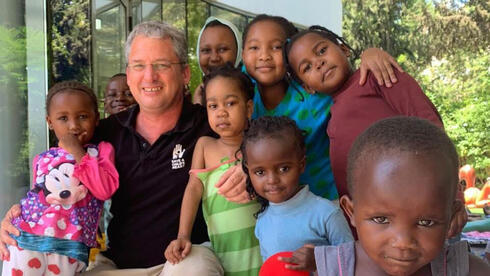
The Executive Director of the "Save a Child's Heart" NGO, Simon Fisher, reflects on 30 years of activity, which continued even during the war, the responsibility of caring for children who arrive without parental accompaniment, and the story of Esther, a girl who returned to serve her community in Tanzania.
Save a Child's Heart is celebrating 30 years of activity, during which it has transformed Wolfson Medical Center into a beacon of international pediatric cardiology. The NGO, which began as the dream of a single heart surgeon, has saved over 8,000 children from 75 countries and reshaped the landscape of cardiology in Africa. Simon Fisher, the Executive Director of Save a Child’s Heart, discusses managing global crises, the responsibility of caring for children who arrive in Israel without their parents, and the legacy of Dr. Ami Cohen, the NGO’s founder.
When the late Dr. Ami Cohen, a Jewish-American heart surgeon, founded Save a Child's Heart three decades ago, he envisioned saving children in need of heart surgery. He probably did not know then how central the organization would become in transforming pediatric cardiology in Africa and beyond.
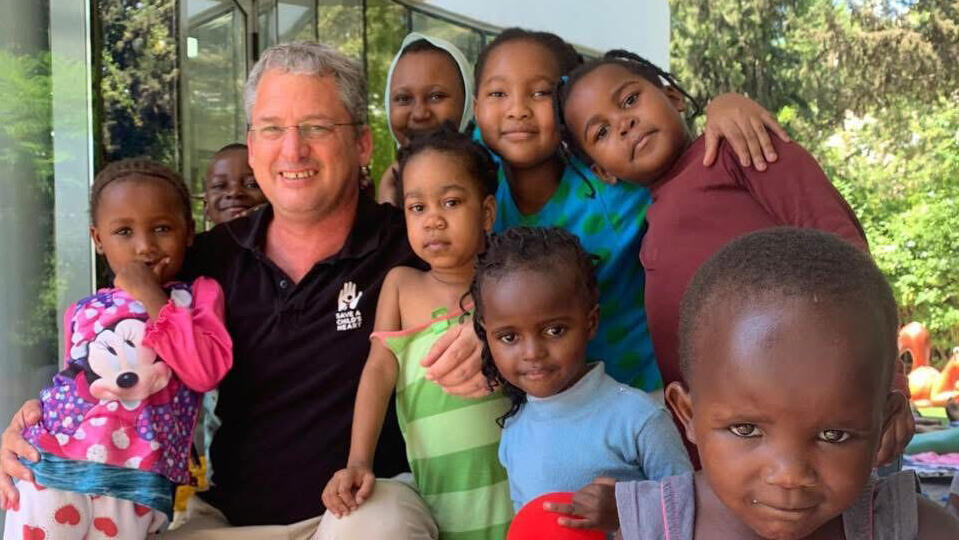
Over its thirty years of activity, the organization has saved over 8,000 children from 75 countries. Today, it handles 300-400 procedures, including heart surgeries and catheterizations, per year in Israel. It raised $50 million to build a children’s hospital at Wolfson, contributing to a total construction cost of $65 million, and during the war it raised $5 million for medical equipment and emergency preparedness for both children and adults. These achievements were made possible thanks to Israeli philanthropists, led by Morris Kahn, Sylvan Adams, the Azrieli Canada-Israel Foundation, the Ted Arison Family Foundation, and many others worldwide.
Cohen began his activities in the 1990s, immigrating to Israel for the second time. As a child, he had briefly lived in Israel with his family, who initially tried to settle from the United States but returned. He studied medicine in the American Medical Corps, fulfilling his dream of becoming a pediatric heart surgeon. While serving in South Korea in the early 1990s, he witnessed children with heart disease struggling to access life-saving treatment.
Upon returning to Israel, Cohen joined the cardiac surgery department at Wolfson Hospital in Holon with a vision to save children from across the globe, without compromising care for Israeli children. At that time, Israel already treated local children with heart disease, but their numbers were insufficient to maintain excellence in pediatric cardiology. Statistics show that eight out of every 1,000 children are born with congenital heart problems, with a third requiring surgical intervention during their lifetime.
A chance encounter with an Ethiopian pediatric cardiologist, who had studied in the U.S. and returned to Ethiopia to establish The Children’s Heart Fund of Ethiopia, led Cohen to persuade Wolfson management to bring two children to Israel for life-saving surgeries. He financed the treatments through his family in the U.S. and housed the children in his parents’ apartment at the Seasons Hotel in Netanya. This marked the beginning of the organization’s activities.
"Ami understood early on that even if we saved as many children as possible, it would be a drop in the ocean. That is why he added a training component to the association's goals, bringing medical professionals, including surgeons, cardiologists, anesthesiologists, intensive care physicians, nurses, and heart-lung machine technicians to Israel for advanced training," says Simon Fisher, CEO of Save a Child’s Heart, in a conversation with Calcalist.
Cohen died of altitude sickness while climbing Mount Kilimanjaro, Africa’s highest mountain, in August 2001. Nevertheless, the association has continued his work: saving children in Israel and training medical personnel who can save lives abroad.
Simon, the activity of Save a Child’s Heart is global. What did it look like during the October 7 war? Did operations continue?
Fisher: "The war created logistical challenges, including closed skies. However, because most of the children we treat come from Africa, and Ethiopian Airlines flies under nearly all conditions, our activity continued. Until the war, a significant percentage of our patients were Palestinian children, whose treatment was disrupted. But we continued to bring many children from other countries, mainly across Africa, for life-saving care in Israel.
"In addition, we worked to assist Wolfson Hospital in equipping and preparing for possible large-scale war scenarios. During the conflict, we raised about $5 million for medical equipment benefiting the entire hospital."
Before the war, the pandemic had already restricted international travel. Fisher explains: "Despite the logistical challenges, the pandemic allowed us to test our readiness. The Sylvan Adams Children’s Hospital was used to treat severe COVID-19 patients, leveraging our ECMO skills from complex heart surgeries. Moreover, African centers of excellence benefited because the doctors we trained here were forced to take full responsibility. For instance, Tanzania treated more children locally than Wolfson during that period, fulfilling Ami's vision and demonstrating the sustainability of our model."
Over the years, the association has treated thousands of children, each with a moving story. One such story is that of Esther, a girl from Tanzania. About a decade after Cohen’s death, Fisher and Dr. Godwin Godfrey, then training to become the first pediatric heart surgeon in Tanzania, climbed Kilimanjaro to raise funds for the organization.
"Two days before leaving, I received an email from a German woman who runs an orphanage, Sister Angelica. One of the children, Esther, had a heart defect, and she asked if we could help. I replied that 'God works in mysterious ways,' and said we would meet her upon arrival. Dr. Godfrey examined Esther and confirmed it was a case where we could intervene."
Esther was brought to Israel for surgery. "She was the same age as my eldest daughter, which made the responsibility immense. Many children over five arrive without their parents, increasing our duty of care. Esther returned to Tanzania healthy and inspired; she studied paramedicine and now aims to work as a catheterization room technician. She witnessed our teams in action, which shaped her career aspirations," Fisher says.
Esther represents the culmination of Cohen’s vision: a child saved by the NGO who is now returning to serve her community in Tanzania.
Looking ahead, Fisher says: "We aim to gradually increase procedures in Israel while balancing international humanitarian work with treatment for Israeli children. We are building the Arison Pediatric Emergency Medicine Center at Wolfson, including a training and simulation center to merge hospital needs with technological advances. Another project is a department for cardiac surgery and congenital heart defects in adults, reflecting advances in the field."



