










Decart's founders will stay at Amazon for five years to secure their billion-dollar payday
The unusual deal structure combines cash and stock, with a substantial portion of the founders' compensation deferred until the end of the retention period. Amazon is also seeking to keep the startup's R&D team as it expands its AI chip operations.
The sale of AI startup Decart to Amazon for approximately $7.5 billion marks one of the fastest and most lucrative exits in Israeli tech history. Amazon officially announced on Monday that it had agreed to acquire Decart’s technology and bring its employees into the company.
While the exact financial terms were not disclosed and will only be detailed upon the deal’s completion, expected in just over a month, Calcalist has learned that the transaction involves a combination of cash and stock. The relatively unusual terms require Decart’s three founders, brothers Dean and Orian Leitersdorf and Moshe Shalev, to remain at Amazon for five years. As a result, the full consideration will not be paid at closing but will instead be distributed over an extended period, with the structure primarily intended to ensure the retention of the company’s employees.
1 View gallery
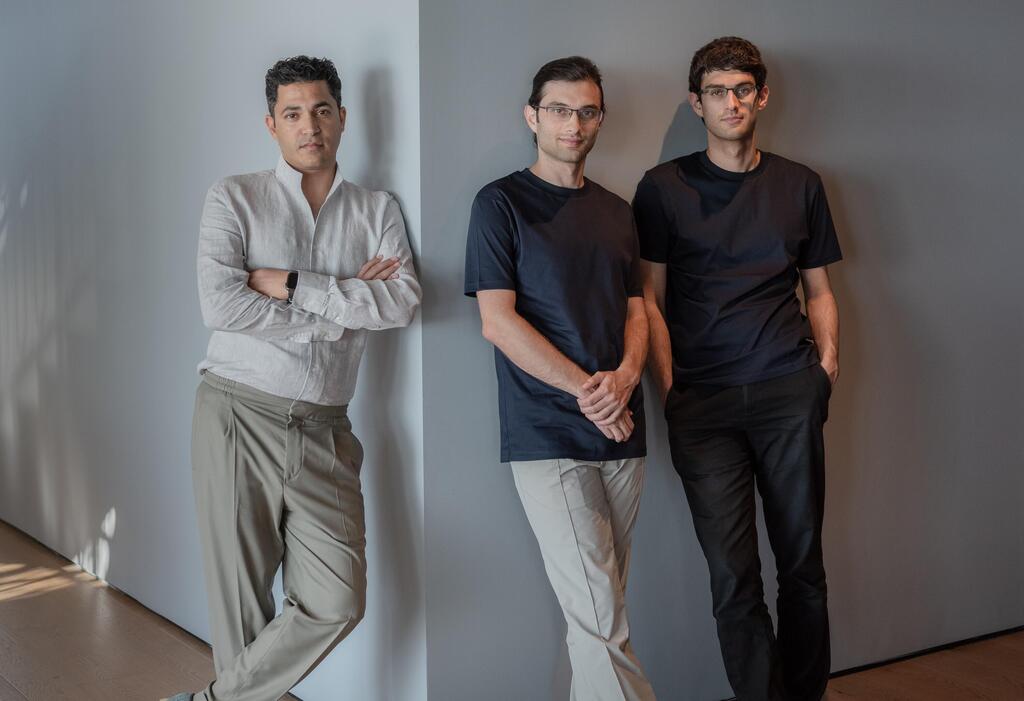
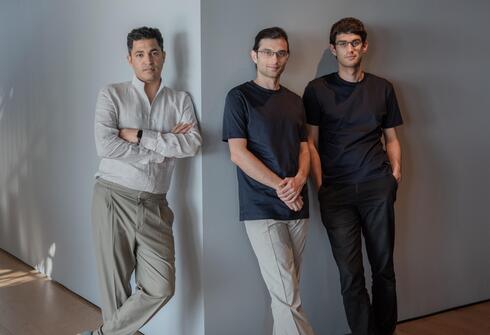
Decart founders Orian Leitersdorf (from right), Dean Leitersdorf and Moshe Shalev.
(Amit Elkayam)
Amazon’s announcement suggests that Decart’s technology still requires substantial further development, making the retention of its team, which currently numbers fewer than 100 employees, particularly important. The founders will therefore be subject to significant non-compete restrictions, while a substantial portion of their compensation will be deferred until toward the end of the five-year period.
The Leitersdorf brothers and Shalev founded Decart just three years ago and now stand to receive more than $1 billion each. Together, the three hold a 50% stake in the company, divided equally among them. This is despite the fact that Orian, Dean’s younger brother, was still serving in the military when the company was founded. At a transaction value of approximately $7.5 billion, each founder’s stake would be worth roughly $1.2 billion before taxes. The Leitersdorf brothers are both under 30, with Dean aged 28 and Orian 23, while Shalev is 39.
Another beneficiary is Yossi Sariel, who commanded Unit 8200 during the October 7 attack and had served as the founders’ commanding officer in the unit. Sariel is particularly close to Shalev, who brought him into Decart after he retired from the IDF in the wake of the October 7 failures. Other major beneficiaries include American venture capital funds, which invested a total of approximately $450 million in Decart during its short history. The company's most recent funding round took place in May 2026, when it raised $300 million at a valuation of $4 billion.
Decart attracted the attention of leading venture capital firms almost immediately after its founding. Its unusually large $21 million seed round was led by Sequoia Capital, with participation from Oren Zeev. Just a month later, the company raised another $25 million, this time at a valuation of approximately $500 million. The round was led by Benchmark, another major American fund that had until then maintained a relatively limited presence in Israel.
Less than a year later, Decart raised another round at a significantly higher valuation of $3.1 billion. Last May, it secured a further $300 million. Its other shareholders include Nvidia and Radical Ventures.
If the founders pay taxes in Israel, as are expected to do employees receiving retention bonuses, the state could collect more than $1 billion in tax revenue from the transaction. However, the precise tax implications remain unclear. Although Decart is registered as an Israeli company, Amazon's announcement refers to the acquisition of its technology and the recruitment of its team, rather than the purchase of the corporate entity itself. This distinction could have significant implications for how the transaction is taxed.
Following the deal's completion, Decart's employees are expected to join Amazon's chip division, a business built in large part around Israeli company Annapurna Labs, founded by Avigdor Willenz. Annapurna is considered one of Amazon's most successful acquisitions. The tech giant paid approximately $350 million for the chipmaker a decade ago, and the division is still led by Nafea Bshara, who will now oversee the Decart team.
Amazon expands its Israeli development operations
Amazon was the most logical buyer for Decart, a possibility first reported by Calcalist in August, given the close relationship between the two companies. Amazon was the first to integrate Decart's technology for optimizing the performance of AI chips into its Trainium processors. The companies have been working together since 2025, with Amazon serving as Decart's primary customer and maintaining a close, ongoing relationship with the startup.
At one point, Decart's founders were tempted by an offer from Anthropic. The prospect was difficult to turn down, as it would have given them the opportunity to receive shares in what was expected to be one of the most sought-after IPOs in Wall Street history, potentially making the founders even wealthier. The deal ultimately fell through. However, sources close to the company say that Dean Leitersdorf worked hard to preserve his relationships with both Amazon and Nvidia even while negotiating with Anthropic, helping pave the way for Amazon to return to the table.
Amazon is seeking to reduce its dependence on Nvidia by developing its own Trainium chips. This is where Decart comes in. The startup was among the first to demonstrate an AI model that performed better on Amazon's chips than on Nvidia's. Amazon is not necessarily looking to acquire a finished product. Rather, it is particularly interested in Decart's team, which is highly regarded in the industry for its technical capabilities.
The team could help advance Amazon's chip technology to a level at which it can better compete with Nvidia, particularly by enabling different types of chips to work together and managing increasingly complex workloads. Amazon is reportedly planning to double the size of Decart's workforce in Israel in the near future. The company already has substantial development operations in the country, with offices in Tel Aviv and Haifa and an estimated workforce of nearly 2,000 employees.



