










Amazon may get Decart for $5.5 billion after Anthropic walked away
The Israeli AI startup is nearing a potential sale at a valuation below the $7 billion reported in the U.S., after Nvidia declined to revive acquisition talks. Amazon is already a strategic customer, with an interest in Decart’s technology for making AI chips run more efficiently.
Is Decart’s sale saga heading toward a happy ending? A month ago, Israeli AI startup Decart suffered one of the biggest setbacks in its relatively short history when Anthropic decided not to acquire the company. The decision came after due diligence had reportedly been completed, casting a shadow over the three-year-old startup and raising questions about its technology and business prospects.
Decart offered a patriotic explanation for the collapse of the deal, saying it had been unwilling to relocate to the United States. Few, however, found that explanation convincing. Calcalist has learned that after the Anthropic deal fell through, Decart tried to reopen negotiations with Nvidia, which had made the first serious acquisition offer before Anthropic entered the picture.
Nvidia declined to return to the negotiating table, prompting Decart’s shareholders to pursue a new round of talks, this time with Amazon. Those discussions have brought the company closer to a deal that could be signed by the end of October. According to information obtained by Calcalist, the proposed transaction would value Decart at $5.5 billion, below the $7 billion figure reported by The Wall Street Journal and less than Anthropic was reportedly prepared to pay.
1 View gallery
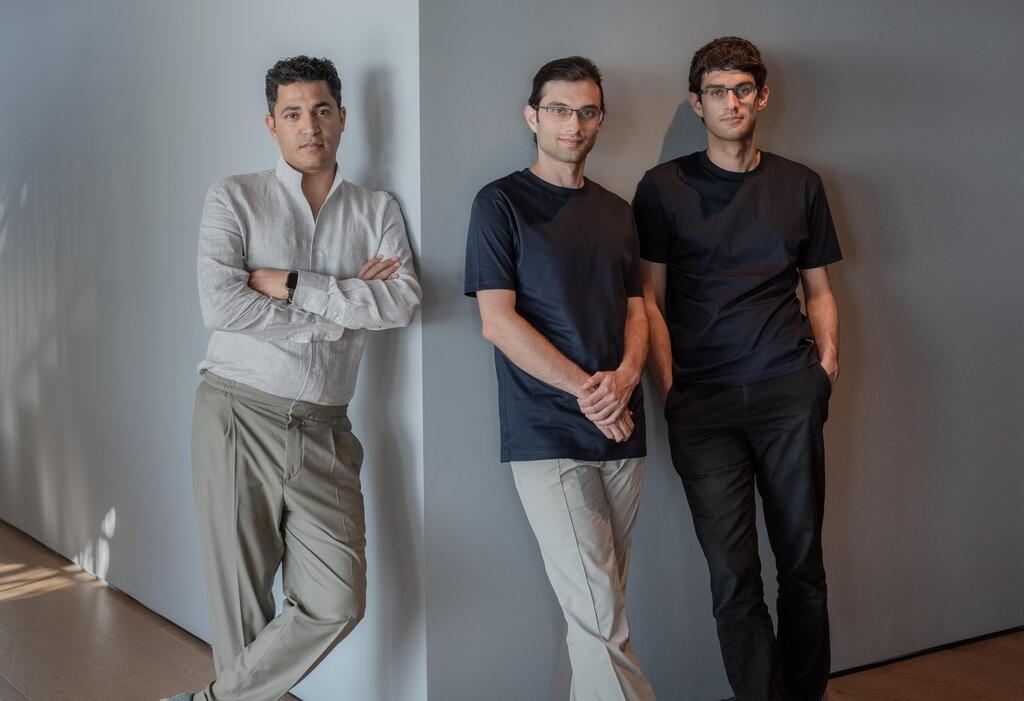
Decart founders Orian Leitersdorf (from right), Dean Leitersdorf and Moshe Shalev.
(Amit Elkayam)
Even at $5.5 billion, a sale would represent a remarkable outcome for a three-year-old company generating tens of millions of dollars in revenue, primarily through projects and commercial engagements, while still working to establish its ultimate product strategy and business model. Decart’s most recent funding round valued it at $4 billion, meaning the proposed sale would give investors a substantial premium and potentially allow them to realize significant returns in a remarkably short time. Its shareholders are predominantly U.S. venture capital funds, with relatively few Israeli investors.
Why would Amazon want to acquire Decart, particularly after Anthropic’s decision to abandon a deal at such an advanced stage? A sale to Amazon may make strategic sense for reasons that differ from Anthropic’s potential motivations. Decart has worked with Amazon almost since its inception and is developing technology that could help the tech giant improve the performance of its AI chips.
Amazon is trying to reduce its dependence on Nvidia by developing its own Trainium processors. Decart’s software is designed to make AI models run more efficiently across different chip architectures, potentially allowing customers to extract more performance from the hardware they already have. The startup was among the first to demonstrate an AI model running more efficiently on Amazon’s chips than on Nvidia GPUs. About a year ago, co-founder Dean Leitersdorf demonstrated the integration of Decart’s technology with Amazon’s new chip at the tech giant’s flagship annual event. The two companies have maintained a close relationship since.
In 2015, Amazon acquired Israeli chipmaker Annapurna Labs for approximately $350 million. The deal became one of the most consequential acquisitions in the development of Amazon’s in-house silicon business. The Yokneam-based company helped lay the foundation for Amazon Web Services’ custom-chip operations, enabling the cloud giant to gain greater control over the hardware powering its data centers and reduce its dependence on external suppliers.
Amazon’s reported interest in Decart reflects a potential effort to replicate that success in the AI era. Whereas Annapurna developed chips, Decart focuses on optimizing the performance of AI models running on processors made by different manufacturers.
Amazon has historically been reluctant to spend heavily on acquisitions, preferring smaller deals to mega-transactions. A purchase of Decart would therefore represent a significant commitment, even at a valuation below the $7 billion figure reported in the United States. The appeal may lie less in acquiring a single product than in gaining control of a highly regarded team and technology that could strengthen Amazon’s competitive position in AI computing.
Decart employs fewer than 100 people, but its engineers are seen as capable of helping Amazon get more out of its own chips and manage workloads across different types of processors. That could become increasingly valuable as cloud providers compete to offer customers alternatives to Nvidia’s dominant hardware.
Decart has two main areas of activity. The product that initially attracted the most attention was its technology for generating video in real time. The company is among a relatively small group of Israeli startups developing its own large AI models, and it first gained widespread recognition with Oasis, a game in which AI generates a virtual environment as the player interacts with it.
The demonstration helped put Decart on the map before the company was even a year old. Oasis reached one million users in three days and surpassed ChatGPT in downloads during that period.
The early success generated revenue, but Decart did not intend to become a gaming company. It spent the following years seeking a broader business direction that could turn its underlying technology into a scalable product.
That effort helped bring its second area of activity to the fore: software designed to improve the efficiency of AI chips, reduce computing costs and allow AI workloads to run across different chip architectures. Decart works closely with chip manufacturers, making its technology potentially valuable to companies seeking to compete with Nvidia or reduce their dependence on its processors.
That helps explain Nvidia’s investment in Decart and its earlier interest in acquiring the startup. Decart has also deepened its relationships with Amazon and Google. For Amazon, the attraction is particularly clear: its own chips are more valuable if customers can run AI workloads on them efficiently, and software that makes it easier to move between chip architectures could strengthen the appeal of its cloud platform.
A sale to Amazon for $5.5 billion would be a remarkable outcome for a startup founded only three years ago and would deliver a significant return to investors who have backed it through a rapid rise in valuation. It would, however, be a less dramatic milestone for Israel’s AI industry than a deal with Anthropic might have been. An acquisition by Anthropic, which has not established a major development presence in Israel, could have provided a new entry point for one of the world’s leading AI companies into the local ecosystem. Amazon, by contrast, already has a substantial development operation in Israel.
In an interview with Calcalist after Decart was named the most promising Israeli startup of 2025, founders Dean Leitersdorf and Moshe Shalev described their ambition in sweeping terms: “We want to be the Google, Apple, or Facebook of the AI world.” They spoke of the transformative impact of technologies and institutions that changed the world, and of their desire to build a company with similarly lasting influence.
Amazon already employs an estimated 2,000 people in Israel, with development operations in Tel Aviv and Haifa. If the acquisition goes ahead, Decart is unlikely to be remembered as the company that first put Israel on the AI map. Instead, it would add another major exit to the long list of successful deals generated by the country’s technology industry.
The sale would also deliver a rapid return for Decart’s shareholders, including its founders, Dean and Orian Leitersdorf and Moshe Shalev, as well as investors who backed the company from its earliest days. Orian, Dean’s brother, joined the startup shortly after its founding while still completing his military service. Yossi Sariel, who commanded Unit 8200 on October 7, had previously commanded the founders and later joined the company after the conclusion of his military career.
Decart attracted major venture capital firms almost immediately after its founding. Sequoia Capital led an unusually large $21 million seed round, with participation from Oren Zeev. Just a month later, the company raised another $25 million at a valuation of approximately $500 million. That round was led by Benchmark, a major U.S. venture capital firm that had until then had limited activity in Israel.
Less than a year later, Decart raised additional capital at a valuation of $3.1 billion. That round brought its total funding to $153 million. In May 2026, it raised another $300 million at a $4 billion valuation, bringing total funding to more than $450 million.
Decart did not comment on reports of a potential sale to Amazon.



