










Gadget review
OPPO’s thinnest foldable yet shows the promise, and limits, of the category
The Find N6 delivers impressive hardware, excellent cameras and a nearly invisible crease, but its high price and limited tablet experience highlight the challenges facing foldable phones.
Top Line
The OPPO Find N6 comes close to delivering the ideal foldable smartphone. Its ability to function comfortably as a regular phone while transforming into a compact tablet is its greatest advantage. The nearly invisible crease, excellent displays, strong performance, and impressive cameras make it one of the most polished foldable devices available.
But several improvements are still needed. The biggest is smarter use of the large internal screen. Foldable phones promise a new computing experience, but many apps still treat them as ordinary smartphones with a larger display.
The biggest obstacle, however, is the price. At NIS 8,800 ($2,897), the Find N6 is extremely expensive, even more expensive than the previous generation. While buyers receive a premium device that combines a smartphone and a small tablet, they can also purchase a flagship smartphone alongside a tablet or laptop for a similar amount.
With Samsung expected to launch its next generation of foldables soon, likely at a more competitive price point, OPPO faces a difficult challenge convincing consumers that its impressive engineering justifies the premium.
Design and build: Better protection, same impressive thinness
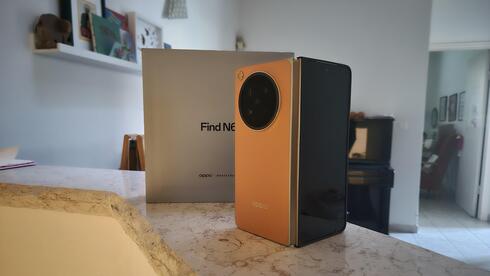
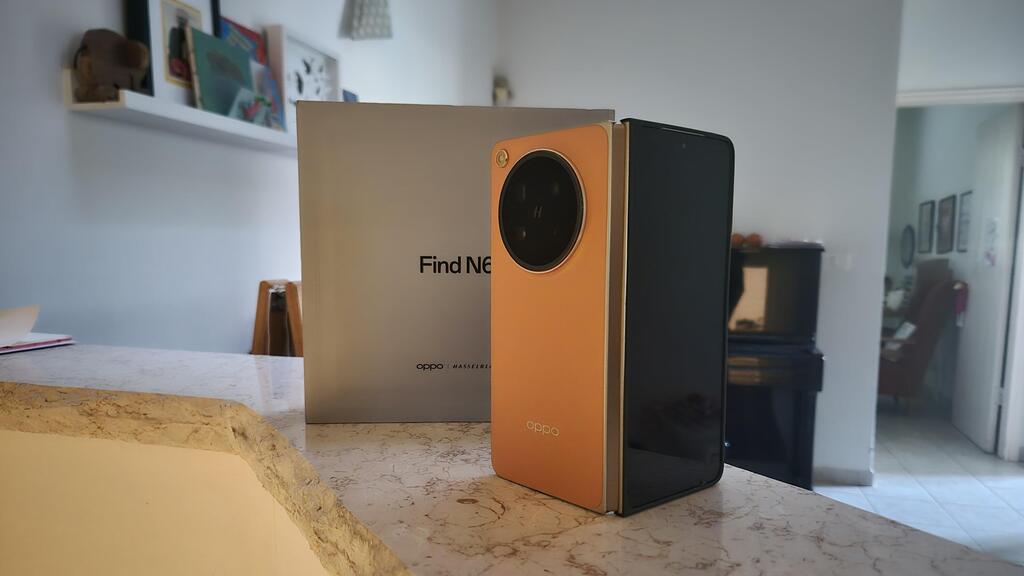
After testing the previous generation and Samsung’s Fold 7, one thing still stands out: when the Find N6 is folded, it feels remarkably similar in size and weight to a regular smartphone.
The differences between the new model and the previous generation are relatively minor, but some improvements are noticeable. The thickness remains just 4.2 mm when opened in tablet mode, an impressive achievement, and 8.9 mm when folded, roughly the same thickness as an iPhone 17 Pro Max, which of course does not fold.
The weight has dropped slightly, with the Find N6 weighing around 225 grams. That puts it above Samsung’s S26 Ultra but slightly below the iPhone 17 Pro Max. Although it is comparable to other flagship smartphones, it still feels somewhat heavy in everyday use.
There is no space inside the thin body for a built-in stylus, and OPPO chose not to abandon pen support. The solution is a protective case with a dedicated slot for the pen and a charging connection. On the one hand, a protective case is always useful. On the other, it comes at a cost: the case and pen are sold separately for more than NIS 600, increasing the device’s weight to around 275 grams — making it significantly heavier to carry.
Perhaps the most impressive improvement is something that is almost impossible to see: the crease where the two screens meet. It was already barely noticeable in the previous model, but OPPO has refined the mechanism further, making it almost invisible both visually and to the touch.
Unlike many foldable phones, whose external screens are narrower and less comfortable to use, the Find N6’s outer display maintains enough width to function as a normal smartphone screen when folded.
The screen sizes remain unchanged: 6.62 inches when folded and 8.12 inches when opened in tablet mode.
The right side of the device houses the power button, which also functions as a fingerprint reader, along with the volume buttons. Above them is an additional shortcut button similar to the Action Button on recent iPhones. It can be configured to open the camera, activate silent mode, or perform other actions.
However, the placement is less successful. On many devices, such a button is located separately from the volume controls to prevent accidental presses. On the previous Find N5, it was positioned on the left side when the device was open. OPPO kept it on the right side this time, likely to avoid confusion, but during testing it was easy to press it accidentally while adjusting the volume.
The device’s durability has also improved. The previous model offered water resistance, including immersion for up to 30 minutes at a depth of 1.5 meters and protection against strong water jets. The Find N6 adds dust resistance, although it still does not match the protection levels of some flagship smartphones.
Hardware: Powerful performance without overheating
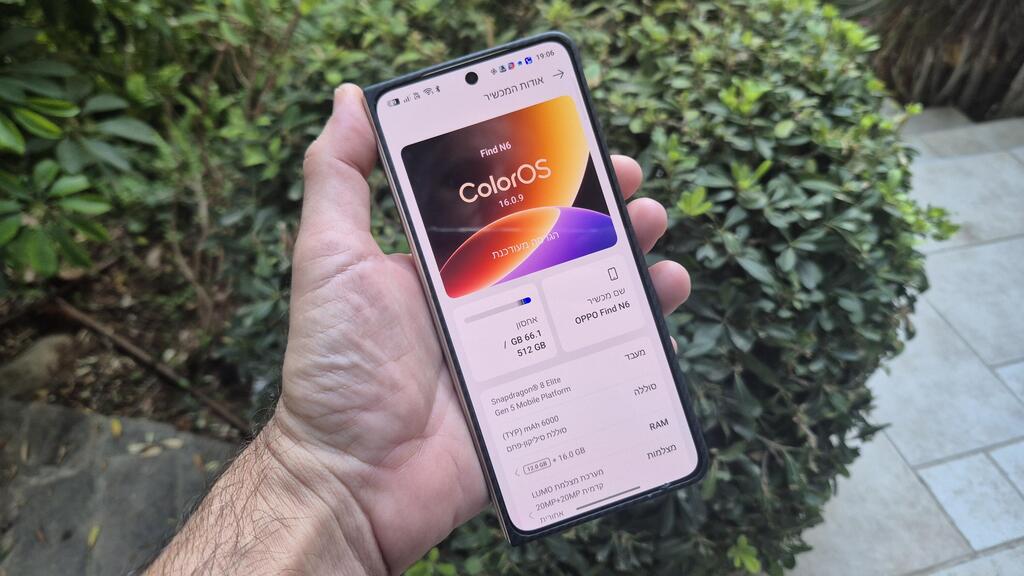
The Find N6 is powered by the fifth-generation Snapdragon 8 Elite processor, almost identical to the chip found in other flagship Android smartphones. The difference is that OPPO uses seven processing cores instead of eight, mainly due to thermal and space considerations in such a thin device.
The Israeli version comes with 16GB of RAM and 512GB of storage. The device also offers an option to add another 12GB of virtual memory by using storage capacity, which can be adjusted through settings.
In everyday use, the specifications translate into excellent performance. The Find N6 handles demanding tasks easily, runs games smoothly, and does not suffer from noticeable overheating. The missing processor core is unlikely to be noticeable unless users specifically compare technical specifications.
Both displays are excellent, with high brightness levels that allow comfortable outdoor use, although reflections remain visible in direct sunlight.
The speakers, however, are disappointing. While smartphone speakers are often a compromise, a premium foldable device at this price point should offer better audio quality.
The battery has been upgraded to 6,000mAh and easily lasted between a day and a half and two days of regular use. The device supports 80-watt fast charging, and the retail package is expected to include a compatible charger, although the review unit did not include one.
Using a 65-watt charger, the battery reached 50% from 15% in around 20 minutes, while a full charge took approximately one hour.
Software: A missed opportunity for a foldable screen
The Find N6 runs Android 16 with OPPO’s ColorOS 16 interface. The operating system remains close enough to standard Android that users of other Android devices should adapt quickly.
The interface includes an app drawer, gesture navigation, and the option to customize the home screen layout.
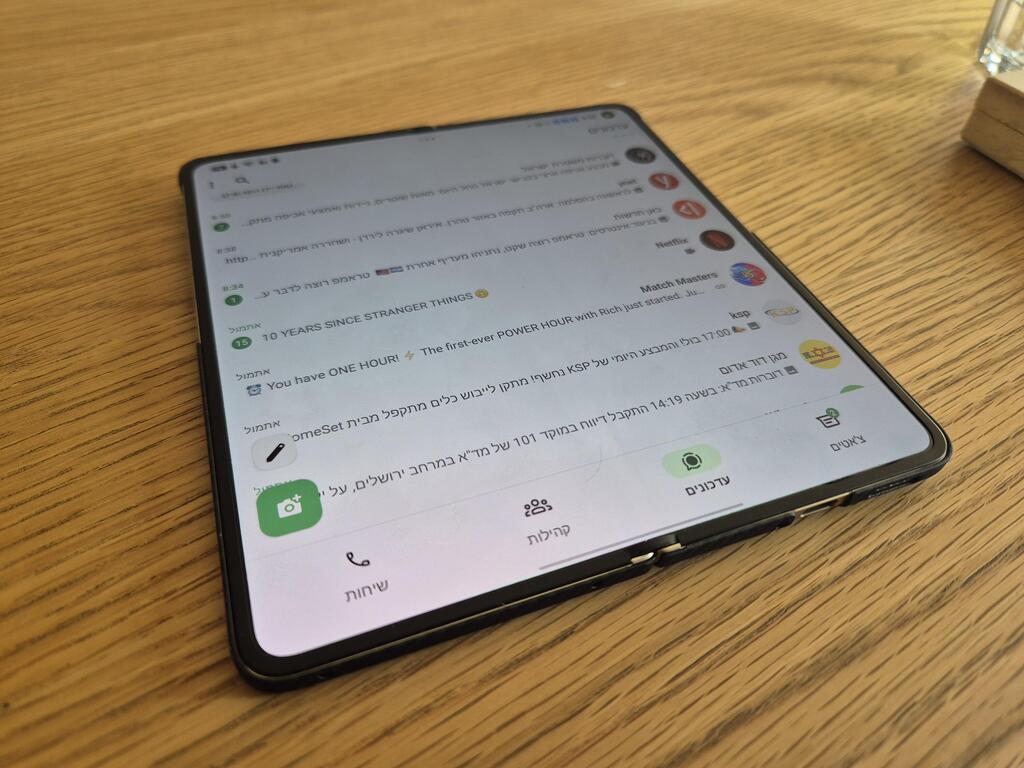
When the device is opened into tablet mode, users can split the screen between two applications, operate several apps simultaneously, and move between the internal and external displays.
The larger screen is genuinely useful. Reading emails, viewing photos, browsing the web, or working with attachments are all more comfortable on the expanded display.
But the biggest weakness of foldable phones remains: many apps still fail to take advantage of the additional space. Instead of offering tablet-style interfaces, many simply stretch across the larger screen. A more effective use of the display would resemble a computer interface, with applications adapting intelligently to the larger workspace.
For example, Outlook takes advantage of the format by displaying the message list alongside the selected email. But apps such as WhatsApp, Facebook, and Chrome simply expand to fill the screen.
OPPO also includes a feature inspired by Apple’s Dynamic Island, displaying information such as timers or media controls near the selfie camera.
Naturally, AI features are also included, including tools for improving and editing text while writing. However, Hebrew support remains limited. Audio transcription is available in English and other languages, along with AI-generated summaries, but Hebrew transcription is still unavailable.
Cameras: A successful partnership continues
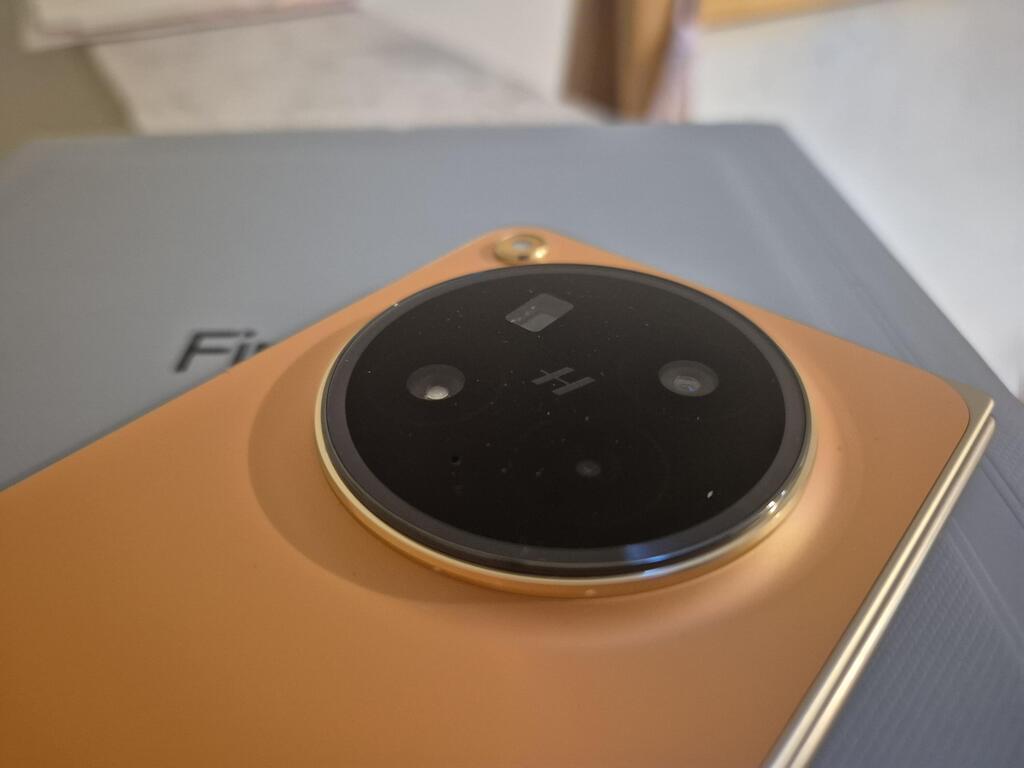
OPPO’s partnership with Swedish camera manufacturer Hasselblad continues, and the Find N6 delivers excellent photography performance.
The device features three rear cameras: a 200-megapixel main sensor, a 50-megapixel telephoto lens, and a 50-megapixel ultra-wide camera. There are also two selfie cameras, one on the external screen and another available when using the tablet display.
The cameras produce sharp, detailed images in both daylight and low-light conditions. Even without a flash, the system captures significant amounts of light, often producing brighter images than what the human eye sees.
The Hasselblad shooting mode, filters, and preset photography options provide additional flexibility. The external display also enables a useful feature: when the phone is open in tablet mode, the outer screen can show subjects their image before taking a photo.
The photo editing experience, however, does not fully exploit the foldable format. For example, when using AI editing tools to remove objects or adjust lighting, the interface still occupies the entire screen rather than showing the original image alongside the edited version.



