









The nuclear answer to AI's energy problem is running into the climate crisis
The world's biggest technology companies are looking to nuclear power for vast amounts of reliable, carbon-free electricity. But reactors take years to build, cost billions and can struggle when extreme heat drains the rivers they depend on.
The growing demand for electricity, combined with the unprecedented expansion of artificial intelligence and the data centers needed to power it, is driving the world toward a new nuclear renaissance. But climate change is exposing a fundamental weakness in that strategy: nuclear reactors need enormous amounts of water for cooling, and increasingly frequent droughts and heat waves are making that water harder to secure.
As Europe swelters and demand for air conditioning peaks, nuclear reactors at six sites have been forced to reduce output or shut down temporarily this month and last. France has been the main casualty, with nuclear generation falling by as much as 20% at the height of the disruption. A number of reactors reduced their output or shut down altogether, while drought has severely affected nuclear generation in Central and Eastern Europe by pushing the Danube to historically low levels. In Hungary, Unit 3 at the Paks nuclear power plant was shut down; in Romania, a unit at the Cernavoda plant was disconnected from the grid; and in Switzerland, the Beznau facility, the world's oldest operating nuclear power plant, was also affected.
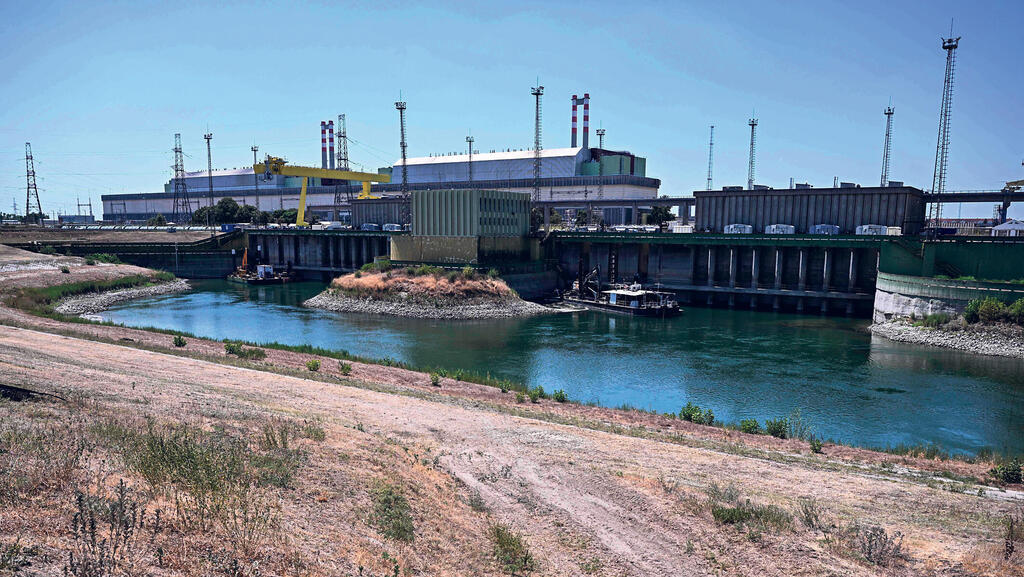
The problem is straightforward. Nuclear reactors require enormous quantities of water to remove the heat generated during the production of electricity. Much of that water is returned to rivers, but when river temperatures rise and water levels fall, regulators can restrict or prohibit the discharge of heated water to protect ecosystems. This can force reactors to reduce output precisely when electricity demand is at its highest.
Europe has already experienced similar disruptions during previous heat waves, notably in 2022. This summer, three heat waves have again forced nuclear plants to cut production. In late July and early August, the disruption reduced French generating capacity by about 1.7 gigawatts, contributing to higher electricity prices. Similar problems have been reported in Italy and the United Kingdom.
The irony is hard to miss. Nuclear power is being promoted as one of the world's most reliable sources of carbon-free electricity, yet a warming climate is making some reactors less reliable. And the problem is likely to become more acute as extreme heat and drought become more frequent.
Europe's dependence on nuclear power has nevertheless remained substantial. In 1990, nuclear energy accounted for roughly one-third of the continent's electricity generation; today, the figure is closer to 15%. That decline has left Europe more dependent on fossil fuels and electricity imports at times when renewable energy has not been deployed quickly enough to fill the gap.
Yet despite the obvious vulnerabilities, the nuclear revival is gathering momentum.
Italy is preparing legislation that could lift its longstanding ban on new nuclear plants. Belgium is reversing course after years of hesitation. Greece, which has traditionally been cautious about nuclear power because of concerns over seismic activity, has opened a public debate over advanced reactor designs. Sweden has reversed a decades-old policy of phasing out nuclear power, while the United Kingdom is seeking to streamline regulations and accelerate new nuclear projects.
The renewed enthusiasm is being driven in part by an entirely new customer for electricity: artificial intelligence.
In recent years, the explosive growth of AI and data centers has prompted technology companies and governments to look for enormous amounts of reliable, around-the-clock electricity. Nuclear power appears attractive because it can provide large quantities of electricity without the direct carbon emissions associated with fossil-fuel plants.
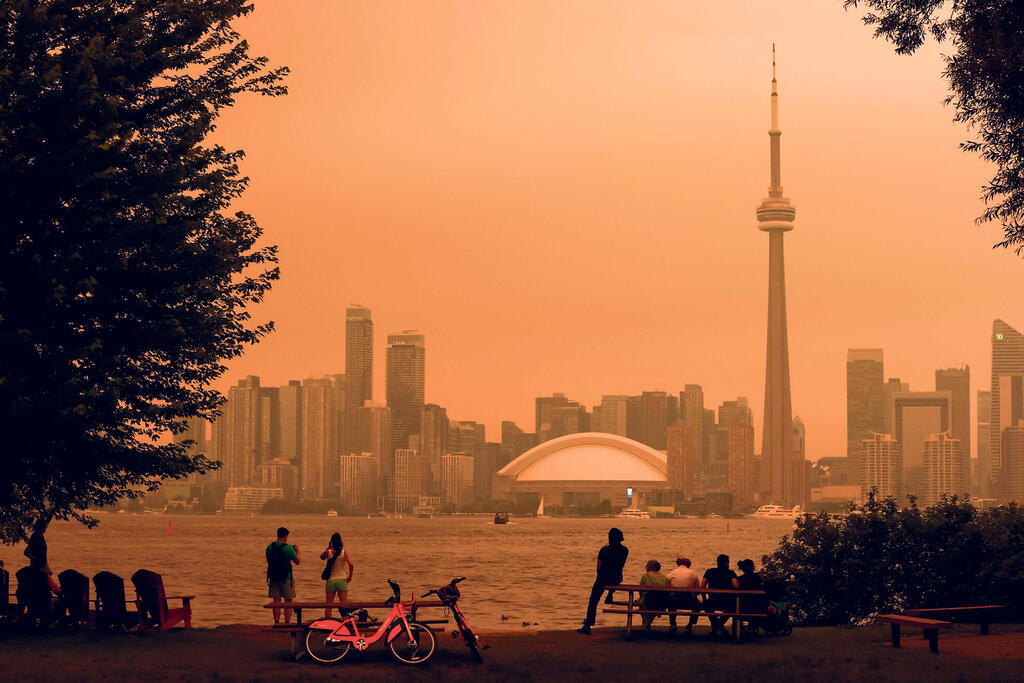
But the more the world relies on nuclear power to provide that electricity, the more it must confront the possibility that climate change itself could undermine its reliability.
Nuclear reactors are designed to provide stable, around-the-clock power, but their dependence on environmental conditions means that they are not completely insulated from the weather. The problem becomes particularly acute during summer heat waves, when electricity demand rises because of air conditioning while rivers are at their warmest and lowest levels.
This raises a difficult question for the AI era: Can nuclear power be the immediate answer to an energy shortage if building a new reactor takes more than a decade?
The construction of a nuclear power plant takes an average of roughly 14½ years from planning to operation. Finland's Olkiluoto 3 reactor, for example, was proposed in 2000 and eventually began commercial operation in 2023 after years of delays and cost overruns.
Wind and solar projects can generally be built much faster. Utility-scale renewable projects can come online within a few years, while rooftop solar installations can be completed in months. By the time a new nuclear plant is ready to generate electricity, multiple renewable projects may already have been built and connected to the grid.
Cost is another major obstacle.
The economics of new nuclear plants have historically compared poorly with those of wind and solar. Lazard's 2018 estimates put the levelized cost of electricity from new nuclear generation at about $155 per megawatt-hour, compared with $43 for onshore wind and $41 for utility-scale solar. More recent research has likewise found significant cost advantages for renewable energy.
These calculations also raise another question: what happens to the waste?
Nuclear reactors may produce electricity without emitting carbon dioxide during operation, but they generate radioactive waste that must be managed for extraordinarily long periods. In the United States, hundreds of millions of dollars are spent each year managing civilian nuclear waste, while a permanent national repository has remained politically elusive.
Spent nuclear fuel contains radioactive elements that remain hazardous for thousands of years. Much of the world's waste is therefore stored temporarily in cooling pools or dry casks at or near nuclear plants. Deep geological repositories are widely regarded as the preferred long-term solution, but political opposition, engineering challenges and public resistance have delayed their development in many countries. Finland's Onkalo repository is among the few projects to have progressed to the point of becoming an operational long-term solution.
Safety remains another unresolved issue. Modern reactors incorporate far more sophisticated safety systems than their predecessors, but the consequences of a major accident can still be enormous. Chernobyl and Fukushima demonstrated the potential for nuclear disasters to cause long-lasting environmental, economic and social damage, including the displacement of entire communities.
The nuclear industry argues that many of these problems can be addressed through a new generation of small modular reactors, or SMRs. The European Commission has joined the United States and Japan in promoting the technology, which is supposed to be easier to build, cheaper to finance and suitable for supplying power to data centers, hydrogen projects and local heating networks.
But there is a catch: most of these reactors do not yet exist at commercial scale.
Only a handful of SMR designs have reached initial operation, notably in China and Russia, and they differ from many of the technologies being pursued in the West. The Western SMR industry remains largely untested, with developers still struggling to demonstrate that the technology can deliver on its promises of lower costs and faster construction.
There are also questions about whether SMRs are necessarily as environmentally attractive as advertised. A 2022 study by Lindsey Krall and colleagues at Stanford University, published in PNAS, found that some proposed SMR designs could produce significantly more radioactive waste per unit of energy than conventional reactors. The researchers attributed this in part to the greater neutron leakage associated with smaller reactor cores.
The industry's economic promise is therefore still largely theoretical. SMRs depend on mass production to achieve the economies of scale that could make them competitive, but that manufacturing base has yet to be established.
The collapse of NuScale's project in Idaho illustrates the problem. The plan originally called for 12 modules producing about 720 megawatts, but the project was scaled back as costs rose. The projected price of electricity increased from roughly $58 per megawatt-hour to about $89, undermining the economics of the project and leading to its cancellation in November 2023.
The Idaho project's failure became a powerful symbol of the gap between the industry's promise of small, cheap and quickly deployable reactors and the reality of rising costs, delays and uncertain demand.
None of this means that nuclear power has no future.
In the long term, advanced reactors and SMRs could become an important part of the global electricity system, particularly as electricity demand from AI and data centers continues to rise. But the technology still has to prove that it can overcome its enormous construction costs, regulatory hurdles, waste problem and dependence on cooling water.
And that last problem may become increasingly important.
The nuclear renaissance is being driven partly by the need to find reliable electricity in a warming world. Yet the same warming that is increasing the need for reliable electricity is also making some nuclear plants harder to operate.
That does not necessarily make nuclear power obsolete. But it does make the idea of relying on it as a single answer to the world's energy problems increasingly difficult to defend.
For now, renewable energy remains the faster and cheaper technology to deploy at scale, while nuclear power remains a potentially important long-term source of stable, low-carbon electricity. The more realistic future is therefore likely to be a diversified energy system rather than a new nuclear age, one in which nuclear plays a role, but is not expected to solve the AI-era energy crisis on its own.



