










Smartphone review
Samsung’s Galaxy Fold 8 Ultra is a remarkable phone with one big problem
The company’s flagship foldable is thinner, faster and longer-lasting than ever, but Samsung’s smaller Fold 8 makes a surprisingly strong case for being the better buy.
Top line
The Galaxy Fold 8, the newest addition to Samsung’s foldable lineup, has attracted much of the attention since the new models were launched and is reportedly selling well. But it is only one of Samsung’s new foldables. The Korean manufacturer also offers the larger Galaxy Fold 8 Ultra, which sits at the top of the range.
The Galaxy Fold 8 Ultra is not a major departure from its predecessor. Externally, it looks almost identical to last year’s model. That is not necessarily a criticism: the previous generation represented a significant step forward, leaving Samsung with less room to make dramatic changes. The result is a device that retains the strengths of its predecessor while gaining more powerful specifications, a larger battery and software upgrades.
The bigger problem for the Ultra may come from within Samsung’s own lineup. The smaller Fold 8 has managed to steal much of the spotlight. It is lighter and more compact, has a wider external display, and its internal screen is not dramatically smaller than the Ultra’s. Then there is the price: the Fold 8 starts at about NIS 6,000 ($2,000), while the Fold 8 Ultra starts at about NIS 6,900 ($2,300).
The biggest difference between the two models is their cameras. If photography is not a priority, I think the smaller Fold 8 currently offers the more compelling package, largely because of its lower weight and more compact dimensions.
And Samsung may soon face another challenge. According to rumors and expectations, Apple is preparing its first foldable iPhone. If it arrives as expected, it will be interesting to see how Apple’s first attempt compares with a foldable category that Samsung has been developing for more than seven years.
Structure and design: There’s nothing new, and that’s not necessarily bad
There is almost nothing new about the Fold 8 Ultra’s external design, which makes it easy to call the phone boring. But describing it that way also overlooks just how difficult it is to build a device like this.
The most noticeable difference is actually how little has changed. The Fold 8 Ultra is the same size and weight as last year’s Fold 7, which did not carry the Ultra name.
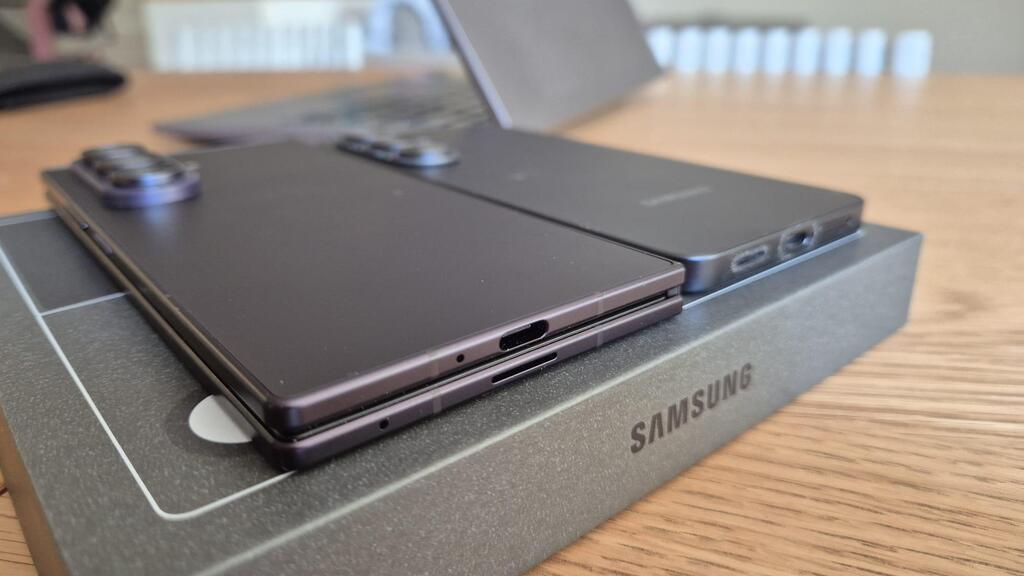
Last year, I noted that Samsung appeared to have created a problem for itself: there was so little space around the charging port that it was unclear how much further the company could go in reducing the phone’s thickness. Samsung has nevertheless managed to shave another fraction of a millimeter from the device.
When open, the Fold 8 Ultra is just 4.1 millimeters thick, compared with 4.2 millimeters for its predecessor. That was impressive last year and remains impressive now. When folded, it is 8.9 millimeters thick, just 0.1 millimeter thinner than the iPhone 17 Pro Max.
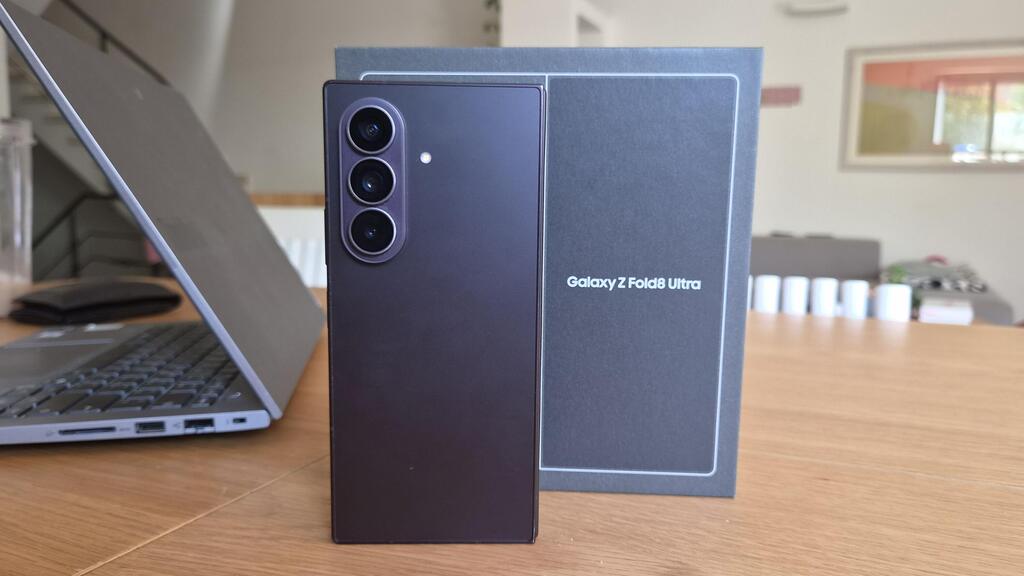
That comparison applies to the phone’s body. The camera lenses protrude considerably, somewhat undermining the visual impact of the engineering achievement.
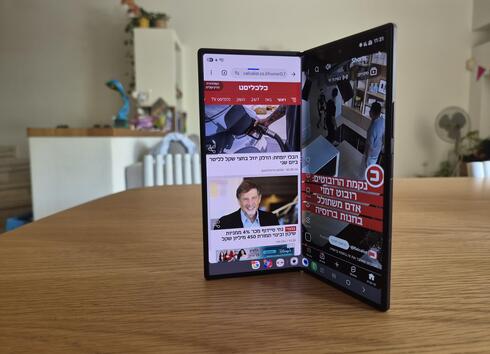
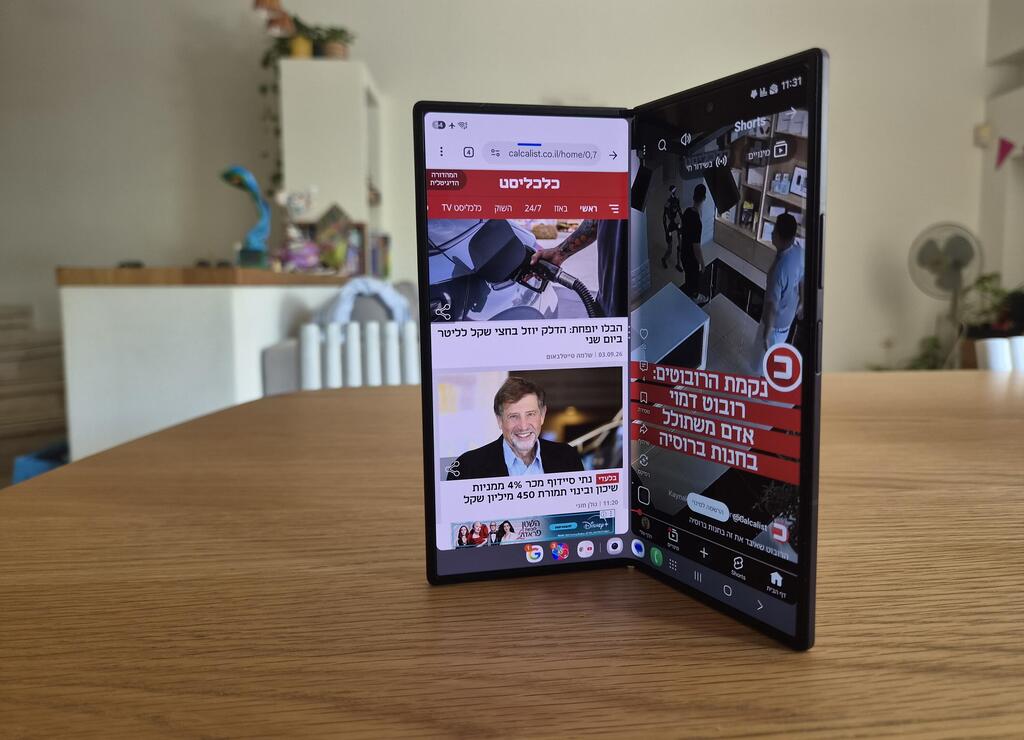
Beyond that, the basic dimensions remain unchanged. The external display is still 6.5 inches, with a narrower and taller aspect ratio than a conventional smartphone. The difference is noticeable and can take some getting used to, creating the impression that the display has been compressed.
The internal screen remains 8 inches, while the phone weighs 215 grams. On paper, that is relatively heavy for a smartphone, but in everyday use it feels surprisingly manageable. It can fit into a pocket without feeling dramatically different from a conventional phone. For comparison, it is about 18 grams lighter than the iPhone 17 Pro Max.
With Samsung’s latest foldables, I increasingly find that I have to remind myself that the screen folds. The crease is now almost imperceptible, both visually and during normal use. Whether playing games, watching videos or scrolling through social media and websites, it rarely gets in the way.
Samsung has also slightly upgraded the phone’s protection, moving to Gorilla Glass Victus Ceramic 3 from last year’s Gorilla Glass Victus Ceramic 2. But dust protection remains limited. The phone carries an IP48 rating, meaning it is protected against water immersion but offers no meaningful protection against fine dust. Samsung warns users about this limitation during initial setup.
So, is the lack of major design changes boring? Not really. A foldable phone that is relatively thin, weighs roughly as much as, or less than, some conventional flagship phones, can be comfortably used when folded, and opens into a large display without feeling fragile remains a considerable engineering achievement.
And that is before getting to the hardware.
Hardware: Fast, cool and with a bigger battery
The Fold 8 Ultra is Samsung’s top foldable, but its core hardware is familiar. It is powered by the fifth-generation Snapdragon 8 Elite processor, with either 12GB or 16GB of RAM depending on the configuration. Storage starts at 256GB and goes up to 1TB.
That is hardly revolutionary. It is broadly what one would expect from a current flagship smartphone.
But there is something to be said for hardware that simply works. The Fold 8 Ultra handles virtually any task quickly, including demanding games. Unlike the smaller Fold 8, which became somewhat warm during gaming and occasionally had problems when a game was running on the external display, the Ultra remained cool and had no trouble running games on the smaller screen.
The two displays are excellent. Both offer vivid colors and high brightness, making them easy to use outdoors. When the phone is opened into tablet mode, its combination of thinness, low weight and large display can create an almost paper-like feel.
The battery is one area where Samsung has made a meaningful upgrade. Capacity has increased from 4,400mAh to 5,000mAh, thanks to the move to a silicon-based battery. In my experience, that is enough for roughly a day and a half to two days of use, depending on how heavily the phone is used.
Charging has also become faster, increasing from 25W to 45W. As usual, Samsung does not include a charger in the box. With a compatible fast charger, 15 minutes of charging took the battery from 15% to 50%. A full charge takes about an hour.
Software: More room for Samsung’s AI features
The Fold 8 Ultra ships with Android 17 and Samsung’s One UI 9 interface. There are some changes, but the basic experience remains familiar. Anyone moving from another Samsung device, or from another Android phone, should have little trouble adapting.
Samsung’s familiar AI features are also present, including tools found on the Fold 8 and Galaxy S26 series. These include enhanced video stabilization and My FanCam, which allows users to focus on a particular subject in a video.
There are also tools for writing and proofreading text, transcribing recordings, and creating stickers, illustrations and images. Hebrew support remains partial.
The large internal display can also be used in ways that make sense specifically for a foldable. For example, Samsung allows users to display photos before and after editing side by side, a feature also available on the Fold 8.
Some apps, however, do not make equally good use of the additional screen real estate. WhatsApp, for example, opens across the entire display rather than adopting a layout similar to WhatsApp Web, with the conversation list on one side and the selected conversation on the other. Microsoft's Outlook does use such a layout.
Camera: The Ultra’s clearest advantage
The cameras are where the Fold 8 Ultra most clearly separates itself from Samsung’s other new foldables.
The Ultra has three rear cameras, compared with two on the Fold 8 and Fold 8 Flip. More importantly, the additional hardware brings capabilities that the other models lack.
The main camera uses a 200-megapixel sensor, joined by a 50-megapixel ultrawide camera and a 10-megapixel telephoto camera with 3x optical zoom.
The telephoto lens is a significant advantage. The other two models do not offer optical zoom and instead rely on digital zoom, which can reduce image quality.
The 200-megapixel main sensor is another differentiator. A higher megapixel count does not automatically produce better photographs, but in this case the sensor delivers a meaningful improvement.
Overall, the cameras perform very well, producing sharp images in both daylight and at night without requiring the flash. Night photographs can look particularly vivid and colorful, while daylight images sometimes appear slightly pale.
For anyone who considers photography a major part of the smartphone experience, the Ultra therefore has a clear advantage over Samsung’s smaller foldables. For everyone else, however, the question is whether those camera upgrades justify paying roughly NIS 900 ($300) more and carrying a larger, heavier device.



