










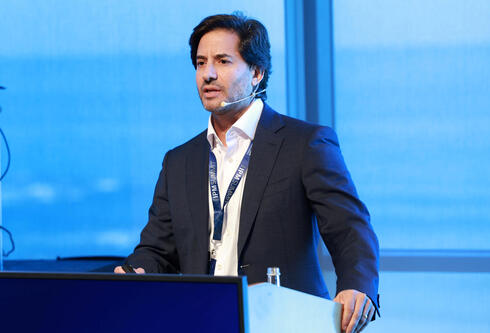
Israel emerges as a growing source of capital for global private markets, says Leader Private Capital CEO
Itay Elnatan tells IPM Summit 2026 that Israel's expanding institutional investment base and private wealth are creating new opportunities for international fund managers, while emphasizing the importance of manager selection, expertise and risk management.
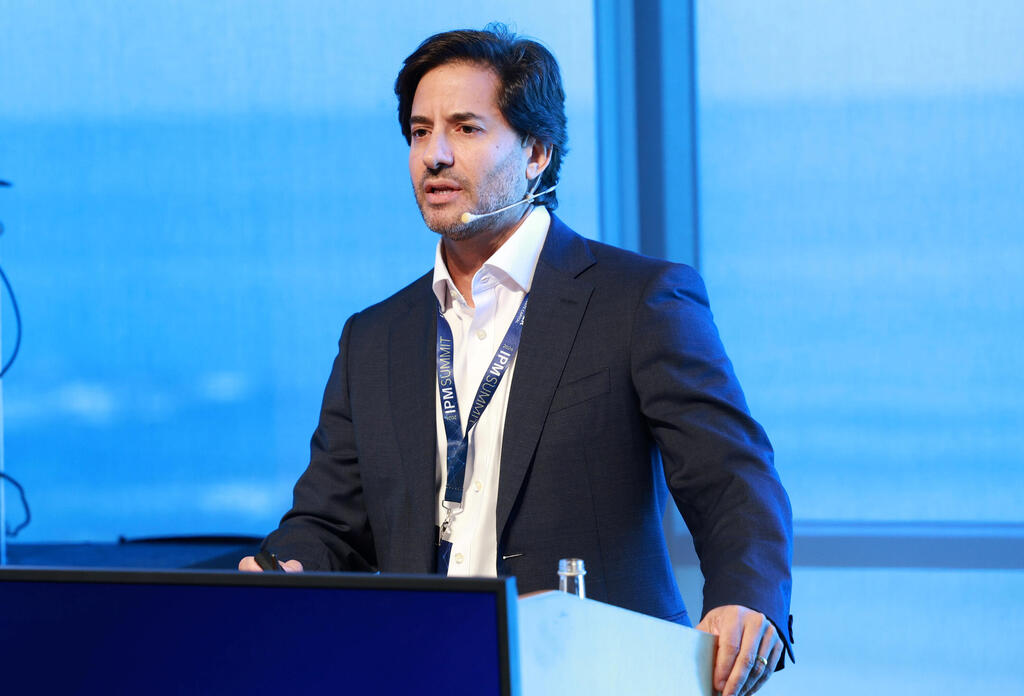
Israel is evolving from a global technology and innovation hub into a significant source of capital for international investment managers, according to Itay Elnatan, CEO and Managing Partner of Leader Private Capital, who addressed the IPM Summit 2026 in Tel Aviv.
Speaking at the conference, Elnatan said that over the past decade, the expansion of Israel's institutional investment sector, together with the growth of private wealth, had enabled Israeli investors to participate on an increasingly large scale in leading international investment funds.
He attributed this development to the country's economic fundamentals and the substantial growth in its financial assets. Israel's GDP per capita is expected to reach approximately $72,000 in 2026, placing it among the ten highest in the OECD. Economic growth is forecast at 5.6% this year and 7.5% in 2027, while Israel continues to lead OECD countries in research and development expenditure as a share of GDP.
Leader Private Capital, the firm headed by Elnatan, specializes in private markets and represents international fund managers to institutional investors, family offices and Israeli companies. The firm also establishes and manages dedicated investment funds and provides Private Investment Banking services, through which it has led some of Israel's largest private transactions and capital raises in recent years. Its Private Wealth business manages close to $1 billion for high-net-worth investors through Leader Private Funds Group, applying the same manager selection and due diligence processes used for institutional clients. The firm also founded and produces the IPM Summit, Israel's leading annual conference on private markets investing, which brings together hundreds of international investment managers, institutional investors and high-net-worth families.
According to Elnatan, the scale of financial assets held by the Israeli public has reached unprecedented levels. These assets now total NIS 7.6 trillion, 2.2 times their value in 2016. Since October 2023, they have grown at an annual rate of 14.6%, more than twice the pace recorded in the preceding years.
Institutional investors have been a major part of this expansion. They currently manage approximately NIS 3.4 trillion, compared with NIS 1.3 trillion a decade ago, while net contributions are expected to exceed NIS 140 billion in 2026.
The private wealth market is also expanding. Israel has approximately 195,000 dollar millionaires, following growth of 4.7% in 2025. Around 82% of private wealth is held in financial assets, the second-highest proportion worldwide. Elnatan said that high-net-worth investors are increasingly seeking access to international funds and investment strategies that were traditionally associated primarily with large institutional investors.
Despite the growth in available capital, however, Israeli institutional investors remain relatively underexposed to private markets compared with their international counterparts. Their average allocation to private markets stands at approximately 9%, compared with 19% in Europe and 28% in North America. Elnatan noted that these averages conceal considerable differences between individual institutions.
At the industry level, Israeli institutional investors hold approximately NIS 384 billion in cash, compared with around NIS 300 billion invested in private markets.
Elnatan attributed the gap to several factors, including the caution exercised by investors amid security and geopolitical uncertainty, as well as the strong performance of public markets and currency movements. During the 12 months ended June 2026, institutional assets grew by 16%, while private investments remained almost unchanged. Consequently, the share of private investments in institutional portfolios declined from 10.4% to 8.9%, reflecting what is known as the Denominator Effect.
Nevertheless, he pointed to signs of renewed activity. Unfunded commitments to private funds increased by 18% during the first half of 2026, reaching approximately NIS 98 billion. Around 80% of allocations are managed by foreign fund managers.
Private Equity remains the leading component of Israeli institutional investors' private investment portfolios, alongside real estate, private credit and infrastructure. Within these asset classes, Elnatan identified growing interest in secondary transactions, credit and value-add investment strategies.
He cautioned, however, against treating increased exposure to alternative investments as an objective in itself. Investing in illiquid assets involves risks, costs and long-term commitments, he said, and investors should not accept illiquidity unless the expected return adequately compensates them for it.
"This requires a professional, systematic and proven ability to handpick managers capable of generating excess returns over time," Elnatan said.
Data from Preqin, he noted, demonstrate the importance of manager selection. Depending on the investment strategy, the annual return gap between top-decile and bottom-decile managers can reach approximately 15 to 30 percentage points.
The differences are also evident over longer periods. Since 2007, the top-quartile Private Equity index has generated a cumulative return nearly three times that of the average Buyout fund. The average Buyout fund, meanwhile, delivered performance broadly comparable to the S&P 500.
These differences, according to Elnatan, highlight the need for institutional investors to move beyond a rigid Strategic Asset Allocation framework towards a Total Portfolio Approach. Under this model, investments are assessed not only according to their asset class or allocation, but also according to the quality of the manager and the investment's contribution to the portfolio as a whole.
"The key question is not only how much capital to allocate to private markets, but to whom to allocate it – and whether the expected return justifies the risk and the illiquidity," he said.
Elnatan also addressed the changing capabilities of Israeli institutional investors. He said that their level of sophistication had increased considerably in recent years, with private markets teams at leading institutions now larger than their public markets analyst teams.
The situation among private investors, however, is different. Drawing on Leader's experience working with high-net-worth individuals, he said that investors sometimes enter investment opportunities they do not have the expertise to assess independently. In some cases, they rely on recommendations or on the reputation of a financial institution that does not necessarily have the relevant expertise in the particular investment field.
According to Elnatan, this can expose investors to substantial losses and reinforces the need for caution and rigorous due diligence when selecting fund managers.
Through Leader Private Funds Group, the firm's Private Wealth business provides high-net-worth investors with access to private market opportunities, supported by the same manager selection and due diligence approach applied to its institutional clients. Elnatan said that this experience has highlighted the importance of ensuring that private investors understand the risks and characteristics of the investments they undertake, rather than relying solely on recommendations or institutional branding.
Concluding his remarks, Elnatan said that Israel's role in the global investment market was changing. The country is no longer solely a technology powerhouse attracting capital from abroad, but is also becoming an increasingly important source of capital for international investment managers.
As institutional assets and private wealth continue to expand, and access to global investment opportunities grows, he argued that expertise, selectivity and risk management will become increasingly important.
The next challenge for Israel's investment market, Elnatan concluded, will not simply be the amount of capital allocated to private markets, but the ability of investors to identify the right managers and strategies and generate superior returns over the long term.



