










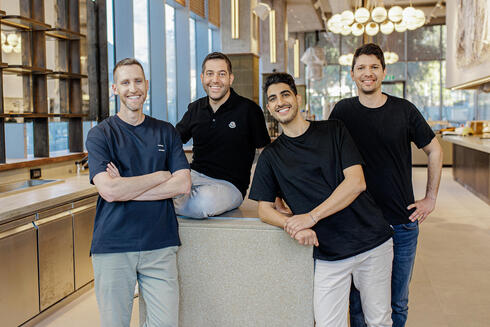
Wiz founders eye McDonald’s Israel franchise at just $160 million
The four entrepreneurs are reportedly negotiating a price far below the NIS 1.5 billion to NIS 2 billion associated with the previous franchise deal. McDonald’s is said to be prioritizing a long-term private operator over the highest offer.
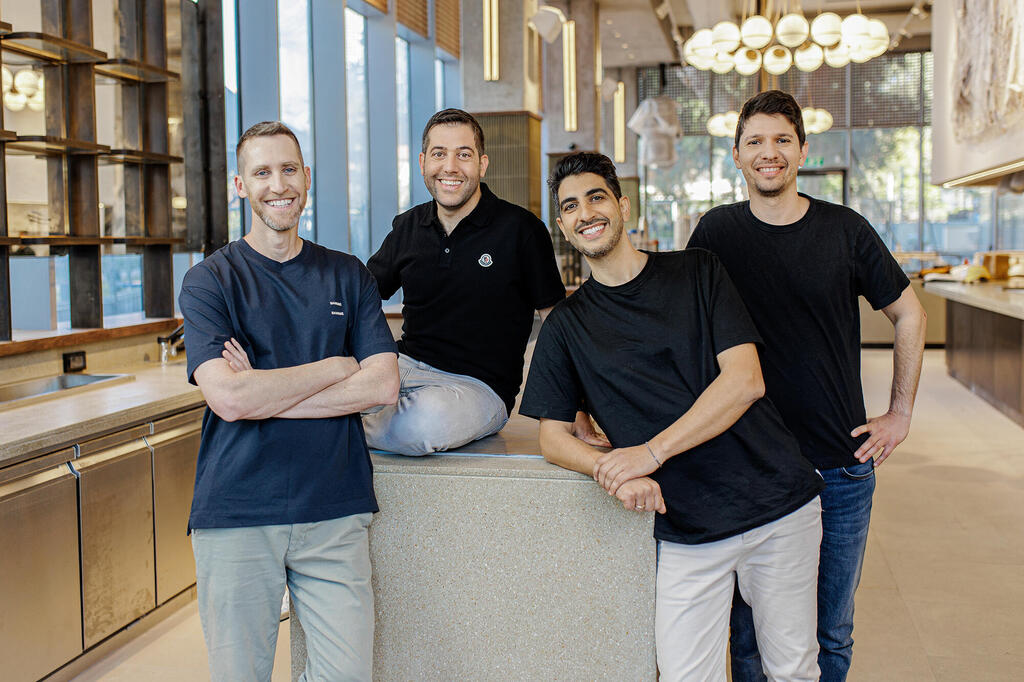
The four founders of Wiz, led by Assaf Rappaport, are moving closer to securing the franchise to operate McDonald’s in Israel, as Calcalist reported on Thursday. Zehavit Cohen and the Apax Partners fund (AMI) could join them as partners, although that possibility is expected to be considered only after a franchise agreement is signed, if the deal goes ahead. Negotiations with McDonald’s are at an advanced stage, and the Wiz founders are believed to be the only party currently in talks. However, a deal is not guaranteed, and discussions could continue for several more weeks.
As previously reported by Calcalist, the four founders are nearing the end of a tender process conducted by McDonald’s Corporation to select a new franchisee in Israel. The process follows the company’s 2024 decision to part ways with its previous franchisee, Omri Padan, after Israeli branches offered benefits to soldiers and donated to the IDF. The moves prompted backlash in Arab countries, boycott threats and a slowdown in McDonald’s sales. The global corporation has acknowledged that the war in Gaza has negatively affected its sales.
Estimates suggest Padan received between NIS 1.5 billion and NIS 2 billion ($482 million to $643 million) for the franchise. He acquired the franchise in 1992, and the chain opened its first Israeli branch in 1993. After taking over the local operations, McDonald’s Corporation assumed direct management of the Israeli chain and stopped donations to the IDF.
About a year and a half ago, McDonald’s began searching for a new franchisee in Israel, with the process managed by investment bank Goldman Sachs. Several parties expressed interest, including Ori Max, the controlling shareholder and CEO of Max Stock; Apax, associated with Zehavit Cohen; the Mayer Group, owned by the Shachar and Kaz families; insurers Phoenix and Clal; and George Horesh’s Union Group, the importer of Toyota and a co-owner of Super-Pharm. Union Group is also seeking to acquire CAL, the Israeli credit card company. The owners of the Café Café chain and Canada Israel, the real estate company controlled by Asaf Tuchmayer and Barak Rosen, also expressed interest.
McDonald’s, however, imposed several conditions on which it was unwilling to compromise. It did not want to award the franchise to a publicly traded company, fearing that this could lead to the disclosure, even indirectly, of financial information about McDonald’s Israel. It also sought to avoid candidates that could face regulatory hurdles, such as Max Stock, as well as those who had made public statements on political issues in Israel.
According to sources familiar with the process, these considerations led to the exclusion of the Mayer Group and Union Group. Goldman Sachs did not formally notify interested parties that they had been disqualified. Instead, it stopped communicating with groups whose representatives had met with the bank to express interest in the deal. McDonald’s preference was for a private franchisee capable of holding the business over the long term.
People close to the deal believe Rappaport could bring a fresh, technology-oriented approach to McDonald’s Israel, applying a digital and marketing-focused mindset to its management. His success in the technology sector could prove useful in the new venture, although the food and retail industries present a different set of challenges.
One of the deal’s main attractions is its price. Estimates suggest Rappaport is negotiating a purchase price of around NIS 500 million ($161 million), significantly below the amount reportedly paid to Padan. This suggests McDonald’s Corporation may now place greater emphasis on the identity of the franchisee and the stability of the business than on maximizing the transaction value.
In addition to the purchase price, the franchisee will be required to pay annual royalties to McDonald’s, calculated as a percentage of revenue. Estimates suggest the investment could be recouped within five to seven years. The prospect of such returns is also attracting industry players interested in joining Rappaport as partners.
It remains unclear exactly what has drawn Rappaport to the venture. He is a fan of hamburgers, frequently dining at McDonald’s and the American chain Five Guys, and hamburgers are even served at Wiz events. But there is a considerable difference between enjoying burgers and managing a nationwide fast-food operation.
Rappaport and his three partners achieved a $32 billion exit when Google agreed to acquire Wiz, from which the founders reportedly received $12 billion in total. Yet extraordinary success in technology does not guarantee success in food and retail, where operators must control costs, manage thousands of employees and maintain consistent service across a large network of branches.
That is one reason the four founders are likely to bring in a partner with experience in food and retail if they secure the franchise. Apax, associated with Zehavit Cohen, is one possibility, although other potential partners are also being considered.
Rappaport reportedly believes he can turn around a business that has fallen on difficult times and sees the venture as a business challenge. To succeed, however, he will need to address not only the chain’s commercial potential but also its accumulated operational problems. Negotiations on behalf of the four Wiz founders are being led by Yotav Costica, who manages their family office.
Since McDonald’s Corporation took over the Israeli chain, working through a local management team that operated alongside Padan and included figures such as Shaul Segev, the business has reportedly struggled. Branches are said to be less busy than they once were, while customers have criticized service standards.
“Assaf wants the deal, but he wouldn’t be upset if the negotiations didn’t come to fruition,” sources close to Rappaport said.
The four founders recently acquired Channel 13, a move that already demands a significant commitment of their time and attention. Taking over McDonald’s Israel would require another substantial investment of time and resources, exposing them to a different kind of business challenge: daily customer complaints, service problems and the operational demands of running a nationwide retail chain.



