













Top 50 Most Promising Startups
What it takes to build a company like Wiz
Six insights from Wiz co-founder and CTO Ami Luttwak on hiring, speed, branding, and scaling globally.
A little over six years ago, we left Microsoft and started a new company with no name and no clear idea, only people we trusted. It wasn’t a trivial decision. At the same time, the coronavirus pandemic broke out, and many of us received calls from worried family members asking whether it was really the right moment to leave everything behind and start a startup. In retrospect, there probably couldn’t have been better timing for a company whose growth would be driven by the mass transition to cloud services.
Wiz’s growth was extremely rapid, even relative to our expectations. There were many challenges along the way, but also many moments that surprised and excited us. In recent months, after we crossed the billion-dollar mark in revenue and began a new chapter with Google, we had the opportunity to pause, look back, and understand what really worked. Let me distill this journey into six key insights:
1. Everything starts and ends with the team
This may sound like a cliché, but in our case it is entirely true. Our team is the primary reason for Wiz’s success. We, the founders, have been working together for more than two decades. We share deep trust, strong friendships, and a clear division of responsibilities, which allows us to operate effectively even in the most complex situations.
But Wiz’s strength does not come only from the founders. The company was built by dozens of people from day one. Some of the team met in the army, others came from Adallom - our first startup, which we sold to Microsoft - some from Microsoft, and others joined along the way. We quickly realized that what truly sets a company apart is not just who founded it, but who builds it every day. The key to hiring is finding people who genuinely fit the company’s character and never compromising. We have always looked for a combination of professional excellence and a deep desire to be part of something meaningful.
2. Listen to customers at all costs
In the beginning, we were building something entirely different. The company was called Beyond Networks, and the technological direction was completely different. We spoke with dozens of security managers and presented our idea, but the response was lukewarm.
At this stage, it is very easy to fall in love with your idea and push forward despite warning signs. Fortunately, thanks to our team, who insisted and challenged us, we stopped to truly listen. We asked ourselves hard questions and realized that customers were pointing us toward a completely different market: cloud security.
Choosing cloud security was not obvious. Even then, it was a crowded market with strong competitors who had started years before us. But once we changed direction, the feedback shifted immediately. Since then, this principle has guided us: customers help define what we should build. In many cases, they are the most important, if not the only, voice that should shape the company’s path.
3. A culture that values quick fixes
Speed is a core principle that guides every process and decision we make. It starts with the product, Wiz delivers value to customers within minutes, but it also defines how we respond to change, fix problems, and make decisions.
Speed comes at a cost. When you move fast, things break. That’s inevitable. At Wiz, we’ve built a culture where mistakes are acceptable, as long as they are fixed quickly. Just as in our early days with Beyond Networks, when we pivoted entirely, we believe there is no shame in changing direction or making mistakes, as long as you recognize them early and correct them.
The biggest advantage of speed is clarity. When everyone understands the value Wiz creates, there is less need for bureaucracy or prolonged debate. Decisions are made quickly, alignment is high, and execution becomes far more effective.
This approach has proven critical during major market shifts. Even during the artificial intelligence revolution, which has reshaped the industry, we did not need to reinvent ourselves. We adapted quickly and, within months, were securing companies building the most advanced AI models in the world.
4. Language and brand create differentiation
After about two years, we had a strong product and clear product-market fit, but our marketing wasn’t keeping pace. Many organizations loved our technology but told us they had never heard of us.
That was a clear signal: we needed to stand out. In cybersecurity, most brands look the same, dark colors, heavy technical language, and clichéd imagery. We chose the opposite approach: a lighter, more colorful, and more intuitive brand that reflects the simplicity of the user experience.
Within months, this became a key differentiator. We became instantly recognizable and were able to cut through the noise of a crowded market. That’s when we understood that branding is not an accessory, it’s a core component of success.
5. There is a lot to learn from big companies
When we sold Adallom to Microsoft, we didn’t expect to stay as long as we did. In hindsight, our time at Microsoft was one of the most valuable phases in building Wiz.
Working at that scale exposed us to complex systems, global customers, and massive operational environments. We learned how large organizations function from the inside and what it truly takes to run a global company. The experience gave us perspective we could not have gained elsewhere.
6. Enjoy the journey
Wiz’s success can be explained in many ways, timing, decisions, people, and a fair amount of luck. But the journey itself has been intense.
That’s why we made a conscious effort to enjoy it. We invested in shared experiences, meaningful events, and moments that build connection and pride.
Over the years, some have criticized what they saw as excess, large celebrations, company trips, and global events. We heard those criticisms, but for us, these were essential elements of our culture. When a team feels connected, motivated, and proud of what they are building, it enables them to go further.
Wiz is now entering a new chapter, but the principles that brought us here remain unchanged. We will continue to listen, move fast, hire exceptional people, and most importantly, enjoy the journey.
Wiz was born out of the Israeli ecosystem, and many of the principles that guide us were shaped by years of experience within it. We are already seeing the first wave of startups founded by Wiz alumni, and we are optimistic that the local ecosystem will continue to grow and produce many more success stories.
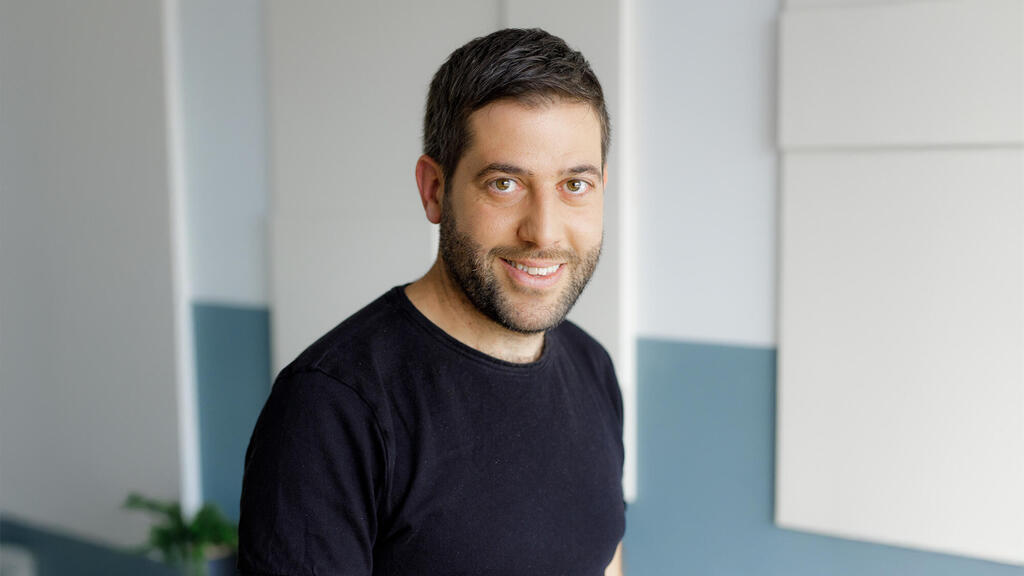
Ami Luttwak is CTO & co-founder of Wiz.



