










“An excellent thing”: Why some Finance Ministry officials welcome the end of U.S. aid
Critics say American assistance has distorted IDF procurement for years. But even those who favor ending the arrangement warn that an abrupt withdrawal will be difficult to manage.
U.S. President Donald Trump announced Tuesday that American security assistance to Israel, worth approximately $4 billion annually, will end in less than two months, at the close of 2026. In an interview with Fox News, Trump said he and Prime Minister Benjamin Netanyahu had reached an agreement to end the assistance several months ago, at Netanyahu’s initiative. “They don’t need it,” Trump said, adding that the United States would help Israel if the need arose.
The timing is significant. The announcement came on the morning of the U.S. midterm elections, against a backdrop of declining support for military aid to Israel in both major parties. In July, 104 members of the House of Representatives voted for a proposal to immediately cut $3.3 billion in aid. The measure was defeated, but a similar proposal had received the support of just 37 Democrats roughly two years earlier. The shift highlights the political risk facing the assistance package. If Trump suffers an electoral setback and Democrats, including members of the party’s increasingly critical wing on Israel, gain control of both chambers of Congress, further cuts could become a serious possibility. Against that backdrop, reaching an agreement with Netanyahu may be preferable to leaving the issue exposed to a future political confrontation.
The announcement reportedly caught some officials at the Ministry of Finance by surprise. The current Memorandum of Understanding (MOU), signed in 2016, provides for $38 billion in American assistance over ten years, or approximately $3.8 billion annually. The package comprises $3.3 billion for military procurement and $500 million for missile defense. It is not due to expire until 2028. Trump did not specify which funds he was referring to, leaving open whether he meant an early termination of the existing agreement or a decision not to renew it when it expires.
Until recently, Netanyahu had spoken of a gradual reduction in American assistance. In January, he told The Economist that his goal was to bring aid to zero within a decade. By October, however, his tone had changed. In an interview with Channel 10’s economics program, four days before the Knesset elections, he said that anyone expecting Israel to continue receiving tens of billions of dollars for its defense budget should “get ready and get used to it: it’s not going to happen,” because America had changed. In effect, Netanyahu had already signaled the end of the current arrangement ten days before Trump’s announcement.
At the Ministry of Finance, at least among some senior officials, the prospect is not necessarily viewed as a disaster. “I listened carefully to the Prime Minister’s remarks. What he said regarding the aid reflects reality, even if some prefer not to acknowledge it,” a senior Finance Ministry official said at the time. He stressed that the expected end of the assistance had little to do with the identity or political affiliation of Israel’s prime minister and much more to do with the changing political climate in the United States.
In fact, he described the end of the aid as “an excellent thing,” arguing that the arrangement had distorted IDF procurement decisions for years. “Things were purchased simply because it was possible to do so, not because there was an actual need.” For the sake of the IDF and the State of Israel, he said, future procurement decisions must be the “right” ones. “From an economic standpoint, we can handle it,” he added, urging the government to “ignore the whining from the defense establishment, an apparatus built over the years on ‘free’ American money.”
A former senior Finance Ministry official reached a similar conclusion, calling the development “the best thing that could have happened to us.” Asked what Israel stood to gain, he answered unequivocally: “Independence. For all these years, this has been nothing short of a millstone around our necks. Do you have any idea how many things we are obligated to purchase from them as a condition of this aid?” He added with a half-smile: “Most importantly, it cuts the Ministry of Defense’s delegation in New York in half,” a dig at what Finance Ministry officials have long described as wasteful spending by the defense establishment.
Another senior Finance Ministry official offered a more measured assessment. “Ending the aid at the conclusion of this agreement is, above all, a matter of principle, a question of independence. It would have been reasonable to extend the agreement, but it is equally reasonable to bring it to an end.” The concern, he said, was the apparent speed of the change. “The fact that this announcement came as a surprise, and appears to have an immediate impact starting as early as next year, is concerning. It is much harder to prepare on short notice.”
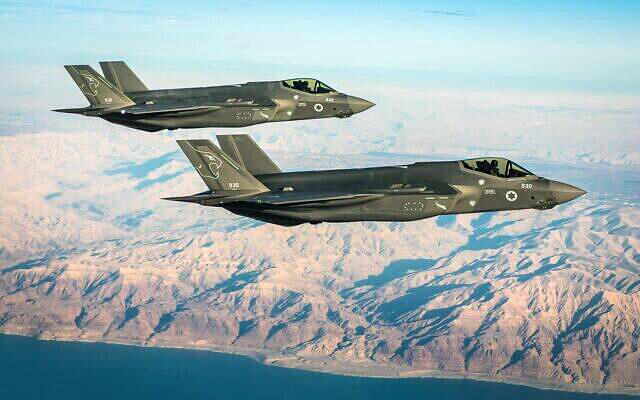
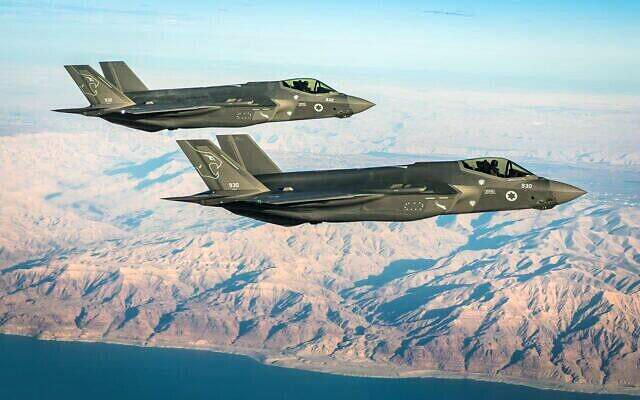
The American assistance was never a “free gift.” Under the MOU, nearly all the money must be spent on American-made weapons, while the option to convert part of the assistance into shekels for purchases from Israel’s domestic defense industry has been gradually phased out. The agreement therefore shaped not only the scale of the IDF’s procurement, but also what it bought and from whom.
Moreover, the $3.8 billion annual allocation represents only the fixed component of American support. Trump himself said the United States would remain ready to assist its key Middle Eastern ally when necessary. The scale of that additional support is illustrated by data from the Costs of War project at Brown University’s Watson Institute. Between October 2023 and September 2025, the United States provided Israel with at least $21.7 billion in military assistance, a figure that includes both routine aid and special packages authorized by the Biden and Trump administrations during the war.
That support should also be viewed against the cost of the American campaign against Iran, Israel’s principal adversary. According to a Pentagon estimate from late October, the campaign has cost American taxpayers more than $47 billion. Taken together, the figures illustrate how wartime support and military operations can dwarf the standard annual assistance package.
From a macroeconomic perspective, the argument that Israel can absorb the loss of the regular aid is plausible. The annual $3.8 billion amounts to less than 1% of Israel’s GDP. Replacing it should be manageable over time, provided the IDF makes its procurement and operations more efficient.
The immediate challenge, however, is the timing. If the assistance ends as early as 2027, the shortfall will hit a defense budget that has yet to be approved, under a government that has yet to be formed, after three years of heavy war-related spending. Israel is likely to continue buying aircraft and munitions from the United States to preserve its technological edge, but it may soon have to pay for them entirely from its own resources.
The question is whether the fiscal discipline advocated by senior Finance Ministry officials will accompany the end of American aid, or whether the defense establishment will seek to have the shortfall covered by the state budget, at the expense of health, education and infrastructure, as it has often done in the past.



