










Israel spent NIS 5 million on failed chemical experiment to fight algae bloom
The Water Authority funded a sea treatment after an algal bloom forced five of the country’s six desalination plants to cut production. The experiment produced inconclusive findings, while concerns over the environmental impact led to a fishing ban pending further assessment.
The Israel Water Authority paid NIS 5 million for a controversial experiment that involved dispersing chemicals in the open sea in an attempt to eliminate an algal bloom that had forced desalination plants to scale back operations. The payment is disclosed in the authority’s report on contractual engagements for the third quarter of 2026, published on the government’s website.
The Water Authority did not inform the public about the experiment in advance. Following the treatment, the Ministry of Health was forced to ban fishing in the area pending a comprehensive assessment of the potential impact of the chemicals on local fish populations.
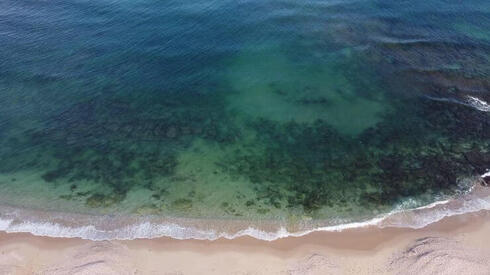
For a month beginning in August, five of Israel’s six desalination plants, which supply approximately 80% of the country’s water, operated at reduced capacity because of abnormally high seawater turbidity caused by a microalgal bloom. The disruption came at a particularly difficult time for Israel’s water supply, with natural sources, including the Sea of Galilee, the Coastal Aquifer and groundwater wells, either depleted by prolonged drought or limited and heavily polluted.
1 View gallery
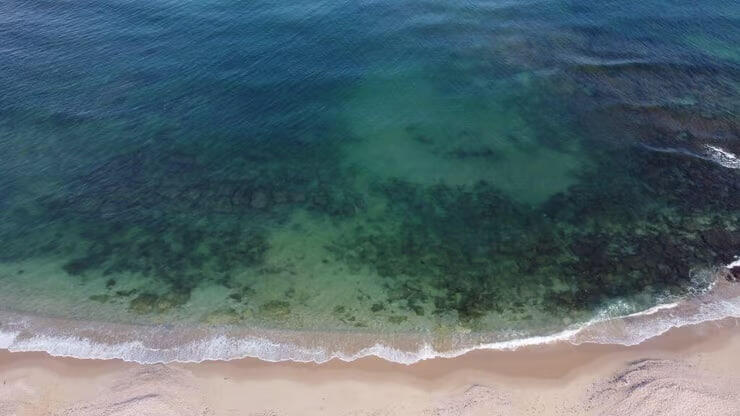
Algae near the desalination plant in Ashkelon
(Israel Oceanographic and Limnological Research)
As the crisis threatened to become both prolonged and severe, the Water Authority decided to finance the purchase of expensive replacement membranes for privately owned desalination plants, allowing them to continue operating at partial capacity. Authorities also opted to test a more aggressive intervention, dispersing chemicals in areas with high concentrations of algae in an attempt to eliminate the bloom. The experiment ultimately failed to produce conclusive results and triggered public criticism. BlueGreen, the company that carried it out, received NIS 5 million from the Water Authority.
Under a permit issued by the Ministry of Environmental Protection, the company introduced 40 tons of copper sulfate and 30 tons of aluminum sulfate into the water.
The full environmental impact of the treatment remains unclear. Dr. Zvi Steiner of the Hebrew University’s Institute of Earth Sciences has warned that adding copper could disrupt the marine ecosystem. Copper is toxic to zooplankton, which consume algae and serve as a primary food source for fish.
Copper also does not readily break down in water. Instead, it can settle on the seabed alongside organic matter and subsequently be released back into the water, potentially repeating the cycle hundreds of times.
The intervention intended as a quick solution could therefore have consequences extending well beyond the initial bloom. According to the concerns raised, copper accumulation could contribute to continuing ecological damage, while the emergence of copper-resistant algae could undermine future efforts to control blooms. The treatment’s actual long-term effects have yet to be established.
Israeli authorities described the algal bloom as an unexpected event for which they had not prepared. Yet such blooms are an established risk for desalination facilities worldwide. Climate change and rising seawater temperatures have contributed to growing concerns about their frequency and severity, while past incidents have demonstrated how severely they can disrupt water production. In 2009, algal blooms forced several facilities in the Persian Gulf and Oman to shut down for approximately nine months. The State Comptroller had also previously warned of the risk.
The Water Authority stated: "In the context of the algal event, which had the potential to escalate into a water supply crisis, it was proposed..."
The proposal was examined by professional teams from the Water Authority, the Israel Oceanographic and Limnological Research Institute, the Ministry of Health and the Ministry of Environmental Protection. Given the scale of the challenge, the authorities decided to proceed with a pilot project costing approximately NIS 5 million.
"Following its execution, it was decided to conduct a more in-depth analysis of the findings, which were not conclusive, and consequently, the activity was not resumed."



