










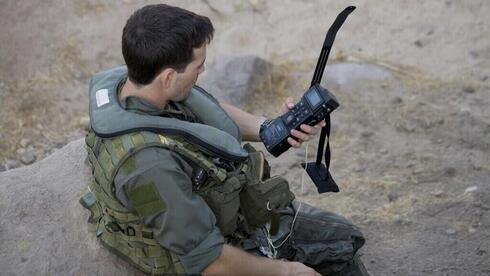
Israel searches for technology that could find soldiers and pilots who cannot call for help
The Defense Ministry is seeking breakthrough systems capable of remotely detecting human biological signals, aiming to create a new generation of battlefield rescue capabilities beyond traditional emergency beacons.
Israel’s defense establishment is searching for technologies that could fundamentally change how soldiers, pilots and civilians are located in life-threatening situations. The Directorate of Defense Research and Development (DDR&D) within Israel’s Ministry of Defense has issued a call for proposals seeking breakthrough technologies for the contactless detection, identification and monitoring of human physiological signals in complex operational environments. These systems are meant to be capable of detecting human physiological signals remotely, even when a person is unable to communicate, activate a rescue device, or reveal their location.
The goal is not medical diagnosis, but battlefield capability. Researchers are being asked to develop systems that could detect signs of life, including brain activity, cardiovascular signals, respiration and muscle activity, from distances ranging from meters to multiple kilometers.
Such technology could provide a new generation of search-and-rescue capabilities: locating wounded soldiers trapped behind enemy lines, identifying survivors after a disaster, or finding pilots who survive aircraft crashes but are unable to activate emergency equipment.
The effort reflects a growing challenge facing militaries around the world. Modern warfare is becoming faster, more autonomous and increasingly dependent on artificial intelligence, but one of the most basic problems remains unsolved: finding a person who cannot send a signal.
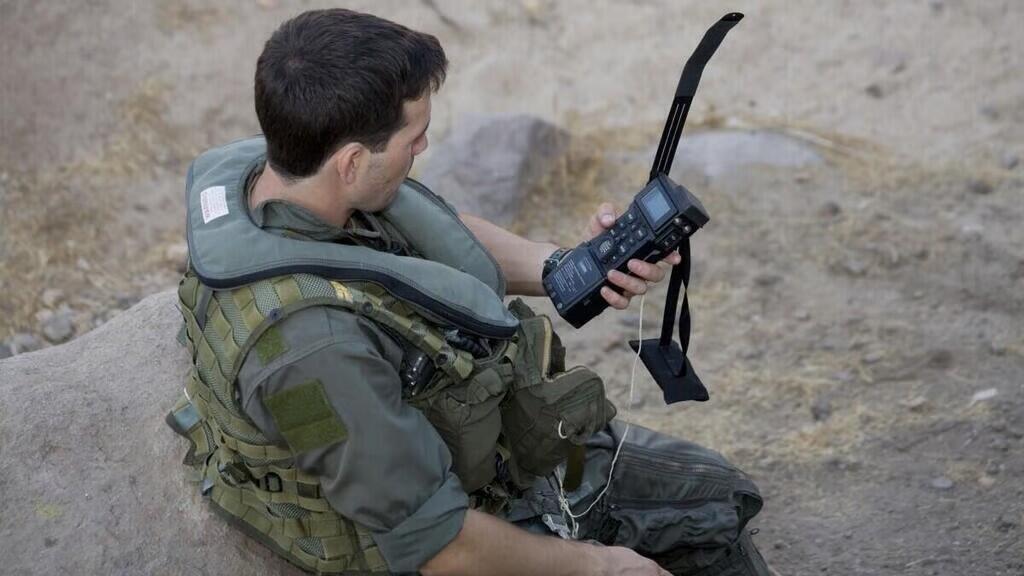
Today, downed pilots and isolated soldiers rely on dedicated survival equipment designed to help rescue teams locate them while minimizing the risk of detection by enemy forces.
One example is the Combat Survivor Evader Locator (CSEL), manufactured by Boeing. The rugged 800-gram device is designed to survive extreme battlefield conditions, including submersion to depths of 10 meters, and can operate for up to 21 days on standby.
Using rapid frequency hopping and ultra-short burst transmissions, the device sends encrypted updates, coordinates and status alerts, such as whether a survivor is injured or ready for extraction, to command centers around the world while attempting to avoid enemy electronic warfare systems.
But even advanced systems such as CSEL have a fundamental limitation as they require the survivor to carry the device and, in many cases, activate or interact with it.
Defense planners are now looking beyond wearable equipment toward passive sensing systems that could detect a person’s presence without requiring any action from the individual.
The idea gained attention after reports following the crash of a U.S. F-15E Strike Eagle over southwestern Iran in April suggested that rescue teams may have relied on more than traditional survival equipment to locate the aircraft’s navigator, who remained hidden in a mountain gorge for two days while Iranian forces searched the area.
Some reports claimed that an experimental intelligence capability known as “Ghost Murmur” was involved in the operation, allegedly using quantum magnetometry, a technology based on highly sensitive quantum sensors, combined with artificial intelligence to detect extremely weak magnetic signals generated by the human body.
The claims have not been publicly verified and have prompted skepticism among physicists. While the human heart generates measurable magnetic fields, these signals are extremely weak and rapidly diminish with distance. Detecting them across miles of open terrain, while separating them from environmental interference and background electromagnetic noise, remains an enormous scientific challenge.
But the broader technological objective is real: governments and defense companies are investing heavily in technologies that could extract meaningful biological information from increasingly faint signals.
The challenge is not only building more sensitive sensors. It is also processing the enormous amount of noisy data those sensors generate.
Israel’s defense research program is seeking solutions that combine multiple technological fields, including quantum systems, electromagnetic sensing, optics, acoustics and artificial intelligence.
AI algorithms could play a critical role by identifying patterns hidden within weak and incomplete signals, separating meaningful biological information from environmental noise and improving detection accuracy in unpredictable battlefield conditions.
The military applications could extend far beyond downed pilots.
Remote physiological sensing could allow rescue units such as the U.S. Pararescue forces or Israel’s elite Unit 669 to assess situations before sending helicopters or ground teams into dangerous areas. Systems could potentially detect survivors buried under rubble, identify wounded troops in urban combat zones, or monitor soldiers operating in extreme conditions.
The technology could also help address one of the growing challenges of modern warfare, the increasing use of autonomous systems and electronic warfare, where traditional communication methods can become dangerous or impossible.
First published: 10:49, 29.07.26



