










Former shipping chief backs new Zim, challenging warnings over $4.2 billion deal
Yigal Maor says the FIMI-Hapag-Lloyd plan would strengthen Israel's strategic maritime position, while regulators and workers continue to warn of national security risks.
Dr. Yigal Maor, former director of Israel's Shipping and Ports Authority, has published a detailed professional opinion backing the proposed creation of the "New Zim," arguing that the plan would strengthen rather than undermine Israel's strategic interests.
In the report, commissioned by the FIMI fund, Maor writes that the "New Zim is not a violation of the national interest. On the contrary, it is a strategic and unprecedented upgrade." He adds that opposition to the transaction "is based on a populist narrative, an incomplete analysis of the components of national and international maritime trade, and a failure to recognize that most of the 'old Zim' fleet is already under foreign and decentralized ownership."
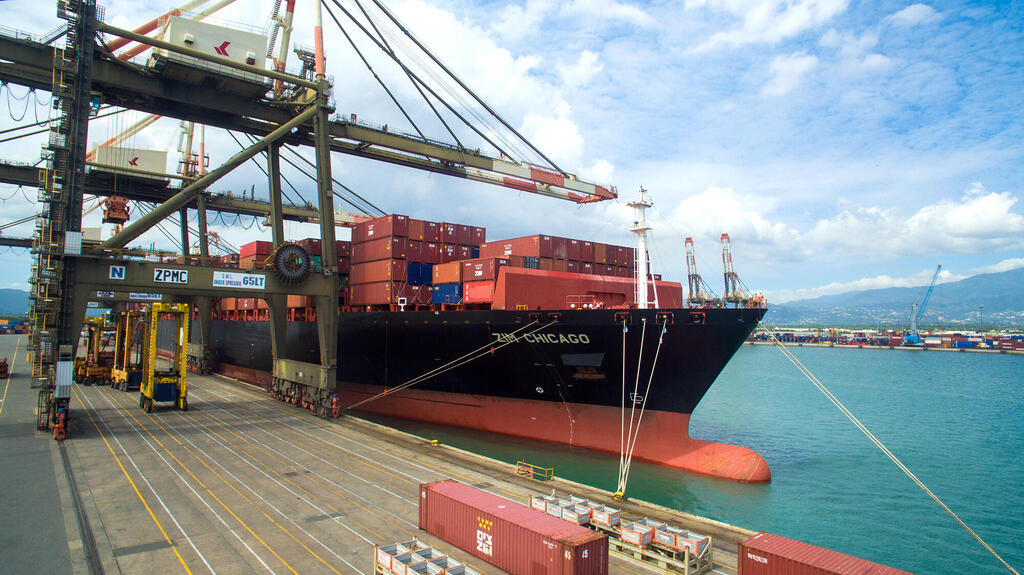
Zim agreed to be acquired by German shipping giant Hapag-Lloyd and Israeli private equity fund FIMI for $4.2 billion earlier this year, with FIMI set to run its local operations.
Maor argues that much of the public criticism rests on outdated assumptions about Zim's ownership structure and operations. While most of Zim's shares are already held by foreign investors through its listing on the New York Stock Exchange, he says the "New Zim" would be fully Israeli-owned under the control of the FIMI fund, which he describes as having "a proven and unquestionable national commitment." According to Maor, the new company would operate with a full commitment to Israel's national security needs and the continuity of the country's maritime trade.
From an economic standpoint, Maor says the new company would begin operations with a modern, debt-free fleet and benefit from commercial agreements with Hapag-Lloyd that would provide stability during its early years, despite continued volatility in the global shipping industry. He also rejects claims that the transaction would reduce Zim's fleet, noting that most of the vessels currently operated by the company are leased rather than owned.
According to Maor, the "New Zim" would strengthen Israel's national interests through six key pillars: full Israeli ownership that eliminates foreign influence; concentrating fleet operations on routes serving Israel and nearby ports; a significant increase in positions for Israeli merchant marine officers; strategic cooperation in training the next generation of Israeli seafarers; a modern, debt-free fleet supported by long-term commercial agreements; and continued adherence to the government's golden share, with its provisions updated to reflect Israel's current strategic needs.
Among other conclusions, Maor writes: "The fleet owned by the 'New Zim' on Israel's core shipping routes will remain fully subject to Israeli emergency and mobilization laws." He also argues that the golden share framework, originally established decades ago when the state privatized Zim, "should be refreshed and updated to meet the needs of today's State of Israel."
Maor's conclusions directly contradict those of Tzadok Radker, the current director of Israel's Shipping and Ports Authority, who warned in an official position paper that approving the transaction could have far-reaching consequences for Israel's shipping sector.
Responding to Maor's report, Zim's workers' union sharply criticized the opinion.
"We categorically reject Dr. Yigal Maor's opinion," the union said. "This is a transparent attempt to legitimize a destructive financial transaction that lacks economic logic under the guise of a so-called strategic upgrade. It is no surprise that an opinion commissioned and financed directly by the FIMI fund, the party with the clearest financial interest in completing the deal, attempts to wrap a dangerous transaction in patriotic rhetoric. Fine words about Zionism and national commitment cannot replace a sustainable business model, nor can they conceal the risks posed by the deal, including concerns over potential Qatari ownership, harm to operational continuity during emergencies, and the lack of any clear business justification."



