






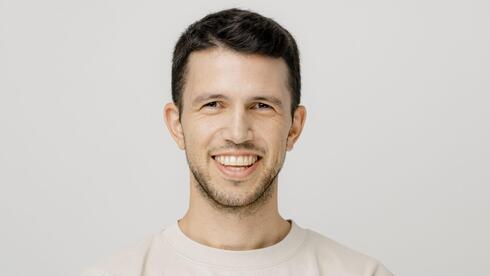




“It will be possible to test a person at age 18 and, using data, anticipate what medical care they are likely to need decades later”
Prof. Shay Ben Shachar, Director of Precision Medicine and Genomics at Clalit Innovation, was speaking at the Calcalist Tech TLV Conference held in collaboration with Leumi.
“There is a treatment that can help all of us, both those who are currently healthy and those who may eventually become ill,” said Prof. Shay Ben Shachar, Director of Precision Medicine and Genomics at Clalit Innovation, speaking at Calcalist’s Tech TLV conference held in collaboration with Leumi.
According to Ben Shachar, “The genome-mapping revolution began in 2003, as soon as the sequencing of the human genome was completed. Everyone expected a dramatic upheaval, but in practice the real revolution has been the ability to sequence anyone, quickly and cheaply.”

He compared the change to “replacing a fishing rod with a net. Before the revolution, when there was concern about a genetic disease or mutation, such as congenital deafness, we would ‘cast a fishing rod’ at individual genes. The process was lengthy and cost around $2,000. Today we can sequence all genes at once, identify the mutation within a week, and do it for about $200. This has been a fundamental breakthrough for rare diseases. It prevents the birth of children with severe illnesses, but it directly affects only the two percent of the population who suffer from genetic disorders.”
Ben Shachar added: “The true power of genetics lies in helping each of us stay healthier, and this would not be possible without data and AI. The entire concept of preventive medicine is the opposite of what we are used to. Take a car, for example: everyone brings a car in for periodic maintenance to ensure it remains reliable. With the human body, we don’t do that. We usually go to the doctor only when something goes wrong.”
How can preventive care be achieved?
“There are dozens of genes where, if a mutation is identified, we can take action, such as closer monitoring for women at risk of breast cancer, or identifying people at risk of heart disease who may need a pacemaker before a sudden cardiac event occurs. Only this year did medical authorities determine that there is enough knowledge to justify broad genetic testing, because we now have concrete interventions, rather than simply telling someone they may develop Alzheimer’s in the future.”
Looking ahead, Ben Shachar said: “This is only the beginning. Studies at the Weizmann Institute have shown that genetics account for about 50% of lifespan. Most diseases are polygenic, affected by many genes. The more risk genes a person carries, the higher their likelihood of obesity, cancer, and other conditions. This allows us to calculate what is called polygenic risk.”
He offered a practical example: “In Israel, women are invited for mammograms starting at age 50. But what about a woman with elevated polygenic risk who should begin screening at 40? And what about someone at reduced risk, who could safely start at 60 and avoid unnecessary, unpleasant tests? The same applies to medications: people respond differently to drugs such as statins for cholesterol. If we could tailor the dosage to each individual, treatment would be far more effective. No single doctor can absorb all this information, but AI systems in the cloud can analyze it and provide personalized recommendations.”
“Once, genetics was associated mainly with pregnancy testing,” he continued. “Today the paradigm is shifting. It will be possible to test a person at age 18 and, using data, anticipate what medical care they are likely to need decades later.”
Ben Shachar concluded: “The genetic revolution may have begun 20 years ago, but its real impact is still ahead of us. At the same time, we must be extremely careful with data. In the U.S., some couples already use pre-implantation diagnostics, selecting embryos based on genetic testing. There are even companies claiming to identify the ‘smartest’ embryo. This represents both an enormous opportunity and a profound ethical danger.”



