








Growth+
“We quickly realized that to reach our potential we needed to build a broad platform that could compete with the largest players”
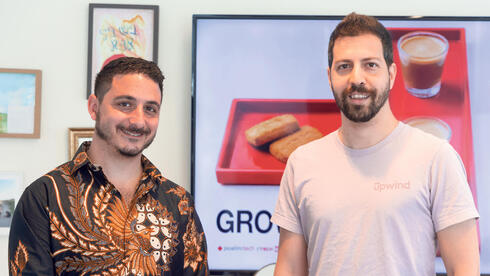
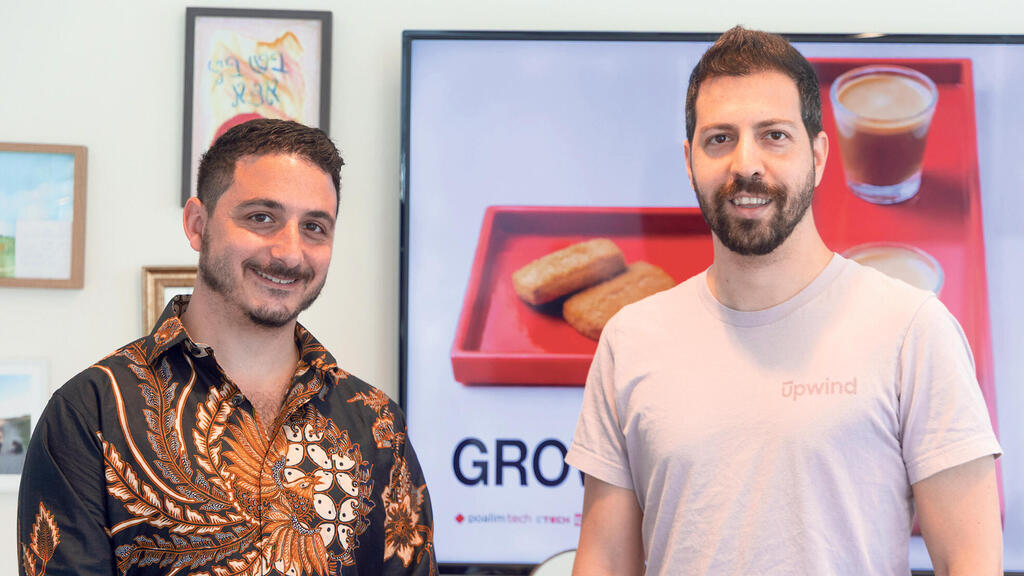
As part of the Growth+ project by Calcalist and Poalim Tech, Lavi Ferdman, SVP of Growth at Upwind, met with David Allouche, CEO and co-founder at Senai: “We had to leave Israel to meet clients while airports here were closed for weeks. Managing a small team spread across the world, while also taking care of families in Israel during wartime, has been the biggest challenge this year.”
As part of the Growth+ project by Calcalist and Poalim Tech, Lavi Ferdman, SVP of Growth at Upwind, met with David Allouche, CEO and co-founder of Senai, which develops artificial intelligence for scanning areas and information visible on the web for intelligence purposes, with a focus on video.
The Growth+ project, now in its third year, includes one-on-one meetings between founders of Israel's leading tech companies and entrepreneurs from promising startups, with the aim of providing advice, support, and practical tools on entrepreneurship, creativity, startup management, and building companies for growth.
Lavi, tell us about a crisis or challenge you encountered early on and what you learned from it that could help entrepreneurs starting out?
"We are a team of entrepreneurs starting a startup for the second time. We founded Spot, sold it to NetApp, and after two years founded Upwind. The most significant mental challenge at the beginning was the shift in our mindset: from building and selling a company, we suddenly returned to operating as a young startup. Suddenly, you don’t have all the resources or a large team, and you need to rediscover who your customer is and find focus. In the first six months, we began building a product in a very specific direction within the cloud security space. We quickly realized that to reach our potential in a competitive market, we needed to build something much bigger, a broad platform that could compete with the largest players. This required raising additional funds and expanding the entire vision. It was a tremendous challenge, which ultimately led us to build something truly significant."
David, what is the biggest challenge you have faced this year?
"The operational challenge in the shadow of the war. Most of our work is in Europe and Asia, and now, because of the situation with Iran, we cannot travel properly. Some team members got stuck abroad and couldn’t return, and we had to leave Israel to meet clients while airports here were closed for weeks. Even major transit hubs like Dubai and Abu Dhabi were closed due to the regional situation. Managing a small team spread across the world, while also taking care of families in Israel during wartime, has been the biggest challenge this year, more than business or fundraising."
Lavi, what advice did you give David?
"Our conversation focused on team building. We discussed where to recruit the first salespeople, where the founders should be located globally, and how to operationally support the organization as sales grow. In my opinion, the most important advice relates to building the right team, the people around you, and creating the processes that enable growth."
What did you learn from each other?
David: "I learned from Lavi that while technology is important, the team is the most critical factor. Getting advice from someone with such extensive experience, who has already built two companies with the same team, is more valuable to me than a four-week incubator. Another thing that impressed me was their level of resilience. A team that achieved such a successful exit, and instead of taking time off, immediately starts building another company, as someone who grew up in Europe, this is something you rarely see."
Lavi: "David made aliyah from France, is building a company in Israel with a strong sense of mission, and is selling video-based defense intelligence to governments around the world, from the United States, through Latin America, to the Middle East. It’s fascinating to see how he leverages his European background and Israeli experience to reach markets that are often difficult for more ‘traditional’ Israeli teams to access."
Is there anything surprising you discovered about each other?
David: "We both have three children of similar ages. Starting a company when you’re no longer single and free to travel at any time, while raising young children during a war, makes everything much more complex."
Lavi: "I was very surprised that before we talked about business, he started by asking about my family. When we discussed a possible move to the US, he immediately raised practical challenges like finding childcare. The fact that two businesspeople begin by talking about family says a lot about what it means to be a truly grounded entrepreneur."
Lavi Ferdman’s golden advice: “Don’t focus only on raising money or finding product-market fit. These are important, but the real X factor, the one that will truly shape your journey, is the people you choose to surround yourself with.”



