










AI's next data center boom is moving into cities, and into people's homes
As demand for computing power grows, developers are finding ways to install servers in office towers, industrial buildings and even private residences. The shift promises faster connections and new revenue streams, but also raises questions about electricity, noise, water consumption and regulation.
In recent weeks, residents of the Colonial Hills neighborhood in Southaven, Mississippi, have been receiving unexpected house calls. Real estate agents hired by xAI, Elon Musk's artificial intelligence company, have been going door to door, offering to buy residents' homes and urging them to leave the area quickly. The logic behind the move is as straightforward as it is ruthless: in an effort to prevent homeowners from joining a lawsuit already filed against the company over noise generated by a power plant supplying electricity to a nearby xAI data center, Musk has apparently decided that buying their homes would be cheaper. According to one recorded conversation, the company aims to acquire 418 homes in the neighborhood. So far, 18 homeowners have agreed to sell.
This remarkable story is just one example of the unusual challenges arising from the ever-growing demand for the computing resources that power the artificial intelligence revolution. To generate responses quickly, AI models require ever-increasing numbers of servers. The result is a global construction boom in massive data centers, typically built in remote areas or on the outskirts of towns, whose construction and operation can take a toll on the environment, wildlife and local communities.

This remarkable story is just one example of the unusual challenges arising from the ever-growing demand for the computing resources that power the artificial intelligence revolution. To generate responses quickly, AI models require ever-increasing numbers of servers. The result is a global construction boom in massive data centers, typically built in remote areas or on the outskirts of towns, whose construction and operation can take a toll on the environment, wildlife and local communities.
In Finland, Google was ordered last month to halt infrastructure and construction work on two data centers after it emerged that the company had illegally felled approximately a quarter of a million trees to clear the sites. In Talavada, India, local residents are campaigning against the construction of a massive data center, a joint project by Google and the Adani Group, arguing that it threatens the local water supply and regional wildlife. Meanwhile, in the United States, Republican voters are increasingly paying attention to environmental issues, in this case because of the impact data centers are having on their own communities. Residents are complaining about the constant "white noise" generated by data centers and their adjacent power plants, as well as the enormous quantities of water consumed to cool the servers inside them.
And what about Israel? The Electricity Authority was recently forced to intervene and regulate the flood of applications to establish data centers. While the Authority sought to manage the facilities' electricity consumption, setting a limit of 200 megawatts for each new facility, one question remains unresolved: how much land is actually available in such a small, densely populated country to accommodate these enormous server complexes?
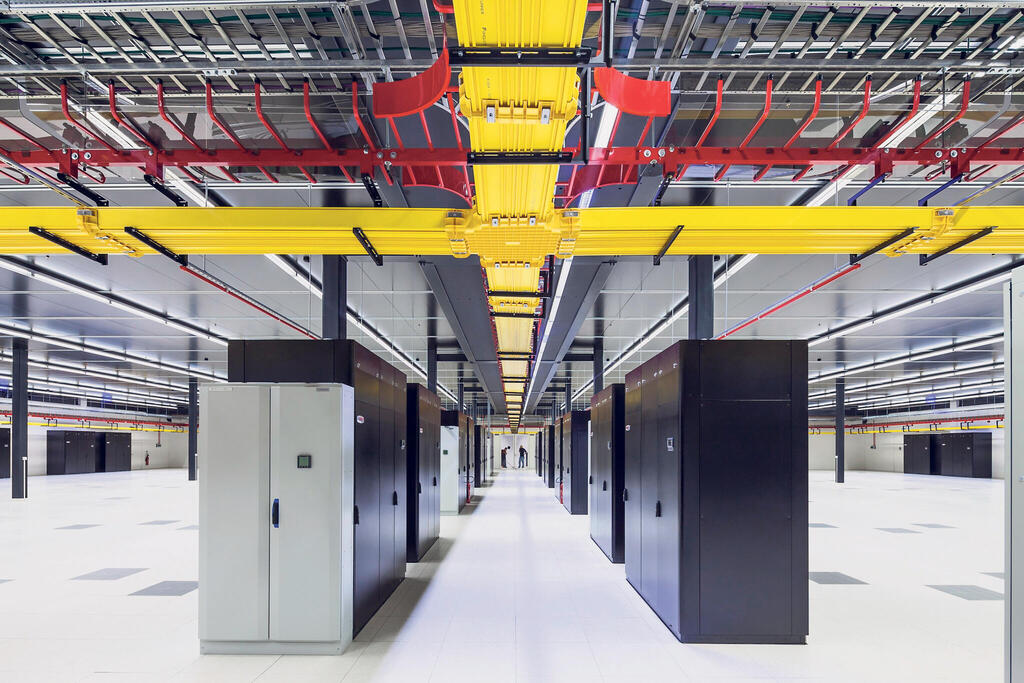
These challenges have helped drive a new development in the industry: the construction of data centers within urban areas. Some are designed to meet the computing needs of an entire building, reducing reliance on remote server farms; others occupy entire floors of office towers. Some companies are even offering to install servers in vacant rooms in residential buildings, generating rental income for apartment owners. The shift is already underway and is expected to accelerate.
The main reason for bringing data centers into cities is that building them in remote locations can take years, due to the need to establish transmission infrastructure, clear land, navigate regulatory hurdles and contend with public opposition. Cities, by contrast, already have established power infrastructure. Integrating data centers into existing buildings through mixed-use development can also help overcome planning and land-acquisition barriers.
The trend is also being driven by forecasts about how the technology industry will evolve. Until now, much of the AI industry's focus has been on training models, a process that requires enormous computing power but does not necessarily require servers to be close to end users. Consulting firm McKinsey predicts that the industry's focus will increasingly shift toward "inference": the actual execution of models when a user asks a question, an autonomous vehicle detects a pedestrian or a robot makes a decision. Unlike training, inference often requires rapid response times, making it advantageous to locate computing infrastructure closer to users.
A server for every tenant
The trend is still in its early stages, but research firm The Insight Partners estimates that approximately $10.9 billion was invested in urban data centers in 2025. It projects that the figure will reach $118.8 billion by 2034, representing annual growth of about 30%. According to the study, spatial constraints will be a key driver, with a shortage of available sites accelerating the migration toward urban centers.
The EdgeUp AI project by Switchup, a company that manages approximately 300,000 square meters of office space, is among the first attempts to bring this model to Israel. The complex, currently under construction in Tel Aviv, is expected to combine office space with infrastructure facilities, including data centers.
Ben Braverman, a managing partner at Switchup, says the company is building a facility in which parts of the space were initially allocated to 16 servers. Their computing power will be made available to companies renting offices in the building. According to Braverman, having servers nearby will significantly reduce the gap between simulation and real-world execution while lowering costs for tenants.
Braverman says the model will spare companies the need to establish and operate their own server infrastructure. He describes a broader vision: "We will take a floor or half a floor in a building, divide it into units of about 50 square meters, and companies that rent labs from us will get server farms right behind their engineers. Any company that is going to use AI agents for its internal information will need a server it owns that is not in the cloud."
He adds: "If I have 20 buildings, I can link them together and create a cloud. If there is no demand for this computing power, I can always sell it on the cloud market. We want to find sites such as office buildings, hotels and new buildings in industrial areas and set up many small server farms. Quite a few buildings can meet our criteria, and when we find such a building, the systems we install can be operational in less than a year."
"Technology companies are currently more advanced and are at the forefront of understanding the need, but we understand that this is where the world is heading," he says. "As agents enter more companies, they will need more local servers. This way, a company that has raised $3 million or $4 million won't have to spend several million dollars on its own server infrastructure."
Urban data centers are changing not only the cost structure but also the time required to get facilities up and running. Globally, developers are discussing converting existing buildings into "micro-farms," or small-scale data centers, in as little as 90 days, a stark contrast to the years it can take to establish massive facilities.
Tamar Migdal, a partner at law firm Meitar, says that in Israel, small server farms could make use of underutilized industrial zones. "We know that in Israel's secondary metropolitan ring, there is an excess of commercial and industrial space that the market cannot absorb, for instance, in the Kiryat Aryeh area of Petah Tikva, though not exclusively there. Consequently, we see developers exploring the establishment of server farms on land previously designated for commercial or industrial use. While large-scale facilities require complex planning and face challenges related to connecting to the power grid, smaller centers are treated, to some extent, much like logistics facilities. They serve as a complementary product."
A server farm for every tower
Although the trend is still in its infancy globally, with many projects remaining on the drawing board, Chicago already has micro-hubs integrated into its urban landscape. Relatively inexpensive electricity, a cold climate that facilitates processor cooling, access to water from the Great Lakes, a relatively low risk of natural disasters and an affordable stock of older industrial properties have helped turn the city into a hub for urban data centers. Many more are expected to emerge in the coming years.
These facilities are located within dense urban neighborhoods, occupying former printing plants, office buildings and multistory structures. They represent an unusual intersection of real estate, infrastructure and residential life.
According to the city, Chicago has 39 data centers, many of them concentrated in densely populated areas such as the South Loop. At 350 Cermak Street, for example, a former Donnelley printing plant that closed in the early 1990s was later converted into a telecommunications interconnection hub and now serves as a data center.
7 View gallery
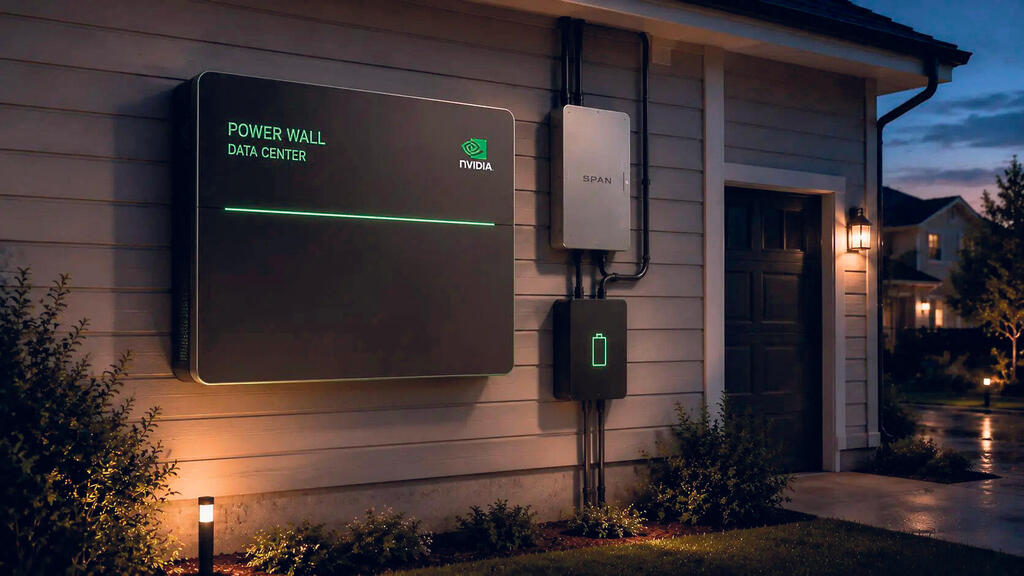
A micro-data center by the startup Span, which is collaborating with NVIDIA.
(Company website)
The former Chicago Board Options Exchange (CBOE) building provides another example. It was purchased two years ago for $12 million, roughly half its pre-pandemic value. A year later, following its conversion into a 33-megawatt data center, it was sold for $40 million. The space is estimated to command rental rates four times higher than those of the office space it replaced. At 300 West Adams Street, meanwhile, five floors of a 12-story office building are set to be converted into a data center.
Beyond the projects already underway, plans are being considered to convert many more buildings across Chicago into server farms.
The expansion has also become a source of friction between local residents and the industry. Data centers can generate noise and pollution from diesel generators and cooling systems operating around the clock, with noise levels sometimes compared to those near a busy highway. Their enormous electricity and water requirements can also contribute to higher costs for consumers.
In 2024, Chicago's City Council passed a regulation intended to encourage the establishment of data centers in the city by requiring municipal data to be stored within the United States. Today, however, the same city government is seeking to rein in their expansion.
According to architect Aynav Ziv, a partner and head of the Concept Department at Miloslavsky Architects, the trend will eventually extend beyond office buildings to residential skyscrapers, which may also need to allocate space for server farms.
"When designing 120-story skyscrapers, one must view them as 'mini-cities.' These buildings will be managed using artificial intelligence, handling everything from waste disposal to automated parking facilities and more," she says. "Large buildings already feature two or three technical floors, and I believe we will need to add another, one housing servers to manage the building's own energy consumption, which is set to be extremely high."

Ziv adds that future buildings could put the heat generated by server farms to use, for example by supplying hot water to residents, heating swimming pools or even feeding neighborhood-wide heating networks.
"Since these facilities generate a significant amount of heat, we are exploring methods for harvesting rainwater to cool the servers. The idea is to integrate the environmental impact of the server farm directly into the operating cycle of these self-sustaining buildings," she says. "This may sound like something destined for the distant future, but these are factors we are already taking into account in our planning. They will be particularly relevant in high-rise buildings."
Another concept being tested in pilot programs elsewhere involves allowing homeowners to earn money by hosting small server farms on their properties. The startup Span, chip giant Nvidia and construction firm PulteGroup recently announced plans to offer homeowners in the United States the opportunity to host such a unit. Mounted on the exterior wall of a house, the system contains 16 graphics processors. A significant portion of the electricity required to power it is expected to come from solar panels installed on the roof.
In exchange for hosting the equipment, homeowners will receive $150 a month to cover electricity and internet costs. The company aims to install 100 systems by the end of this year. If the trial proves successful, it plans to roll out 80,000 units during 2027.
Technology moves faster than regulation
As elsewhere in the world, the entrepreneurial drive to meet the technology industry's demands in Israel is far outpacing existing regulation. While authorities are currently grappling with applications and proposals for large-scale server farms, no policy has yet been formulated for integrating micro-server farms into urban areas. Leaving the issue unaddressed could lead to a regulatory vacuum and future problems that would be difficult to manage.

Ron Eifer, head of the Sustainable Energy Division at the Ministry of Energy, notes that "many companies in urban areas already operate small server farms within their own facilities, including banks, which require significant computing power in city centers."
He adds that while large-scale server farms are generally more energy-efficient, the Israeli market faces two main challenges that are hindering their establishment.
"Our first problem is that there isn't enough electricity in Israel to meet all the requests to establish new data centers. Consequently, we have capped the scale of data centers to be built in Israel over the next decade, ensuring that no more than 20% of the country's total electricity consumption is allocated to this purpose. The second problem is the strain on the power transmission grid and the challenge of delivering electricity to the center of the country. Building data centers in the Gush Dan area would place an even greater burden on the transmission system serving that region. That said, under certain conditions, establishing data centers within urban centers could help address this second problem," Eifer says.
How, for example?
"A building that isn't fully using its existing electrical connection capacity could make efficient use of its current grid access to host a small data center. However, even an 'urban' data center would still require additional electricity from the grid, potentially necessitating the construction of new power plants. So, from the perspective of Israel's energy sector, this is by no means a magic solution."

What about the excess heat that data centers would generate if they were built in large numbers within cities?
"Establishing server farms in urban areas might be more attractive in countries with colder climates than Israel, where there are many potential uses for the waste heat they emit. For instance, in central Stockholm, heat generated by server farms can be used to warm homes throughout the city, a practice employed in the not-so-distant past in many European cities using heat from power plants. In Israel, however, utilizing heat from server farms is less appealing, primarily because the temperatures are not high enough to facilitate cooling, a process that requires chillers, which are in high demand in Israel. In my view, the global incentive for locating server farms in urban environments will likely stem from the need for rapid electrification solutions, rather than from heating or cooling technologies."
You don't sound enthusiastic about the possibility that we might start seeing small server farms everywhere.
"From the perspective of the energy sector, this is not particularly significant news. Server farms, even if small and distributed, still require electricity, and a great deal of it, regardless of where they are established. That said, from a real estate standpoint, I understand that setting up small-scale facilities in major cities can present an opportunity, a quick way to connect to the power grid by leveraging existing electrical infrastructure. From a technological perspective, large data centers are more efficient. However, for certain applications, there is a distinct advantage to being located closer to end users."

As data centers move closer to residential areas, regulators will also need to address concerns about electromagnetic radiation. The primary issue is not necessarily the servers themselves, but the placement of transformers and electrical systems, the level of exposure in neighboring apartments and the measurements taken when facilities are operating under load.
The location of a data center on a particular floor does not, by itself, determine exposure levels in the apartments above it. Those levels depend on factors including electrical current, the positioning of cables and equipment, and the distance between electrical infrastructure and living spaces.
Regulators may therefore need to establish mandatory requirements governing the placement of transformer rooms and electrical panels, as well as cable routing and building design, to minimize electromagnetic fields near residential areas. Shielding measures, such as lining electrical rooms with steel or aluminum panels, may also be required in some cases. Such measures are already used in certain transformer rooms.
The more data centers are concentrated in industrial zones, the easier it may be to implement these safeguards. But as computing infrastructure moves into office towers and residential buildings, the challenge will be to ensure that the expansion does not come at the expense of the people living and working around it.



