










AI is replacing programmers, but it can't replace electricians
As tech companies pour nearly $700 billion into AI infrastructure, a fierce battle is emerging for the skilled workers building the data centers that power the revolution.
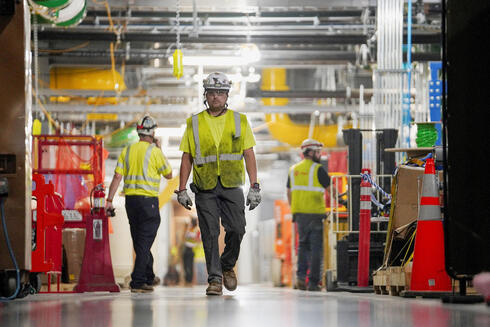
Programmers? Out. Human resources, marketing, and sales? Chatbots are rapidly taking over many of their tasks. AI and data center companies, however, are now locked in a new race for workers that AI models cannot yet replace: electricians, carpenters, welders, pipe fitters, and other skilled tradespeople needed to build the vast computing infrastructure powering the AI revolution. To attract them, companies are offering some of the highest wages and bonuses these professions have ever seen.
Tech giants Microsoft, Amazon, Google, and Meta are expected to invest nearly $700 billion in AI infrastructure this year alone. AI companies such as OpenAI and Anthropic are investing tens of billions of dollars of their own, while future commitments across the industry are approaching $1 trillion. Investment firms are also joining the race. BlackRock is investing tens of billions of dollars in building and acquiring data centers, including a major facility in El Paso, Texas, while SoftBank plans to build a $500 billion AI industrial complex in Ohio.
1 View gallery
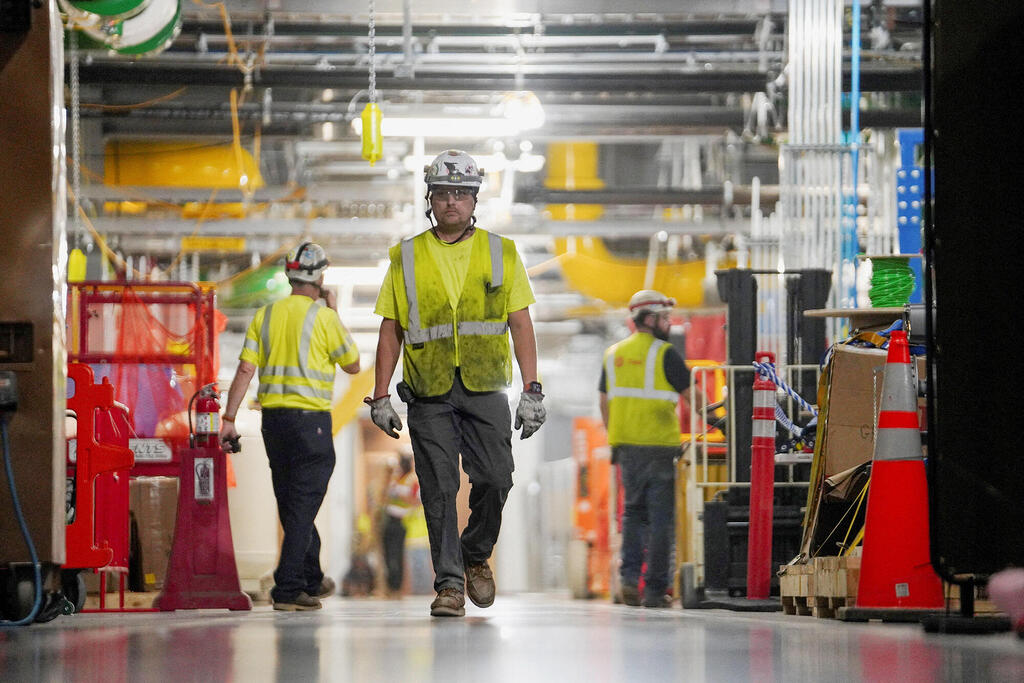
Workers at Microsoft's data center complex in Mount Pleasant, Wisconsin
(Audrey Richardson/Reuters)
All of this construction requires enormous resources, from AI processors, CPUs, memory chips, electricity, and water to another increasingly scarce resource: skilled labor. Electricians, carpenters, welders, and other construction professionals are essential for building AI infrastructure. According to The New York Times, companies are now investing hundreds of millions of dollars in recruiting and training these workers, often persuading them to relocate to remote communities where new AI infrastructure is being built.
A significant share of that investment is focused on workforce development. The International Brotherhood of Electrical Workers (IBEW), together with the National Electrical Contractors Association (NECA), operates 270 training centers across the United States that prepare tens of thousands of workers for careers in construction and infrastructure.
In June, Google announced a partnership with the union's Electrical Training ALLIANCE (etA), committing $50 million to help train 300,000 workers.
"Building and maintaining America's future infrastructure requires a massive, coordinated, and highly skilled workforce, from welders and HVAC installers to electricians and fiber-optic technicians," said Google.org Director Maggie Johnson. "There are hundreds of thousands of open skilled-trade positions across the United States. This initiative will help workers gain the skills needed for long-term careers."
According to etA Director Tina Williams, one of the main goals is to avoid the type of supply shortage that has hit the memory chip market, where AI demand has driven up prices and reduced availability for other industries.
"We want to bring in enough workers to meet the needs of data centers while maintaining our core work everywhere else," she told The New York Times.
BlackRock has also pledged $100 million over the next five years to nonprofits and workforce development initiatives. As part of that commitment, the firm will invest $30 million in Texas over the next three years to train more than 12,000 electricians.
In March, OpenAI announced a partnership with the North America's Building Trades Unions (NABTU), which represents roughly 3 million workers, to train skilled labor for AI infrastructure projects. The organization says its partners already invest $2.5 billion annually in apprenticeship and workforce training programs.
Meta has committed $115 million during the first year of a multi-year initiative to train construction workers. The first cohort will include 5,000 participants, who will complete a fully funded four-week training program covering tuition, travel, and accommodation. Graduates are guaranteed employment at one of Meta's data center construction sites.
Meta is partnering with the Associated Builders and Contractors (ABC) to develop the curriculum.
"The initial goal is to get as many workers on Meta sites as possible and keep them in the family," said Joel Thames, the organization's vice president of workforce development.
The surge in AI infrastructure spending has offset slowing demand elsewhere in construction. The U.S. commercial real estate market has yet to recover from the pandemic, home sales remain sluggish because of high interest rates, and renewable energy construction has slowed sharply under the Trump administration.
Even so, competition for skilled labor is becoming increasingly intense.
"There is no doubt that resources are very limited, so a decision to build one project affects the availability of workers elsewhere," said Mario Iacobacci, director of the construction and infrastructure group at Oxford Economics.
According to staffing platform Indeed, demand for data center workers has tripled over the past three years. Today, six out of every 1,000 U.S. job openings are in data centers.
The 10 largest technology companies account for 71% of those openings, and they pay accordingly. Data center workers earn salaries that are, on average, 42% higher than workers in comparable construction jobs outside the sector.
Competition is especially fierce in regions such as Dallas and Northern Virginia, where multiple data centers are being built simultaneously. Contractors are competing aggressively for skilled workers, who frequently switch employers in exchange for signing bonuses and higher wages.
"There's a community of job seekers who want to seize the opportunity presented by this once-in-a-generation data center gold rush," Marty Schager, data center market manager at staffing firm Aerotek, told The New York Times.
Some experts question what will happen when the construction boom eventually fades. Although these workers can apply their skills to factories, office buildings, and residential construction, few believe those markets will generate demand comparable to today's AI infrastructure boom.
"The best-case scenario is that you train all these skilled workers and, just as data centers become less popular, there's a surge in the private real estate market," said Professor Jeff Strohl, director of Georgetown University's Center on Education and the Workforce. "But that's probably not very likely."
The extraordinary demand for skilled trades offers a glimpse into a labor market reshaped by AI.
Traditional white-collar professions, including programmers, marketers, HR professionals, lawyers, and accountants, are increasingly under pressure from AI systems capable of automating many of their routine tasks. But while AI has become remarkably proficient at processing text, numbers, and data, it still struggles in the physical world.
Robots remain far behind humans when it comes to complex manual work performed in constantly changing environments, installing electrical systems, welding pipes, fitting HVAC equipment, or constructing sophisticated facilities such as data centers.
For decades, white-collar workers, particularly those in high tech, often viewed manual labor as less desirable. Now it is skilled tradespeople who are building the infrastructure that powers artificial intelligence, creating the very systems that may reduce demand for many white-collar jobs while dramatically increasing demand for their own skills.
Also in Israel: Worker shortage threatens the AI boom
Israel is also experiencing a data center boom, albeit on a much smaller scale than the United States.
According to Mordor Intelligence, Israel's data center market is currently valued at $632.3 million and is projected to grow at an annual rate of 8.8%, reaching $964 million by 2031.
Earlier this month, the Electricity Authority froze the processing of new data center connection requests for 140 days after applications totaling 27,000 megawatts were submitted within just two months, nearly three times Israel's average nationwide electricity consumption.
However, this growth is colliding with a severe shortage of construction workers.
According to a Bank of Israel report published in March, the industry faces a shortage of approximately 30,000 workers, contributing to a 14% increase in wages.
The causes are varied. Since October 7, restrictions on Palestinian workers from the West Bank have sharply reduced their participation in Israel's construction sector. At the same time, the number of foreign construction workers reached 75,000 in 2025, the highest level in two decades and more than 70% higher than before October 7. The number of Israeli construction workers also rose 19% to 267,000.
Together, these increases have offset roughly 90% of the loss of Palestinian workers. Yet demand for labor has continued to rise over the past three years as residential construction has accelerated and investment in data centers has expanded.



