










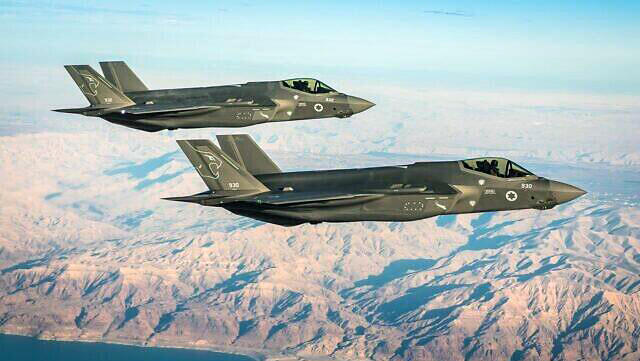
"With Iran, Israel may need to act every five years"
Security officials say the latest round of fighting highlights a new reality of periodic military action, rising defense costs, and no clear endgame with Tehran.
The brief round of fighting between Israel and Iran lasted less than 24 hours. Yet despite its short duration, it carries significant public and economic implications. The latest exchange highlights two realities that are widely understood within Israel's defense establishment but less appreciated by the broader public.
The first is that despite Israel's military achievements against Iran, the campaign has not been decisively won. The Iranian regime remains intact, and its intentions toward Israel have not fundamentally changed. The second is that there is no realistic plan to "defeat" Iran in the conventional sense. The term "victory," which has become common in Israeli public discourse, is largely irrelevant in the Iranian context. Instead, the strategic vocabulary revolves around less popular concepts such as "rounds of conflict," "conflict management," "degrading capabilities," and "achieving periods of deterrence and calm."
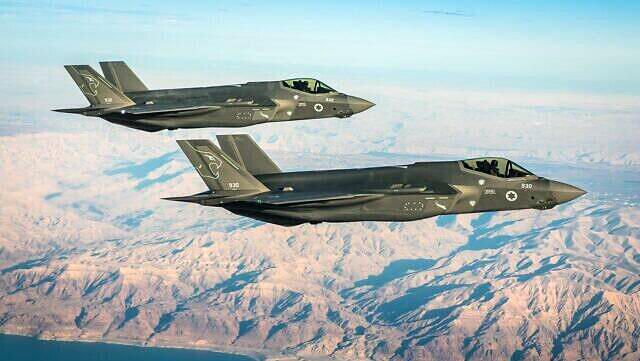
Security experts interviewed by Calcalist use different terminology, but their assessments converge on a similar conclusion.
Brig. Gen. (res.) Sasson Hadad, former financial adviser to the IDF Chief of Staff, said: "We are in a state of strategic deadlock. This is a cycle, and it is not good for either the country or the economy. The only real solution would be regime change, but that is not achievable through military means. What can be done is to increase economic pressure."
Maj. Gen. (res.) Yaakov Amidror, former head of the National Security Council and former chief of the Research Division of Military Intelligence, offered a similar assessment. "It is possible to achieve a decisive outcome in Gaza," he said, "but with Iran, Israel will likely need to act periodically according to the progress of the nuclear program, perhaps every five years, while also addressing the ballistic missile threat through improvements in both defense and offensive capabilities."
Both officials agree that weakening or ultimately replacing the Iranian regime would be desirable from Israel's perspective. However, they acknowledge that this is not an actionable strategy under current circumstances. Amidror added that "Israel and the United States do not want a ground operation, while economic pressure is less effective without broad international cooperation. Russia and China are not with us."
These assessments may sound obvious to defense professionals, but Israeli citizens experienced the reality of this strategy firsthand over the past 24 hours. Until recently, confrontations with Iran were often framed in historic terms, as events capable of reshaping the Middle East. The latest round felt different. Its nature was more reminiscent of the recurring confrontations with Hamas in Gaza, limited operations intended to preserve the strategic balance, degrade capabilities, or create tactical advantages rather than fundamentally alter the regional landscape.
According to Amidror, one objective of the latest operation was "to create a separation in the Iranian mindset between the Lebanese front and the Iranian front. If that succeeds, it could weaken Iran's position and potentially improve the terms of any future agreement on the nuclear issue."
The Economic Reality: Higher Defense Spending for Years
The most immediate implication of this reality is that even the most optimistic policymakers may need to accept that Israel's defense spending will remain elevated for years to come.
Until recently, officials within the Ministry of Finance and independent economists continued to ask whether, after spending hundreds of billions of shekels on war, there was still justification for increasing defense expenditures further rather than reducing them. The latest confrontation has significantly weakened that argument.
The issue is not whether the concern is legitimate. Rather, it is that Israel now faces multiple active fronts that require substantial manpower, munitions, intelligence capabilities, air force readiness, missile defense systems, and strategic stockpiles. The prospect of recurring confrontations with Iran means the country must maintain a much higher level of preparedness than before.
This does not mean every demand from the defense establishment should be approved without scrutiny. The military has a long history of pushing for larger budgets, and officials are likely to use the latest confrontation to reinforce spending requests already under discussion as part of the 2026 budget process.
Nevertheless, the broader defense budget, including intelligence agencies, already stands at approximately 7.8% of GDP, compared with 4.2% in 2022. The assumption that Israel is approaching a period of relative calm no longer appears realistic. While debate over the size of the defense budget remains necessary, the broader trend is becoming increasingly difficult to ignore.
Efficiency Can No Longer Wait
To limit the impact on civilian spending and living standards, policymakers must focus on three key areas.
First, the IDF must continue pursuing internal efficiency reforms rather than postponing them until hostilities subside.
As Hadad told Calcalist, "All the efficiency teams in the IDF are effectively frozen. The army has put these efforts on hold."
Given that the current security environment may persist for years, he argues that efficiency measures can no longer be deferred.
"We must constantly economize on munitions and resources, even before shortages emerge," Hadad said.
The second challenge is manpower. The government will likely need to expand the pool of available reservists, with many policymakers viewing greater participation by the ultra-Orthodox community as the most significant untapped source.
The third challenge lies with the Ministry of Finance. Policymakers will need to maximize economic growth while simultaneously restoring fiscal discipline and reducing the debt-to-GDP ratio.
Strong Revenues Offer Limited Relief
Despite the security challenges, there is cautious optimism within the Ministry of Finance.
Tax collection figures for May showed that government revenues continue to outperform expectations. Tax revenues are currently running approximately 12% above the long-term trend, prompting the Chief Economist to raise the state's revenue forecast to roughly NIS 594 billion.
The updated forecast could still prove conservative. Approximately NIS 261 billion has already been collected, representing 44% of the annual forecast, even though only 41% of the year has elapsed.
Based on current projections, government revenues would leave Israel with a deficit of approximately NIS 104 billion against planned spending of roughly NIS 698 billion. That translates into a deficit of around 4.6% of GDP, slightly below the legal ceiling.
As a result, Finance Ministry officials believe the 2026 budget could ultimately remain close to its current framework. Even if spending exceeds the statutory ceiling, they argue it may still be possible to avoid breaching the government's deficit target.
However, a deficit approaching 5% of GDP remains historically high and would continue to push public debt upward. It would also exceed deficits recorded during some previous wartime years.
For that reason, any revenue windfall is likely to be directed toward reducing the deficit rather than fully accommodating additional defense spending demands.
A New Era of Permanent Readiness
The latest confrontation may have lasted less than a day, but its strategic significance extends far beyond the immediate exchange of fire.
For Israel's defense establishment, it reinforces the view that the confrontation with Iran is evolving into a long-term campaign characterized by recurring rounds rather than decisive victories. For policymakers, it signals years of elevated defense spending and difficult budgetary trade-offs. And for the economy, it underscores a reality that many had hoped to avoid: the challenge is no longer financing a temporary war, but managing a prolonged period of active conflict without sacrificing long-term fiscal stability.



