










The world condemned Israel. Then it bought $19.2 billion of its weapons
Defense exports surged 30% to a record high as governments balanced political criticism with growing security demands.
1.
A year ago, when Israel’s defense exports reached $14.8 billion in 2024, officials at the Ministry of Defense looked ahead to 2025 with concern and uncertainty about whether such an achievement could be replicated. Looming over those expectations was the accelerating international campaign to delegitimize Israel over its actions in Gaza, as casualty figures and images of destruction reverberated across the world. The French government, for example, went out of its way to obstruct the participation of Israeli defense companies that were “arming the IDF” at an international defense exhibition in Paris.
Yet this was far from the first time the international community demonstrated a gap between rhetoric and behavior. Governments publicly criticized Israel, suspended contracts, and condemned its military actions, while continuing to purchase its weapons systems behind closed doors. Fear of future wars, and of losing them, once again proved stronger than political instincts to distance themselves from Israel.
The result was a 30% increase in Israeli defense exports to a record $19.2 billion in 2025. The figure illustrates the widening gap between public rhetoric and actual government behavior. European streets were filled with demonstrators accusing Israel of genocide. Parliaments debated sanctions. Leaders restricted the supply of weapons and components to Israel. Spain barred ships carrying military cargo for the IDF from docking at its ports. Yet, in private meeting rooms, procurement officials from many of those same governments quietly signed new contracts with Israeli defense companies.
2.
One of the most striking figures in the 2025 defense export data is the growing role of government-to-government (G2G) transactions. Approximately $10 billion of Israel’s defense exports last year came through such deals, compared with $6.5 billion in 2024.
Examples include the Arrow 3 missile defense agreement between Israel and Germany, in which the Israeli government played a central role while Israel Aerospace Industries acted as the prime contractor. The increase of $3.5 billion in G2G transactions reflects a deliberate policy within the defense establishment, based on the belief that weapons can open doors and help solve political and diplomatic challenges.
Beyond their ability to bypass bureaucratic hurdles and accelerate procurement, many G2G agreements function as strategic alliances. Defense officials argue that countries heavily dependent on Israeli-made missile systems and other critical military technologies are less likely to lead diplomatic campaigns against Israel or support punitive measures.
“There are sensitive countries with which we conduct G2G transactions and build a strong security framework,” a senior defense official said this week. “Sometimes this involves direct engagement between defense ministry directors-general, including agreements regarding technology transfers and mechanisms designed to prevent sensitive information from reaching third parties.”
The number of countries purchasing Israeli weapons expanded significantly over the past year, although exact figures are no longer publicly disclosed following reforms that eased oversight of defense exports. The reforms relaxed regulatory requirements and reduced bureaucratic barriers in an effort to maximize the competitiveness of Israeli defense companies in global markets.
3.
The opportunities are not the only factor driving Israel’s export strategy. For years, the defense establishment has closely monitored the rapid rise of Turkey’s defense industry, which continues to gain market share with an increasingly broad portfolio of military systems.
In 2025, Turkish defense exports exceeded $10 billion, nearly doubling compared with the previous year. Israeli defense officials say the growing challenge posed by Turkish manufacturers was one of the considerations behind the reforms that eased restrictions on Israeli defense exports.
Turkish weapons systems are often viewed as less sophisticated than Israeli alternatives but significantly cheaper, making them attractive to many countries seeking to modernize their militaries.
An arms deal is rarely a one-time transaction. Military procurement typically creates long-term relationships involving maintenance, upgrades, training, and ongoing support. Once an army invests billions of dollars in a major weapons platform, replacing it becomes difficult and expensive.
Israeli officials therefore view expanding exports as a way to secure customers before they establish similar long-term relationships with Turkish suppliers and President Recep Tayyip Erdoğan’s growing defense industry. In several cases, according to defense officials, those efforts have already proven successful.
4.
Yet the current momentum is far from guaranteed.
Europe in 2026 is very different from Europe in 2022. Across the continent, governments are investing heavily in domestic defense manufacturing capabilities in an effort to reduce dependence on imported weapons and strengthen strategic autonomy. Building those capabilities will take years, as Europe still faces shortages of engineers, technicians, and skilled factory workers. Nevertheless, as the continent’s defense industrial base expands, competition for future contracts will intensify.
Israeli companies will increasingly need to differentiate themselves by offering battlefield-proven capabilities and technological advantages that competitors cannot match.
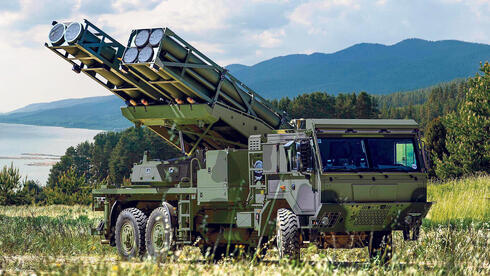
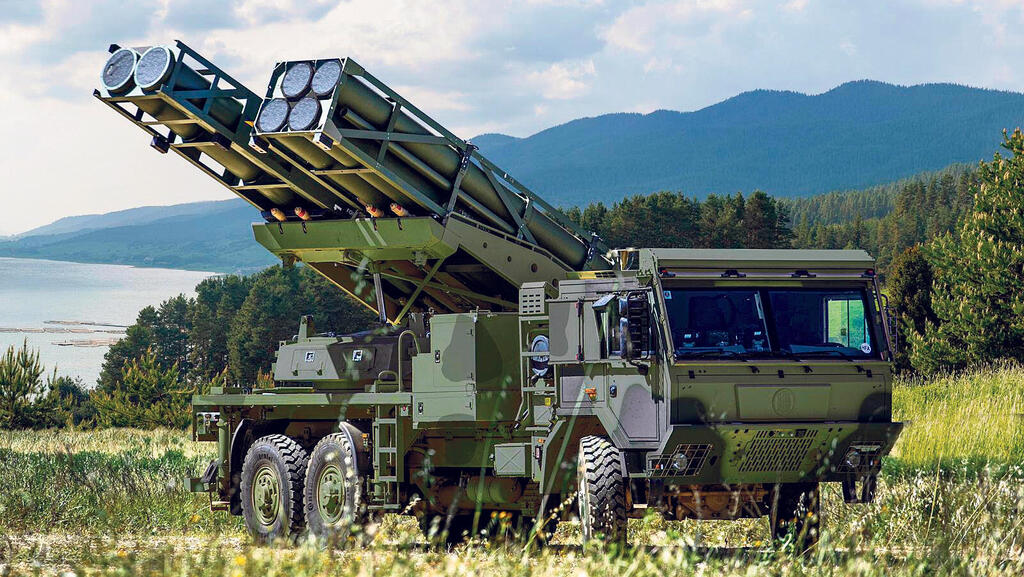
About 30% of Israel’s defense exports in 2025 consisted of air-defense systems such as Barak MX, Arrow 3, and David’s Sling, alongside precision-guided artillery systems such as Elbit Systems’ PULS rockets. One of the key drivers behind their success has been operational use by the IDF, one of the world’s most active militaries.
Military buyers place considerable value on systems that have been tested under real combat conditions. The assumption is that any system adopted by the IDF has undergone some of the most demanding battlefield evaluations imaginable.
After nearly three years of regional conflict, Israeli defense companies have benefited from that reputation. Most of the systems they market internationally have been tested in combat and carry the highly valued label of being “combat proven.”
But that advantage is gradually eroding. Conflicts elsewhere in the world are providing competing defense manufacturers with similar opportunities to validate their products in real-world conditions. As a result, Israel is steadily losing a degree of the uniqueness it enjoyed for decades.

5.
Israel’s three largest defense companies, Israel Aerospace Industries, Rafael, and Elbit Systems, accounted for between 85% and 90% of all defense exports in 2025. Together, they currently hold an order backlog approaching $90 billion.
The export figures are based on company reports submitted to the Ministry of Defense through the end of 2025, when the dollar traded at around NIS 3.20. Because most defense contracts are denominated in dollars, the recent weakness of the US currency has become a growing concern.
Every dollar earned is worth fewer shekels, while salaries, subcontractor payments, and production costs remain largely denominated in Israeli currency. Most contracts are long-term agreements with fixed pricing, limiting companies’ ability to adjust prices to offset currency fluctuations.
As a result, the profitability challenge is only beginning. Israeli defense companies must convert their enormous order backlogs into earnings while coping with rising costs and an unfavorable exchange rate.
At the same time, the government’s debt to the defense industry continues to grow. Industry executives estimate that the Ministry of Defense currently owes Israel Aerospace Industries, Rafael, and Elbit between NIS 14 billion and NIS 15 billion ($4.4 billion-$4.7 billion) for products already ordered but not yet paid for.
The dispute stems from an ongoing battle between the Ministry of Defense and the Ministry of Finance over the size of this year’s defense budget. While the approved defense budget stands at NIS 144 billion ($45 billion), defense officials are seeking an increase to NIS 184 billion ($57.5 billion). The Treasury opposes the move, and Prime Minister Benjamin Netanyahu has yet to resolve the disagreement.
Until then, Israel’s largest defense companies are effectively extending credit to the state.
Strong sales, healthy profits, and customer advances from overseas contracts have so far helped cushion the impact. Moreover, the companies view government obligations as secure debts. Even so, officials acknowledge that the day is approaching when defense industry executives will demand payment from the state.



