










The Nvidia effect: A rural valley faces an urban-scale shock
An R&D campus in Kiryat Tivon could trigger Israel’s largest regional realignment in years.
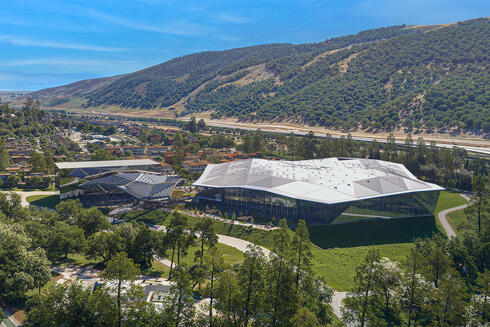
Nvidia’s new campus in Kiryat Tivon is still far from being built, but its impact is already being felt on the ground. About 10,000 workers, most of them from a high socioeconomic background, are expected to reshape the residential and employment map in northern Israel, from Tivon and the valleys to Haifa, Nesher and Yokneam.
For local authorities and entrepreneurs, this represents a rare opportunity, one that could unfold into a real estate and economic event on a scale Israel has scarcely experienced. Beyond the uncertainty surrounding whether and when the campus will be built, a deeper question looms: will this be a growth engine that spills over into surrounding communities, or will the campus function as a largely closed ecosystem, driving up housing prices while generating limited broader economic value?
It is difficult to overstate the potential impact of establishing a massive high-tech employment hub, operated by a single company, at the junction of the Zevulun and Jezreel valleys, in a predominantly rural and suburban area. An influx of roughly 10,000 workers implies the arrival of approximately 30,000 people, including family members, assuming employees choose to live near their workplace. These workers are expected to belong almost entirely to the upper end of the socioeconomic spectrum. To this must be added the secondary wave of suppliers, service providers and businesses likely to gravitate toward the campus. The most immediate and visible effects are already emerging in the real estate market.
This is an event with few precedents in Israel. Intel’s facility in Kiryat Gat, for example, is primarily a manufacturing plant rather than an R&D campus of the kind Nvidia plans to build in Kiryat Tivon. Unlike Haifa’s Matam industrial park, located at the city’s southern entrance, the Nvidia campus is expected to rise in a rural setting. According to urban planning and marketing consultant Tamir Ben Shahar, “In both Kiryat Gat and Haifa, most employees do not live in the cities where the facilities are located. They commute daily from other places.”
It is already clear that Kiryat Tivon itself will not be home to thousands of Nvidia employees. Council head Ido Greenblum told Calcalist that the community, dominated by single-family housing, is committed to preserving its character and has no interest in accelerated growth or high-density development. Under Tivon’s master plan, which looks ahead to 2040, housing capacity allows for only about 6,000 additional residents, equivalent to roughly 1,500 housing units. These will be concentrated in three existing residential areas, along with limited infill development and construction on the former Elroy fuel depot site.
According to data from nadlan.gov.il, apartment prices in Tivon currently range from about NIS 1.5 million ($467,000) for a three-room apartment to roughly NIS 3 million ($934,000) for a five-room unit.
Greater growth potential exists in Yokneam Illit and Nesher, the two cities closest to the future campus. Housing prices there remain lower than in Kiryat Tivon. In Yokneam, the average price of a three-room apartment is NIS 1.37 million ($427,000); four-room apartments average NIS 1.95 million ($607,000), and five-room units around NIS 2.58 million ($804,000).

Nesher is cheaper still, with three-room apartments averaging NIS 1.24 million ($386,000), four-room units NIS 1.54 million ($480,000), and five-room apartments NIS 2.19 million ($682,000).
Both cities are also advancing major development plans. In Yokneam, the TAMAL 1123 plan on the city’s western edge, approved last month, includes 3,300 housing units. Another major project, the urban renewal of the old Nof Carmel neighborhood, approved in July 2025, adds roughly 2,100 units. Implementation, however, is expected to take years.
In Nesher, construction is already underway in the Agamei Beresheet neighborhood, which will include around 2,000 units in its first phase and an additional 3,000 in the second. Both cities are pursuing dense construction, ranging from six-story buildings to towers of up to 20 floors.
3 View gallery

Yokneam Illit mayor Roman Peres (left), Kiryat Tiv'on mayor Ido Greenblum
(Elad Gershgoren)
Some Nvidia employees may opt for nearby semi-rural communities, where supply is scarce and prices are high. According to the Madlan real estate platform, a 220-square-meter private home in the expansion area of Alonei Abba is currently listed at NIS 8.2 million ($2.55 million). In Bethlehem of Galilee, a 250-square-meter plot with building rights of up to 225 square meters is offered for NIS 3 million ($934,000).
In Nofit, closer to Tivon, a 300-square-meter plot is listed for NIS 2.25 million ($701,000). In Kfar Yehoshua, a 300-square-meter home on an 820-square-meter lot is offered for about NIS 8 million ($2.49 million).
In Ramat Yishai, where supply is somewhat broader, a 160-square-meter semi-detached house is currently listed for around NIS 3 million ($934,000).
The Planning Administration estimates total construction potential in the broader area at tens of thousands of housing units: roughly 10,000 in Tirat Carmel, about 16,000 in Kiryat Ata, 10,000 in Kiryat Yam, 3,000-5,000 in Kiryat Bialik, 5,000-8,000 in Kiryat Motzkin, and tens of thousands more in Haifa.
Ben Shahar, however, cautions against inflated expectations. “Nvidia is like a spaceship that landed in Tivon,” he says. “Its interest is to make the campus the best place possible, employees will eat there, their children will go to kindergarten there, they’ll get services there. It’s similar to what Wix did at Glilot. This is an upgrade of Matam, a closed ecosystem.”
“Employees won’t go downtown during the workday,” he adds. “At most, they’ll do so after hours.”
Still, he believes neighborhood commercial centers in Tivon, Yokneam and Nesher may benefit. “Tivon is small, with limited growth capacity. Demand will exceed supply,” he says. “Those seeking rural living in the Jezreel, Megiddo and Zevulun regional councils will push prices higher. Younger employees may prefer city life, this could be Haifa’s opportunity to revitalize Hadar HaCarmel and the lower city. On the other hand, some may still choose to live in Tel Aviv and commute.”
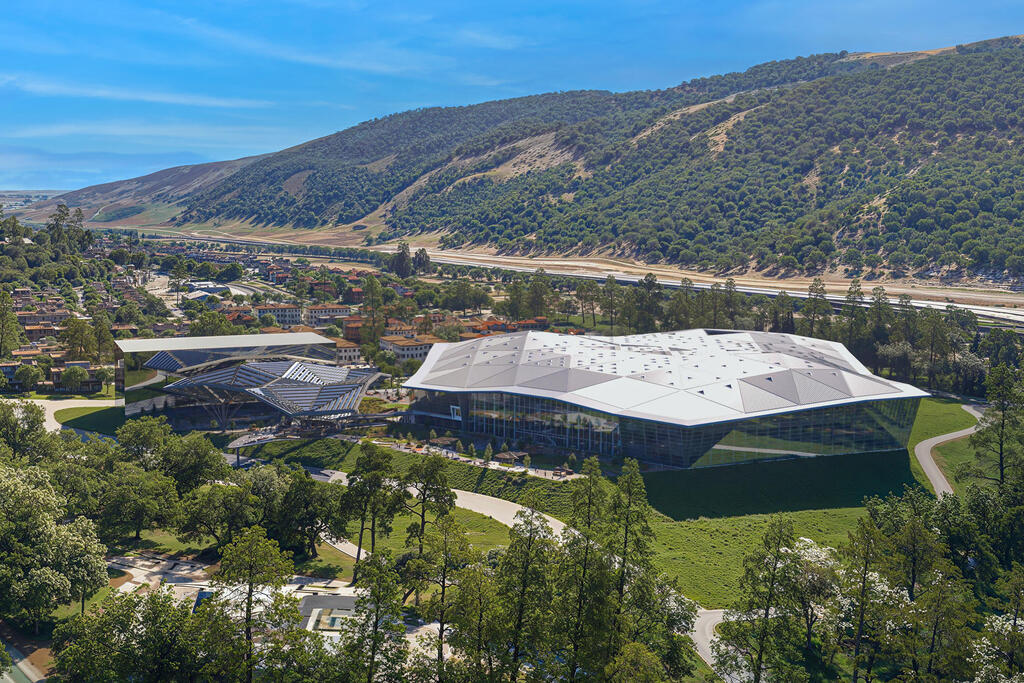
For now, the campus remains years away. Nvidia has said the site will include ancillary services such as restaurants and cafés, but little else is known. Even the architectural renderings released so far are essentially replicas of Nvidia’s Santa Clara campus, not detailed planning documents.



