










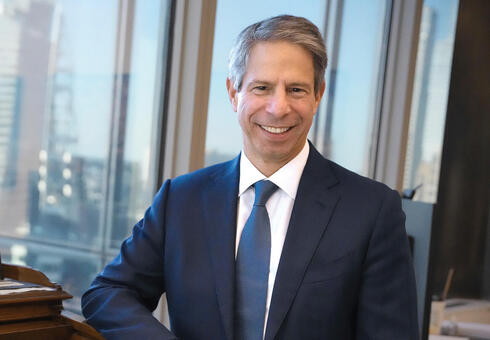
Morgan Stanley co-president: "There is no AI bubble"
Dan Simkowitz argues that strong corporate earnings and the financial strength of major technology companies distinguish today’s AI boom from previous market bubbles. But he acknowledges that investors face a growing challenge in determining which businesses will benefit from the technology and which will be left behind.
“I know that investors are weary, and facing greater challenges than ever before, because they are constantly being forced to reassess the fundamental assumptions underpinning their investments. They often tell me that investing today requires significantly more effort than it did in the past. It is no longer enough to identify the future winners in AI, whether chipmakers, major cloud providers or model developers. Investors must also determine which companies will be best positioned to use artificial intelligence effectively, and which will lose out. We are still in the very early stages of making those assessments.
“And yet, today’s markets bear little resemblance to those of 2000 or 2008. I lived through the bursting of the tech bubble in 2000 and the subsequent financial crisis. But consider the computing capabilities available today, whether to me personally, to Morgan Stanley as an organization or even to my own children. The landscape is entirely different.”
Dan Simkowitz, co-president of Morgan Stanley, made these remarks in an exclusive interview with Calcalist, offering a defense of the AI investment boom while acknowledging the growing demands it places on investors.
Morgan Stanley has operated in Israel for decades. Yair Seroussi, the former chairman of Bank Hapoalim, represented the bank as far back as the mid-1990s, when it also led Israel’s first international debt offering. The bank established a full-fledged branch in Israel in 2000, but its senior executives have rarely visited the country, and their visits have generally attracted little public attention.
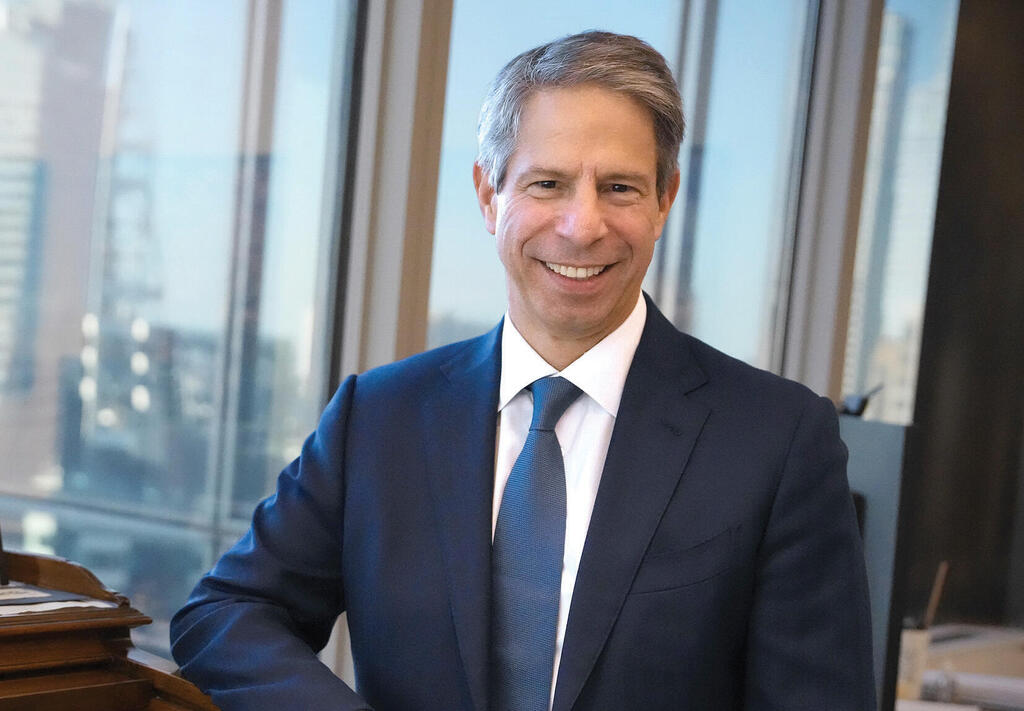
Simkowitz’s trip to Tel Aviv, a whirlwind 24-hour visit, marks a rare opportunity to hear directly from one of the bank’s most senior executives. He met with entrepreneurs, venture capitalists and senior executives from publicly traded companies.
Morgan Stanley competes with Goldman Sachs and other U.S. banks for investment banking and wealth management business in Israel. It has played a role in several major offerings by Israeli technology companies, including both Mobileye IPOs and SentinelOne’s listing. Over the past year, it also advised on Google’s $32 billion acquisition of Wiz and ServiceNow’s acquisition of Armis for nearly $8 billion.
Beyond investment banking, Morgan Stanley has a substantial wealth management business serving affluent Israeli clients. That business forms part of the firm’s global operation, which manages approximately $8 trillion in assets.
For Simkowitz, who became co-president in 2023, the visit was his first to Israel in that capacity. It was not his first time in the country, however. In 1985, he came to Israel as a swimmer competing in the Maccabiah Games.
He later captained Harvard’s swimming team, earned an MBA from Columbia University and joined Morgan Stanley in 1990. Over the course of his career, he held senior positions across investment banking and asset management, with a particular focus on technology IPOs and acquisitions. His name was also considered in discussions about the bank’s next CEO. Ted Pick ultimately took the role in 2023, while Simkowitz was promoted to co-president.
Simkowitz argues that the scale and accessibility of today’s computing power, together with the financial strength of the companies funding AI development, distinguish the current boom from earlier technology bubbles.
“Powerful tools that can increase productivity at the world’s largest organizations are available even to an 18-year-old in India with a mobile phone. We also need to examine the sources of funding for this power. Who is making the investments?
“In previous bubbles, there was much more room for speculation, and the money came from far less stable sources. Today, the companies financing development include Nvidia, Google, Microsoft, Amazon and Broadcom. These are huge companies with strong balance sheets and disciplined management. There is no AI bubble. There may be excessive enthusiasm at certain points, but in the long term, it is clear that we are only at the beginning of the road.”
“AI investments are bolstering corporate earnings”
Simkowitz’s visit coincided with a period of conflicting signals in the financial markets. U.S. Treasury yields remained elevated, while stocks traded near record highs. Rising oil prices and geopolitical tensions, including conflicts in the Middle East and the war between Russia and Ukraine, added to uncertainty.
How do you explain this market behavior? The yield on the 10-year U.S. Treasury note is at a more than 20-year high, and the threat of war looms, accompanied by rising oil prices, yet investors continue to pour money into stocks.
“We have witnessed quite a bit of drama in the markets this year, and I believe we are still seeing the repercussions. But if you examine the underlying dynamics, U.S. growth is extremely robust, with nominal GDP growth reaching 7%. A significant portion of that growth is driven by the enormous scale of investment in artificial intelligence.”
That rapid growth also has an inflationary component, Simkowitz said, while conflicts in the Middle East and the war between Russia and Ukraine are putting pressure on energy markets. Those forces are feeding into the bond market, where investors are responding to both inflation risks and strong economic growth.
“There is no doubt that the past few months have been intense and volatile for macro investors. Yet the U.S. stock market, along with other markets, has shown remarkable resilience, driven by AI.
“Investments in artificial intelligence are generating growth and bolstering corporate earnings. We see this firsthand at Morgan Stanley as we increasingly adopt AI tools. We are already seeing returns on our investments in computing power, and we are only just getting started.
“AI is driving an increase in corporate profits that will outweigh the impact of geopolitical tensions and rising interest rates. The power of AI is offsetting some of the volatility and pressure stemming from interest rates and currency fluctuations.”
Morgan Stanley also benefits from market activity through its trading business, which generates commissions. But Simkowitz’s broader argument is that the current strength of equities rests on corporate earnings, not simply investor enthusiasm.
How do you explain the wave of apocalyptic forecasts from economists warning that the market is in a bubble?
“Those who advance these pessimistic scenarios would argue that the market is already very expensive. But they overlook a key data point that undermines their bearish argument: the earnings of the companies driving the economy are exceptionally strong.
“If you look at the price-to-earnings multiples at which these companies trade, they have barely changed this year. What has changed is their earnings,” Simkowitz says. “Despite the rise in stock prices, particularly in the U.S. technology sector, multiples have not expanded because earnings have grown even faster.”
Still, the scale and structure of financing for AI infrastructure have raised questions about how sustainable the boom will be. Morgan Stanley is deeply involved in a financing ecosystem estimated at $1.5 trillion, in which companies across the AI supply chain invest in one another. Such arrangements can help fund infrastructure and sustain demand, but they also raise questions about how much of that demand ultimately depends on continued investment by the same group of companies.
Isn’t that starting to look worrying, particularly when some of the debt involved carries relatively high yields, such as Oracle bonds offering 7%?
“I don’t buy into all the hype surrounding these frightening scenarios. The key is to examine every deal rigorously and maintain strict discipline in credit underwriting and research.
“Currently, there are no forecasts or expectations for a global recession, and certainly not for a recession in the U.S. Credit spreads remain favorable for borrowers. As for the risks, we need to watch whether volatility in interest rate and currency markets begins to overshadow the positive impact of economic growth, which has been supporting the stock market.
“These two forces are competing with each other, and so far, the market has managed to hold its ground.”
Which sectors do you favor outside artificial intelligence, or has everything effectively become tied to AI?
“If I had to choose one sector in which artificial intelligence could drive a major leap in productivity and innovation, I would point to parts of healthcare.
“The healthcare system remains heavily reliant on manual labor, paperwork and processes that are not fully integrated from end to end. There is enormous potential for improvement through more effective use of technology.
“The other side of the sector, drug development and biopharmaceuticals, also offers tremendous opportunities. We are seeing significant investor interest in this area. Healthcare accounts for a substantial share of economic activity and GDP, making it particularly important.
“Another area worth watching is the industry that provides the infrastructure for data centers. A number of industrial companies are involved in building that infrastructure, and they may present attractive investment opportunities.”
The software sector, meanwhile, is often described as one of the likely losers from the AI revolution. There has even been talk of a “SaaS apocalypse.” Do you agree?
“The ‘SaaS apocalypse’ scenario was an exaggeration. The software sector certainly needs to undergo a profound transformation, but does that mean it will disappear? I don’t think so.
“The pressure on the industry is immense, and the scale of the required change is significant. However, some of these companies are much more than a single product sold through a traditional billing model. They have the capacity to adapt, a capability that may not have been fully appreciated until now.”
Investors are eagerly anticipating the potential IPOs of AI giants Anthropic and OpenAI, with valuations reportedly reaching as high as $2 trillion. How would such offerings affect the market?
“We handled the SpaceX offering, the largest in history, although I cannot comment specifically on Anthropic or OpenAI. But if you look at SpaceX today, which is closely linked to the AI ecosystem, its stock performance has been strong so far. This is further evidence that AI is not a bubble but a powerful economic engine.”
Morgan Stanley is expected to be among the underwriters for the anticipated IPOs of Anthropic and OpenAI, two offerings that could test investor appetite for large technology listings.
There is a widespread view that major institutional investors in the U.S. and elsewhere are holding capital on the sidelines in anticipation of these potential mega-IPOs. That expectation has contributed to concerns that smaller companies, including Israeli technology firms, will struggle to attract enough investor interest to list on Nasdaq and will instead seek acquisitions.
Can an Israeli company still reach the scale required for an IPO on Wall Street?
“The IPO market is much healthier today than it was until recently. Over the next two years, we will see more public offerings than we saw in the period leading up to the SpaceX IPO. The underlying market conditions are favorable.
“Granted, it is more difficult for companies that are not at the center of the AI boom, but this is not a permanent state of affairs. For a small company growing at a moderate pace, going public is extremely difficult and will remain challenging in the near term. The market favors larger companies, while investors in small- and mid-cap stocks have sustained losses.
“But for a growing company that is relatively small yet has significant potential, the picture is different. If its growth rate is high, it can go public. It does not necessarily have to be sold.”
Is profitability no longer a requirement for an IPO?
“It depends on the specific case. A large company that is growing well can still go public even if it is not a cutting-edge technology company or an exceptional biotech business.”
“I would be surprised if Israel did not produce a steady stream of billion-dollar companies”
You advised Wiz during its potential sale to Google and were involved when Assaf Rappaport rejected the initial $23 billion offer. Will we see more mega-deals of a similar scale involving Israeli companies?
“I have been working with Israeli companies for about 25 years. In the early days, they were primarily very small startups. That has changed. Israeli companies are no longer just small startups relying mainly on talented people. They now offer products and systems that are critical to their customers’ operations.
“As a result, the scale of transactions and the interest shown by global technology companies in Israel are substantial. I would be very surprised if, over the coming decade, we did not see a steady stream of Israeli technology companies valued in the billions of dollars, companies that will either go public or be acquired. The pace and scale of activity here are consistently growing. This is a clear testament to the strength of the Israeli economy and the quality of its human capital.”
Simkowitz says Morgan Stanley’s involvement in the Israeli ecosystem goes beyond advising on major transactions.
“This is also why we invest significant effort in working with startups, founders and venture capital funds. We engaged with the founders of Wiz, as well as with Amnon Shashua of Mobileye, when their companies were still very small and at an early stage.”
In discussing Wiz’s origins, Simkowitz was referring to Adallom, the cloud security startup founded by Rappaport and his co-founders before they established Wiz.
“When I speak about the large number of companies expected to go public or be acquired, I do so with considerable confidence. That confidence is rooted in the fact that we are deeply embedded in the ecosystem.”
I could have agreed with you confidently before 2023. How has the perception of Israeli technology companies and businesses among American investors and banks changed since then?
“What we are seeing in the Israeli stock market, in technological development and in the mergers and acquisitions we have executed, including the Wiz deal, is that the resilience of the Israeli stock market, and the technology sector in particular, is extraordinary.
“I do not want to downplay the gravity of the events of October 7, a date that remains constantly in my mind and in my heart. But Israeli high-tech has navigated this period in a truly impressive manner. I am not referring here to the emotional, political or geopolitical dimensions of the situation, but to the importance of Israeli technology in the world we inhabit today.
“In this regard, Israel has never been more important. The markets are turning toward Israel. Cybersecurity and security are fields in which Israel has long excelled, and today they are at the top of the market’s priorities, both in national security and in enterprise security.
“In a world where the ability to build and create, including in deep tech, is becoming increasingly vital, Israel plays a significant role. This is an extraordinary expression of resilience and quality, even in the face of adversity and difficulty.”



