











Revolut is coming to Israel. Can it finally break the country's banking oligopoly?
The company has received a conditional banking license and could launch within a year, bringing the scale of its 80 million-customer international business to a market dominated by established local lenders. Its challenge will be persuading Israelis to move beyond using it for payments and foreign exchange.
For the first time in more than two decades, an international bank is preparing to compete for customers in Israel's retail banking market. Revolut, one of the world's largest digital financial services companies, has received a conditional banking license from the Bank of Israel. According to Supervisor of Banks Dani Hahiashvili, the company could begin operating in Israel within approximately a year, provided it completes the necessary regulatory processes.
The move had been widely anticipated. In recent months, Revolut Israel, led by Uri Nathan, the former CEO of digital bank Pepper, has been recruiting senior executives from the local credit and financial sectors. The company is also integrating with SHVA (Automated Banking Services), a step that is seen as signaling preparations to issue payment cards in Israel.
Revolut already holds a license to provide payment services in Israel, but has so far chosen not to use it. Part of the explanation lies in a strategic decision to enter the market as a bank offering a broad range of financial products, rather than starting with a narrower payment service.
2 View gallery
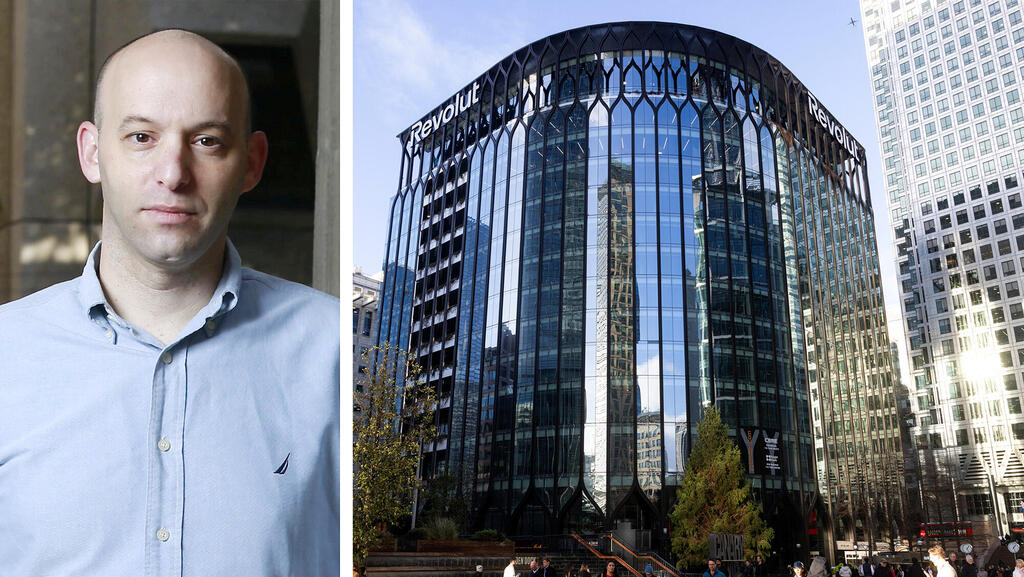
Revolut Israel CEO Uri Nathan alongside a Revolut bank branch
(Chris Ratcliffe/Bloomberg, Amit Shaal)
The company is considering offering current accounts, deposits, loans, payment cards and securities investment services in Israel. However, it has yet to make a final decision on which products it will launch or how they will be priced. Globally, Revolut operates a subscription-based model under which customers pay a monthly fee for access to expanded service packages. It remains unclear whether the company will introduce the same approach in Israel. Its local operations are expected to be entirely digital, without physical branches.
One of Revolut's main advantages is its scale. Local digital banks such as One Zero and Esh must justify investments in developing technological services largely on the basis of the Israeli market. Revolut, by contrast, develops products for tens of millions of customers around the world. This allows it to spread development costs across a much larger customer base, potentially making it easier to offer advanced services at competitive prices.
80 million customers worldwide
Revolut is one of the fastest-growing companies in the global digital banking sector. Founded in the UK in 2015 by Nikolay Storonsky, it operates in more than 40 countries and serves over 80 million retail customers, primarily in Europe. In the UK, it has approximately 13 million customers. In France and Spain, it has around 7 million in each country; in Italy, more than 6 million; and in Poland and Romania, approximately 5 million in each. In Spain, for example, about 15% of the population holds a Revolut account, while in Ireland its credit portfolio has surpassed €1 billion.
The figures illustrate how a company that began as an app for currency exchange and money transfers has gradually expanded into a broader retail banking business, offering deposits, credit and investment services. Nevertheless, a significant portion of its global customer base does not yet use Revolut as its primary bank.
Revolut is the third new bank to receive a license under the Bank of Israel's tiered licensing framework, following One Zero, founded by Amnon Shashua, and Esh, founded by Nir Zuk. The framework is designed to make it easier for new banks to enter the market by tailoring capital requirements, regulation and supervision to the size and complexity of their operations. Smaller banks can begin with a more limited range of services and face additional requirements as they expand, while remaining subject to safeguards intended to protect their stability and depositors' funds.
2 View gallery

On the right, Revolut Israel CEO Uri Nathan and Revolut founder Nikolay Storonsky
(Amit Shaal, Giuliano Berti/Bloomberg)
A senior figure in the banking industry said Revolut's international scale gives it a significant advantage over local digital banks, particularly One Zero.
"One Zero has to develop a product and justify the investment based solely on the Israeli market. At Revolut, when a new product is developed, it is designed with tens of millions of customers worldwide in mind. Consequently, it is far easier to justify the investment, even when the product is intended to enhance the customer experience rather than necessarily generate additional revenue," the source said.
According to the source, the difficulties facing local digital banks are partly rooted in the high fixed costs of operating a bank. "Even a bank without physical branches incurs massive fixed costs. When these costs are spread across a limited number of customers in Israel, achieving profitability becomes difficult. However, when a large portion of expenses is distributed across tens of millions of customers worldwide, the equation changes."
That advantage does not necessarily mean Revolut will be the cheapest provider of every banking service. The central question is whether it can translate its global scale into a meaningful presence in Israel, where customers have traditionally been slow to switch banks.
Revolut may initially focus on services such as foreign exchange and peer-to-peer money transfers, similar to those offered by local services such as Bit and PayBox. These are areas in which the company has built its business and could provide a relatively straightforward entry point. Persuading customers to try a standalone service, such as currency exchange or money transfers, is generally easier than convincing them to open a new bank account and move all their financial activity to a different institution. Even if Revolut launches full current accounts in Israel, it may therefore prioritize services that allow it to attract customers before trying to become their primary bank.
Adapting to Israeli banking habits
Payment cards present another challenge. Although Revolut has begun integrating with SHVA's infrastructure, it will still need to adapt its offering to local consumer habits.
One of its advantages is the ability to hold balances in multiple currencies in a digital wallet. Customers can, for example, purchase dollars in advance and then use a payment card to make dollar-denominated purchases directly from that balance.
Israeli consumers, however, are accustomed to credit cards that provide a credit limit and defer payment until a later date, rather than relying exclusively on money already deposited in an account. To compete more broadly, Revolut may need to combine the flexibility of its multi-currency wallet with access to a credit line. That could require a product tailored specifically to the Israeli market.
The last time an international bank made a significant attempt to compete for retail customers in Israel was in 2002, when U.S. banking group Citibank entered the market with current accounts and other services for households. The effort was short-lived. The bank froze its expansion plans that year and began scaling back its retail operations in 2003. International banks have continued to operate in Israel since then, but have largely concentrated on corporate clients, financial institutions and private banking for wealthy individuals rather than competing for customers across the household market.
Revolut's conditional license is part of a broader Bank of Israel initiative to encourage new players to enter the banking sector. Under the tiered licensing framework developed by the Banking Supervision Department, capital and liquidity requirements are adjusted to the size of a bank and the scope of its activities. The framework also allows micro and small banks to begin with a limited range of services, potentially focusing on areas such as deposits and loans.
Hahiashvili said Revolut's decision to enter Israel reflects confidence in the country's economy and could represent a significant development for consumers.
"What we see here is a group, an international company with proven business experience abroad, which is expanding and becoming a significant player in various markets around the world," he told Calcalist.
"Bringing a real contribution to the foreign exchange sector"
Revolut already holds a license from the Israel Securities Authority to provide payment services, which it obtained before deciding to pursue a banking license. It nevertheless chose to seek authorization to establish a bank rather than begin operating solely as a payment services provider.
"The significance of their decision to seek a banking license in Israel, rather than a payment services provider license, is that they can offer a broader suite of products," Hahiashvili said.
According to the supervisor, Revolut's planned offering is expected to cover much of the range of financial services available through a retail bank. "Their flagship product centers on payments, specifically international payments and transfers, but they will also offer current account management, deposits and securities trading. These are the services expected to be available."
Hahiashvili said Revolut does not currently plan to enter the mortgage market. The conditional licensing process allows the company to begin with services in which it has a competitive advantage and expand its activities later. As part of its application, Revolut submitted a business plan to the Banking Supervision Department, which set milestones that it must meet before receiving an unrestricted license.
"We will see them in Israel very soon," Hahiashvili said. "To obtain an unrestricted license, they must complete the necessary processes and meet the regulatory milestones we have set for them. Broadly speaking, a timeframe of about a year is a reasonable estimate for fulfilling these requirements."
The tiered licensing framework was developed partly in response to the experience of One Zero and Esh, the first two banks to enter under the new approach. According to Hahiashvili, regulators examined the challenges those institutions faced in developing their business models and launching operations. Their arrival has also had an effect on the established banking sector, prompting incumbent banks to reconsider their products, pricing and service standards.
"It is more difficult for the pioneers; for those who follow, it may be easier," he said.
Alon Glazer, managing director of research at Leader Capital Markets, believes Revolut could attract Israeli customers through its competitive advantage in foreign exchange services.
"They make a genuine contribution in the realm of foreign currency transfers, international payments and several other areas where traditional banks are less strong," he told Calcalist.
Hahiashvili said he would like to see more small banks enter Israel, similar to markets where a handful of large institutions account for most banking activity while smaller players operate alongside them, offering specialized services and challenging established business models.