










Growth+
“A startup can’t do the same thing throughout its entire life”
As part of the Growth+ project by Calcalist and Poalim Tech, Vered Raviv Schwarz, President and COO at Guesty, met with Sapir Tubul, Co-Founder and CTO at LeanCon. “We knew that if we said two months, we would lose the client. So when they asked how long it would take, I answered: 'A week.' From that moment on, we went into sleepless nights, working 24/7 to deliver the product. In the end, it took us nine days instead of a week.”
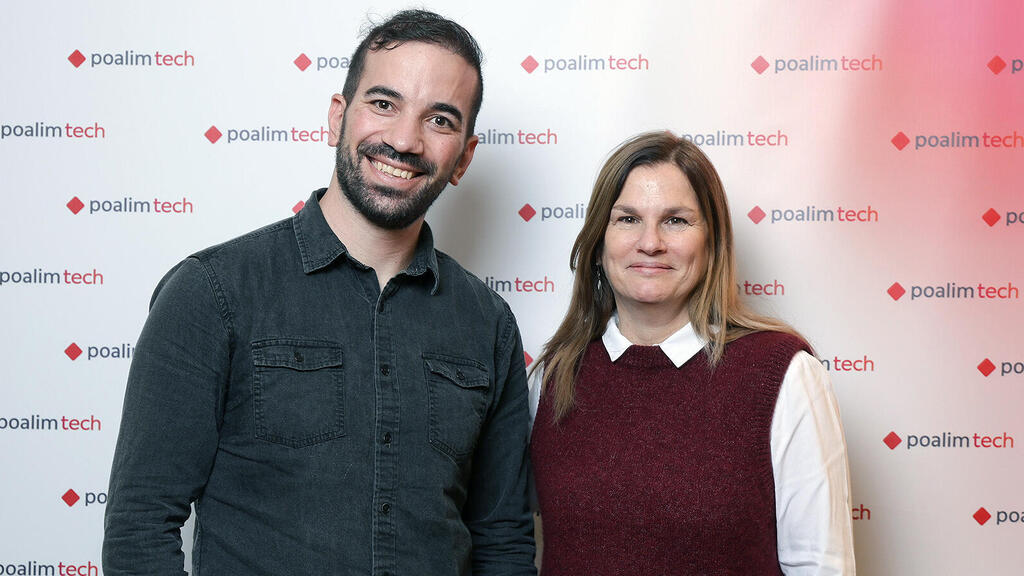
As part of the Growth+ project by Calcalist and Poalim Tech, Vered Raviv Schwarz, President and COO of Guesty, met with Sapir Tubul, Co-Founder and CTO of LeanCon, which develops an artificial intelligence-based solution for the planning and execution processes of projects in the construction industry.
The Growth+ project, now in its third year, includes one-on-one meetings between founders of Israel's leading tech companies and entrepreneurs from promising startups, with the aim of providing advice, support, and practical tools on entrepreneurship, creativity, startup management, and building companies for growth.
Vered, tell us about a crisis or challenge you encountered early on and what you learned from it.
"A significant challenge that I remember from the beginning was actually during my time at Fiverr, when the company scaled rapidly. We started with a concept of small transactions in an open B2C market, where we didn’t have to think deeply about regulation. Suddenly, it became a large, serious business with a completely different audience, and the ways in which we were judged changed. We experienced a similar challenge at Guesty when we started selling to the traditional American market. Suddenly, we realized that customers had completely different needs, for example, complex accounting rules that we hadn’t considered before. We had to build the system differently in order to win over this audience. The key insight is that you can’t continue doing what you’ve been doing throughout the life of a startup. You have to rebuild yourself and adapt to changing market conditions."
Sapir, what was your biggest challenge this year?
"We had our first pilot with an American client who requested features that we didn’t have in our system at that time. The client asked me what the timeframe was to deliver a customized product. I looked at my partner, we both knew the realistic answer was at least two months, but we also knew that if we said two months, we would lose the client. So when they asked how long it would take, I answered: 'A week.' From that moment on, we went into sleepless nights, working 24/7 to deliver the product. In the end, it took us nine days instead of a week, but this move helped us win the client. They saw that we were able to create significant value for them in a short time, and that opened the door to a double-digit number of projects with them."
Vered, what advice did you give Sapir?
"We talked a lot about pricing. How do you find the right balance? If you price too low, you are perceived as a non-premium solution; if you are too expensive, customers may walk away in advance. We discussed how to build a price list, how to price a pilot, and how to structure pricing for a design partner. We also talked about demonstrating profitability to the customer, showing that they pay X but save 5X. In addition, we discussed where the market is and where it makes sense to focus, expanding in stages rather than immediately pursuing projects in 20 countries."
What did you learn from each other?
Sapir: "The issue of pricing and transitioning from a pilot to a large group of projects is very much on our minds these days. Should we price per annual project, per time, or per user? What cost should we assign to our current stage? Should we offer a significant discount now and adjust later, or set a lower upfront price to signal long-term affordability? We plan to adopt some of Vered's insights with customers currently in our pipeline."
Vered: "It is always encouraging to see entrepreneurship that takes very conservative, established industries like real estate and brings real disruption, especially in the age of AI. I think the field is very active right now, and the product is well-positioned and in demand. I was pleased to hear that they have a clear and logical roadmap."
Is there anything surprising that you discovered about each other?
Vered: "I discovered that Sapir has three young sons and is currently at home with them. In addition, he is a graduate of the Yahalom unit, so he went through a difficult war and brought that experience and resilience into the startup world. It’s always interesting to see these connections."
Sapir: "I discovered that Vered has immense experience and knowledge, and even if it doesn’t come directly from the construction world, her business insights are relevant and critical at every stage of a company’s life."
Vered Raviv Schwarz's golden advice: “If you start with too narrow a vision, your chances of breaking out are small. Map out the path to where you want to be in ten years, even if it feels unrealistic at the time.”



