











SpaceX’s $2 trillion question: Visionary empire or Starlink house of cards?
Investors must decide whether Musk can turn costly ambitions into sustainable businesses.
Elon Musk intends to take SpaceX public on the Nasdaq. The company, which combines Musk’s activities in space, internet connectivity, artificial intelligence and social media, filed its prospectus over the weekend ahead of what could become the largest IPO in history.
SpaceX is reportedly seeking to raise between $75 billion and $80 billion at a valuation of between $1.5 trillion and $2 trillion. But the filing raises a more fundamental question for investors: what is the company’s real business?
The answer may be surprising.
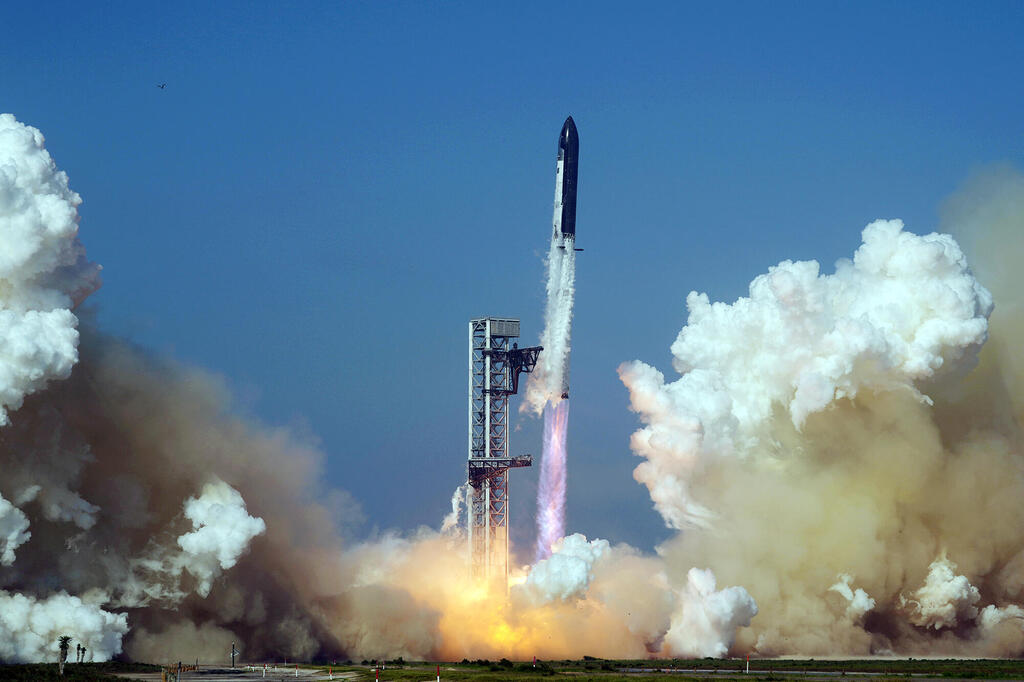
SpaceX’s prospectus marks the beginning of what could become the hottest IPO cycle in technology history. OpenAI and Anthropic are also expected to go public later this year at valuations reaching into the hundreds of billions, and perhaps even approaching $1 trillion. Together, the offerings could represent both the peak of the AI boom and, potentially, its first real test.
OpenAI ignited the generative AI revolution in 2022. Anthropic emerged as a fast-moving challenger that many investors believe executed more effectively than the original market leader. Other companies, including Google, Meta and Nvidia, entered the race through either long-established dominance or rapid adaptation.
SpaceX entered the AI race after Musk merged the company with xAI earlier this year. xAI itself was founded only in March 2023 and later absorbed X, formerly Twitter.
But unlike OpenAI or Anthropic, AI remains only a secondary part of SpaceX’s business. The prospectus makes that abundantly clear.
The company generated $18.67 billion in revenue in 2025, up 33.2% from $14.02 billion in 2024. However, revenue growth itself is slowing, not accelerating as investors might expect from a company approaching a record-breaking IPO.
Profitability paints an even more complicated picture. SpaceX moved from a $4.63 billion loss in 2023 to a profit of $791 million in 2024, before falling back to a $4.94 billion loss in 2025.
The primary explanation was a surge in research and development spending, which climbed 150% year over year to $8.64 billion.
Huge investments in infrastructure
The company is also spending aggressively on infrastructure. Capital expenditures reached $20.7 billion in 2025, including $12.7 billion dedicated to AI infrastructure projects such as Colossus and Colossus II data centers.
And the spending is accelerating. In the first quarter of 2026 alone, SpaceX invested another $7.7 billion into AI infrastructure.
Those investments are beginning to generate returns. Anthropic, according to the filing, agreed to pay SpaceX $1.25 billion per month through May 2029 in exchange for access to portions of its computing infrastructure. Similar agreements could eventually turn the company’s massive AI spending into a profitable business.
Still, the most revealing part of the filing is the breakdown of revenue across SpaceX’s three operating segments:
- Space - rocket launches and spacecraft operations including Falcon, Dragon and Starship.
- Connectivity - primarily the Starlink satellite internet business.
- AI - xAI operations, including the Grok model and X integration.
Ironically, the space division, the business most closely associated with SpaceX, is now the slowest-growing part of the company.
Revenue from space operations rose just 7.6% in 2025 to $4.09 billion. The segment also swung from a modest operating profit of $21 million in 2024 to a loss of $657 million.
The AI division generates the greatest excitement and likely contributes heavily to the company’s enormous valuation. Yet it remains the company’s smallest business segment, producing $3.2 billion in revenue in 2025, up 22.2% year over year.
It is also the largest source of losses. The AI segment recorded an operating loss of $6.36 billion, an increase of more than 300%.
The real financial engine of SpaceX is Starlink.
The connectivity division generated $11.39 billion in revenue in 2025, up 49.9% year over year, alongside operating profit of $4.42 billion, a 120.5% increase. Starlink ended the first quarter with 10.3 million paying subscribers, more than double the previous year.
Musk sells investors visions of Mars colonization, AI systems capable of understanding the universe, and futuristic orbital AI data centers. But the prospectus reveals a much simpler reality: SpaceX is currently, above all else, an extraordinarily profitable satellite internet provider.
Rockets are photogenic, but not highly profitable
That does not mean the company lacks long-term potential.
Rocket launches, AI infrastructure and advanced AI models could eventually become dominant profit drivers. SpaceX could still transform any one of these businesses into a far larger enterprise.
But the prospectus provides a reality check against some of the more ambitious narratives surrounding Musk’s empire.
The rocket business remains visually spectacular, but financially limited. The AI division, meanwhile, still trails competitors significantly. Anthropic alone is reportedly expected to generate $10.9 billion in revenue this quarter, more than ten times the $818 million generated by SpaceX’s AI segment during the first quarter of 2026.
For now, the core product SpaceX is bringing to public markets is not rockets to Mars, AI systems capable of reshaping humanity, or social media platforms. It is global satellite internet access.
The filing also highlights another central issue for investors: Musk himself.
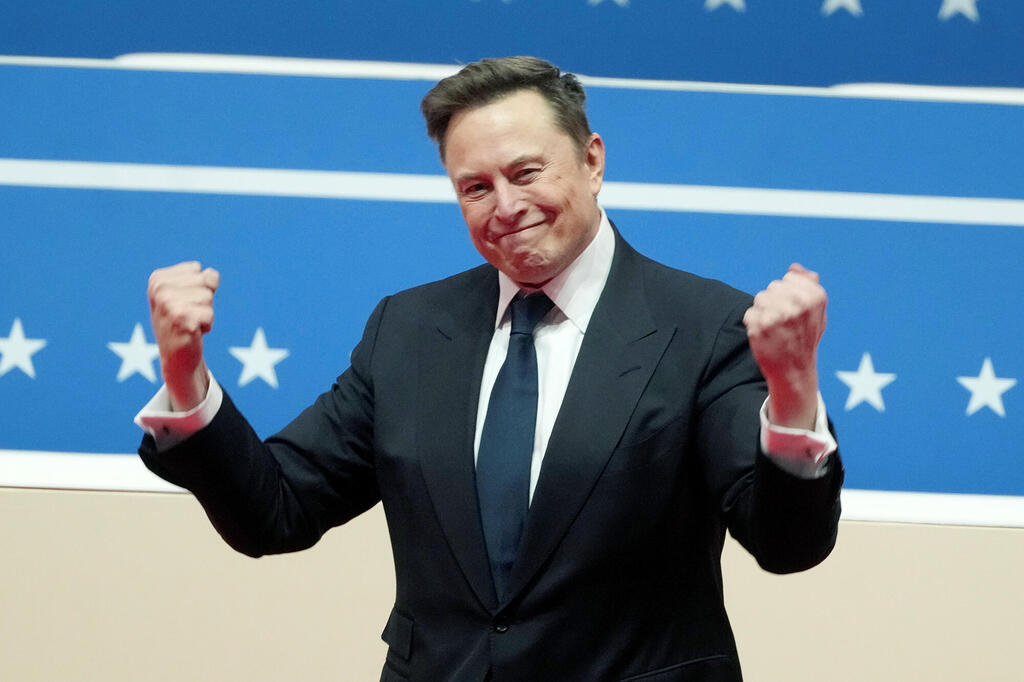
The billionaire controls 12.3% of SpaceX’s Class A shares and 93.6% of its Class B shares, giving him roughly 85.1% of total voting power. In practical terms, Musk will remain firmly in control of the company after the IPO.
Whether that concentration of power is viewed as a strength or a risk will depend largely on investor confidence in Musk himself. Supporters view him as one of the world’s most visionary entrepreneurs. Critics see an erratic leader whose increasingly political behavior and unpredictable management style introduce significant governance risk.
A successful IPO could also make Musk the world’s first trillionaire, creating strong incentives to maximize near-term market performance.
A house of cards built on Starlink
Despite the risks, a $2 trillion valuation is not necessarily irrational according to the company’s own projections.
SpaceX estimates its total addressable market at $28.5 trillion, including:
- $370 billion in space solutions,
- $1.6 trillion in connectivity,
- and $26.5 trillion in AI-related markets.
The filing also points to future businesses that sound almost science fiction-like: orbital computing, space tourism, orbital manufacturing, cargo transport to the Moon and Mars, lunar energy production and asteroid mining.
“SpaceX is no longer a traditional space company,” Chad Anderson, founder of Space Capital, told Yahoo Finance. “It’s an AI company vertically integrated with hyperscalers, and it wants to dominate all segments.”
Anderson argues that Starlink is effectively subsidizing the company’s far more speculative businesses.
“Starlink contributed more than $4 billion in operating profit,” he said. “The losses are the result of investments in growth - AI and Starship.”
That thesis depends on one crucial assumption: that SpaceX Starship can become operational within the next two years.
So far, Starship has demonstrated partial launch successes but has yet to achieve stable orbital deployment.
“The entire model depends on Starship becoming operational by 2027,” Anderson said. “Investors are buying into the next 50 years of orbital infrastructure, more satellites, larger launch capabilities and space-based AI data centers.”
SpaceX itself acknowledges that delays or failures involving Starship would materially harm its long-term strategy, particularly plans involving space-based computing infrastructure.
The company also warns of risks surrounding its AI business, particularly Grok. The filing states that Grok’s “spicy” and “wild” features could expose the company to reputational damage and the generation of misleading or exploitative content.
Ultimately, SpaceX and Musk are attempting something unprecedented: building a company simultaneously focused on Mars colonization, artificial intelligence, orbital infrastructure and global connectivity.
But almost all of those ambitions remain years, if not decades, away.
For now, the company’s entire structure depends heavily on one business: Starlink. The satellite internet division is effectively the oxygen supply financing Musk’s larger and vastly more expensive ambitions.
If those ambitions succeed, a $2 trillion valuation may eventually appear conservative. If they fail, investors may discover they bought into a far more ordinary business wrapped inside one of the most ambitious narratives in corporate history.



