










Israel is heading into an election without a serious debate about its economy
Likud and much of the current coalition have published no economic platform, while opposition proposals often lack cost estimates or funding plans. The silence reflects not only the dominance of security and identity politics, but also a public that has yet to feel the full weight of the country’s fiscal risks.
Two weeks before the elections for the 26th Knesset, no party is required to explain the economic agenda it intends to pursue if it wins. Most parties in the current coalition have not even bothered to publish an economic platform. Leading the way is the ruling Likud party, which has turned the failure to publish one into the “new normal.” Before voters can ask how much campaign promises will cost or who will foot the bill, there is a more basic problem: there are hardly any promises to begin with. Economic policy is largely absent from debates, broadcasts and interviews. In an election campaign taking place in a year when the deficit still exceeds 4% of GDP, following three years of exceptionally large deficits, the political establishment is preoccupied with almost everything except socioeconomic priorities and how to pay for them.
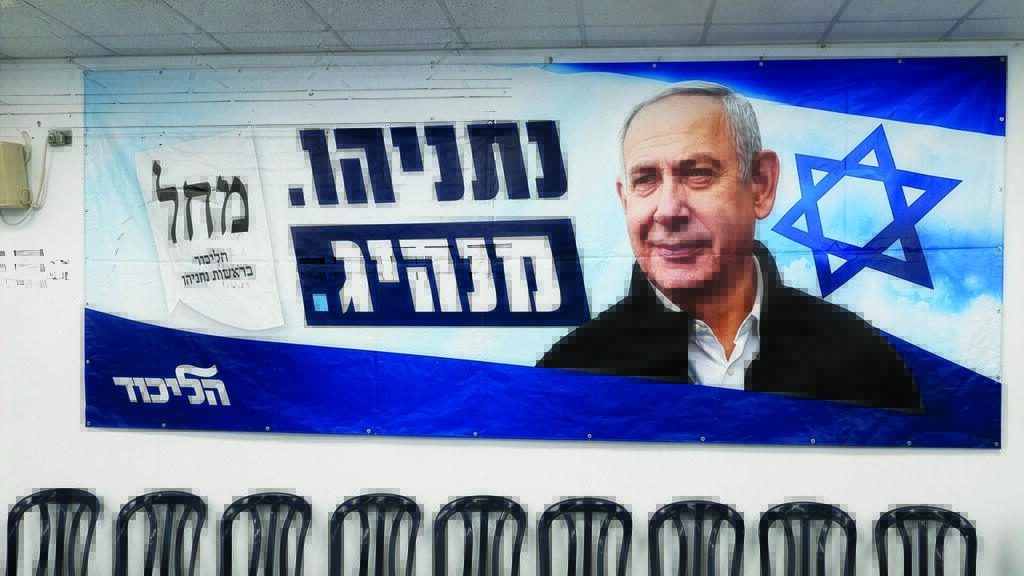
As previously noted, Prime Minister Benjamin Netanyahu’s Likud party has once again failed to publish a platform. This is not an oversight but a deliberate strategy. Since 2019, Likud has contested four consecutive elections without an economic platform. Other parties, including Shas, United Torah Judaism, Otzma Yehudit and Religious Zionism, whose leader is the finance minister, have also failed to present such a document. Bezalel Smotrich’s case is particularly striking. The party leader, who has overseen the state’s finances for four years, offers voters no indication of the economic policy he believes is appropriate for the economy he has been managing.
The picture is more detailed on the opposition side, where at least some parties have published general outlines or policy proposals, though not necessarily fully costed plans. Yisrael Beiteinu has published the most detailed platform, assigning specific price tags to some of its pledges: NIS 3 billion to strengthen the police, NIS 1 billion for artificial intelligence and NIS 1 billion for national laboratories. The platform also proposes adding NIS 25 billion a year to the defense budget. Yet it does not provide a total cost or identify funding sources, and even measures that could potentially help pay for the pledges lack cost estimates.
Gadi Eisenkot’s Yashar! party promises income tax cuts for workers, to be funded by cracking down on the “black economy,” a source of additional revenue that finance ministers have repeatedly promised to pursue but rarely quantified. The Yachad party, led by Naftali Bennett and Yair Lapid, has proposed measures to reduce market concentration in the food sector and increase long-term care benefits, but has not identified funding sources. The Democrats have settled for a broad platform that also lacks a price tag. More troublingly, its budget calculations do not appear to add up.
Who is pledging to eliminate coalition funds?
Much of the proposed cost-cutting in party platforms sounds appealing but would save relatively little. Several opposition parties, including Yisrael Beiteinu and Yashar!, promise to reduce the number of ministers and close “superfluous ministries.” The budget documents show the limited savings these measures could deliver. In 2026, the Ministry of Heritage is allocated NIS 86 million, the Ministry of Jerusalem and Tradition NIS 101 million, the Ministry of Diaspora Affairs NIS 191 million and the Ministry of Settlement NIS 581 million. Together, that is less than NIS 1 billion, or approximately 0.14% of the state budget.
The combined cost of all ministerial and deputy ministerial offices is less than NIS 20 million. Even that amount could not necessarily be eliminated in full, since many of the ministries existed before the current government. The more substantial savings may lie in curbing their expansion. The Ministry of Settlement’s budget rose from NIS 139 million in 2022 to a planned NIS 581 million in 2026. Meanwhile, the Ministry of Jerusalem and Heritage, which received NIS 53 million in 2022, was split into two ministries whose combined 2026 budgets total NIS 187 million.
Abolishing coalition funds, a measure explicitly pledged by only Yisrael Beiteinu, could yield considerably greater savings: approximately NIS 5 billion in the 2026 budget. But the figure needs to be treated with care. Some of the spending has already been incorporated into the budget baseline, while other allocations are made through adjustments during the year. The Ministry of Heritage’s budget, for example, has more than doubled from its initial approval to NIS 194 million.
A measure that could have a more lasting effect on public spending is to make municipal tax discounts, exemptions and allowances depend on socioeconomic status rather than sectoral affiliation. This proposal appears in the Yashar! platform, but without enough detail to assess how it would work or how much it would save.
This is what another election campaign looks like: the supply of economic policy proposals is extremely limited, but demand for them is almost nonexistent. That is the more troubling question. With all due respect to the politicians, the issue is not just why economic platforms are missing or inadequate, but why voters are not demanding them.
The first and most obvious explanation is historical. A country that has faced existential threats since its founding tends to put the economy second, and a country at war since October 7 pushes it even further down the list. Security concerns dominate the agenda. That helps explain why economic issues take a back seat, but not why they have all but disappeared.
The second explanation is that the economy has not vanished from the campaign. It has simply disguised itself. The major fiscal debate of this election, over the conscription of ultra-Orthodox men, is framed in terms of loyalty and “sharing the burden,” rather than budgetary costs. Yet its underlying mechanisms are economic. Exemptions from military service are tied to remaining in yeshiva until the age of exemption, a requirement that keeps tens of thousands of men out of the workforce.
When Lapid declares that “the ultra-Orthodox won’t get a single shekel,” he is making a budgetary argument in the language of tribal politics. When Agudat Yisrael and Degel HaTorah commit in their joint electoral agreement to seeking exemptions from military service for yeshiva students without sanctions, they are effectively presenting one of the election’s most consequential fiscal positions. “No sanctions” means preserving the existing system of stipends, day-care subsidies and other benefits. No one calls this an economic platform, but that is precisely what it is.
A third explanation is that many voters do not feel an economic crisis in their pockets. The economy absorbed the impact of the war with Iran in the first quarter of the year: GDP contracted at an annualized rate of 3.3%, while private consumption fell by 4.7%. In the second quarter, however, GDP rebounded at an annualized rate of 14.9%, more than reversing the earlier contraction. Unemployment fell to 2.8% in August, close to historically low levels. Annual inflation stands at 1.5%, below the midpoint of the government’s 2% target.
By the end of June, the public’s financial asset portfolio had reached approximately NIS 7.6 trillion, following an increase of NIS 332 billion in a single quarter. The deficit remains high and public debt is rising, but households with growing pension savings, secure jobs and relatively stable supermarket prices may not feel that the state’s finances are in trouble. Voters tend to focus on the economy when they feel economic pain. Israel’s fiscal risks are real, but they are not part of most people’s daily experience. They appear in Bank of Israel and OECD tables, not on the average Israeli’s bank statement.
There is one major exception: the cost of living. According to OECD data for 2023, Israel’s price level for private consumption was approximately 22% above the organization’s average, making it one of the most expensive countries in the developed world. Polls repeatedly identify the cost of living as one of the public’s most pressing concerns, and it features prominently in numerous party platforms. Yet it rarely becomes the focus of a sustained political debate.
One possible explanation is that Israelis have grown accustomed to it. When high living costs persist for more than a decade, they can become part of the routine landscape rather than a catalyst for political change.
A fourth explanation is structural. Political parties have increasingly become vehicles for individual leaders, such as “Yashar! with Eisenkot” and “Bennett 2026,” which merged with Yesh Atid. In such parties, the leader often determines the composition of the electoral slate. Only Likud and The Democrats selected their lists through primaries. When the party is the leader, the leader becomes the platform. There is little incentive to commit to a detailed policy agenda when voters are being asked to endorse a person.
The populist zeitgeist
The fifth explanation is comparative. Israelis looking abroad see France, which has no war on its territory, no missile attacks and no military reserve-duty burden comparable to Israel’s, struggling to reduce a deficit of 5.4% of GDP. French public debt has reached 119% of GDP, its highest level since World War II. In early October, the yield on 10-year French government bonds touched 5%, its highest level since 2002. Governments have struggled to maintain stable parliamentary majorities. In the United States, the deficit for the fiscal year ending in September reached approximately $2 trillion, or 6.2% of GDP, while public debt surpassed 100% of GDP.
By comparison, Israel, which has been fighting on multiple fronts for three years, has a debt-to-GDP ratio of approximately 69% and a 10-year government bond yield of around 4.2%. Its risk premium, measured by five-year credit default swaps, stood at just 49 basis points last June, a level similar to that recorded on the eve of the October 7 attacks. It has since risen to 58 basis points, compared with 140 in 2024.
Economists also look at the direction of travel: is the situation improving or deteriorating? On that measure, the comparison may be reassuring. Israel’s deficit is currently lower than France’s, but the difference partly reflects their starting points. Israel entered the war with a debt-to-GDP ratio of approximately 60%. That initial buffer provides a degree of security, but every year of running a deficit comparable to France’s erodes it. Israel’s fundamental economic challenges are also long-term, even as the high-tech sector continues to thrive and major exits help offset shortfalls in tax revenue.
The final explanation is what Dutch political scientist Cas Mudde termed the “populist zeitgeist”: a political climate in which even mainstream parties adopt a narrative pitting a “pure people” against a “corrupt elite.” Israel’s pro-Netanyahu and anti-Netanyahu camps no longer represent merely competing policy agendas. They have become opposing moral camps, each viewing the other as an existential threat to the state itself.
Moral battles leave little room for deficit figures. Voters convinced that the opposing camp is “treasonous” are unlikely to stop and ask how much fuel or cottage cheese will cost in two months. The result is predictable: the next government will have to pass a budget for 2027 from a starting point of high debt and defense spending that shows little sign of falling.
The bill will come due after the election. Voters may not have demanded a detailed account of the costs, but they will still have to pay them.



