










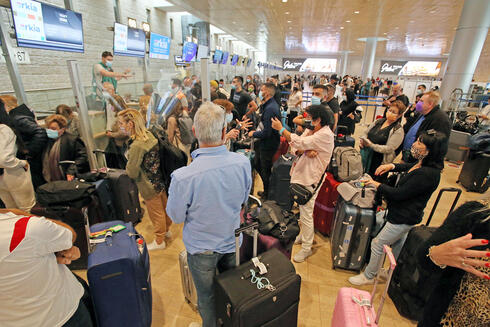
Ben Gurion Airport braces for its busiest summer since the war began
More passengers, more flights and the reopening of Terminal 1 signal a recovery, though not yet a full one.
After two and a half years of operating under the shadow of war and recurring security threats, Ben Gurion Airport is beginning to feel the impact of the summer travel season, with a significant increase in activity during July. The Israel Airports Authority expects approximately 2.3 million passengers, both arriving and departing, to pass through the airport this month, up from 1.67 million in July 2025. Aircraft movements are also expected to rise to 14,500, compared with 12,100 during the same month last year.
The rebound is being driven by the return of foreign airlines, the weakening of the U.S. dollar against the shekel, and Israelis' desire to travel after nearly three years of war. Even so, the recovery remains incomplete. In July 2023, before the war, Ben Gurion Airport handled 2.6 million passengers and was served by 77 foreign airlines.
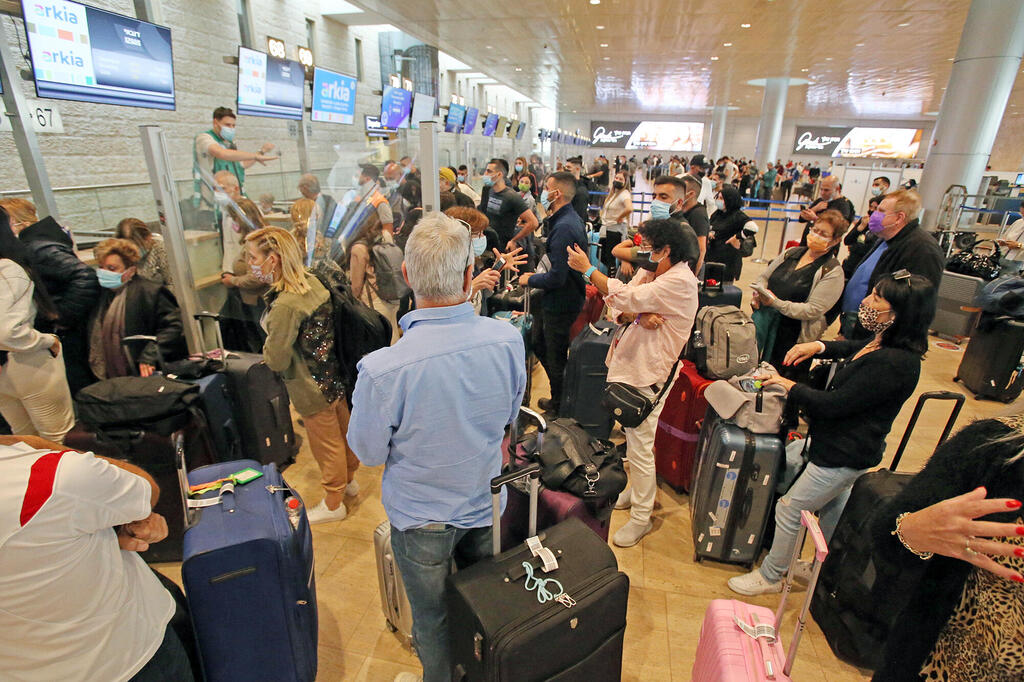
In 2024, following the outbreak of the Iron Swords war on October 7, 2023, aircraft movements at Ben Gurion Airport fell by 40.5%, while passenger traffic declined by 44%. For nearly three years, the airport has contended with persistent security threats, including Houthi missile attacks, one of which struck near Terminal 3, threats from Iran, repeated airspace closures, and the prolonged presence of U.S. Air Force refueling tankers and transport aircraft occupying parking stands normally used by commercial airlines.
For months, there were genuine concerns that millions of airline seats would not be available this summer because the continued presence of U.S. military aircraft prevented the Airports Authority from allocating additional takeoff and landing slots to foreign airlines. Ultimately, however, dozens of U.S. refueling aircraft were relocated, allowing international carriers to expand their schedules.
Many airlines are returning to Israel this month. Lufthansa has already resumed its Frankfurt route with 14 weekly flights and plans to operate 29 weekly passenger flights to and from Israel during July. Austrian Airlines has increased service to 11 weekly flights between Tel Aviv and Vienna. Eurowings will resume operations on July 10 with two weekly flights to Hamburg and will add two weekly flights to Düsseldorf beginning July 18.
During August, Lufthansa plans to increase its schedule to 54 weekly flights from Israel. Swiss will launch daily service between Tel Aviv and Zurich, Austrian Airlines will increase its Vienna service to 14 weekly flights, and Brussels Airlines is expected to operate one weekly flight between Brussels and Tel Aviv.
Italian carrier ITA Airways has also resumed its Rome route with two daily flights, while AirBaltic has returned with three weekly flights to Latvia. Georgian low-cost carrier OneClick Airways has resumed service with two weekly flights to Batumi and two weekly flights to Tbilisi. Air France is expected to resume daily flights between Tel Aviv and Paris this weekend. Overseas will launch a weekly route to Slovakia later this month, while FlyOne will resume flights to Romania on July 19 with eight to nine weekly services. In August, Air Seychelles is scheduled to restart its direct route between Tel Aviv and the Seychelles with one weekly flight.
The Americans Are Still Taking Their Time
Despite the return of many international carriers, Ben Gurion Airport's flight schedule remains far from its pre-war scale. In July 2023, 77 foreign airlines operated at the airport. By the end of June this year, 33 foreign airlines had returned, and with additional carriers resuming service during July, the total is expected to reach 44.
Major U.S. airlines remain cautious. Delta Air Lines does not plan to resume flights until September 2026, while American Airlines has postponed its return until October 2026.
Europe's largest low-cost carriers are also staying away. EasyJet and Ryanair, whose return could significantly reduce airfares for Israeli travelers, have yet to restore service.
EasyJet first announced a long-term suspension of flights to Israel in July 2025, extending it through March 28, 2026, before later prolonging the suspension.
Ryanair's situation has become more complicated. Beyond security concerns, the airline became embroiled in a dispute with the Israel Airports Authority following the temporary closure of Terminal 1, whose lower airport charges make it particularly attractive to low-cost carriers. The dispute ultimately led Ryanair to remove Tel Aviv entirely from its route network.
The Airports Authority maintains that airport fees were never the primary obstacle, pointing to the reopening of Terminal 1 without Ryanair's return as evidence that other factors are driving the airline's decision.
Against the backdrop of rising passenger volumes, Terminal 1 reopened this week for international flights. The reopening, postponed several times because of the security situation and reduced traffic, is expected to ease congestion at Terminal 3 while lowering airport charges for airlines. The Airports Authority has completed logistical preparations, including reopening duty-free stores and restoring the free shuttle service between terminals.
Families Drive Demand
There is also encouraging news on ticket prices.
While global airfares have risen by more than 11%, prices in Israel have begun to decline. Although fares remain well above pre-war levels, they have eased compared with the past two summers.
Airfares from Israel rose by roughly 33% between the summers of 2023 and 2024 and by 60% to 70% between the summers of 2023 and 2025. Now, prices are beginning to moderate.
According to lastminute.co.il's July 2026 airfare index, ticket prices to Budapest have fallen by 47%, Batumi by 36%, and Athens by 37% compared with last year.
Compared with pre-war levels, however, fares remain elevated.
Destinations with limited competition continue to command especially high prices. Amsterdam fares are 8% higher than last year and 104% above summer 2023 levels, averaging $787. Bangkok fares have risen 28% year over year and are 101% above 2023 levels, averaging $1,234 per ticket. Tbilisi remains 89% more expensive than before the war, while Berlin is up 63%.
The extreme heat wave sweeping Europe is also reshaping Israelis' travel preferences.
Searches for hotter destinations have declined sharply, including Milan (-27%), Madrid (-22%), Paris (-18%), Lisbon (-12%), and Berlin (-8%). Meanwhile, demand has risen for beach destinations such as Paphos (+38%), Rhodes (+31%), Mykonos (+29%), and Corfu (+21%), as well as for cooler destinations including Bratislava (+78%), Sofia (+57%), Tirana (+28%), and Geneva (+17%).
According to the index, travel habits are also changing. Families now account for 42% of all bookings, up from 38% last year, while solo travelers have fallen from 31.5% to 25%.
Despite the gradual return of foreign airlines, more than 88% of Israelis continue to book with Israeli carriers, underscoring travelers' preference for airlines that continued operating throughout the war and provided rescue flights during periods of heightened conflict.



