










The $3 trillion data center boom
JLL says the global industry has entered a “supercycle” as AI demand drives record investment, soaring rents, and growing power shortages.
Led by the United States, the global data center market is expanding at a dizzying pace, with total capacity expected to double to 200 gigawatts by 2030. According to a new forecast report by global real estate firm JLL, the industry is entering what it describes as an unprecedented growth phase, a “supercycle.” The report estimates that as much as $3 trillion in investment will be required over the next five years to sustain this expansion.
For real estate investors, the most significant figure lies in how that investment will be distributed. Roughly $1.2 trillion is expected to go toward direct real estate development, including land, building shells, and physical infrastructure. The remainder will largely be spent by technology companies on servers, chips, and advanced computing equipment.
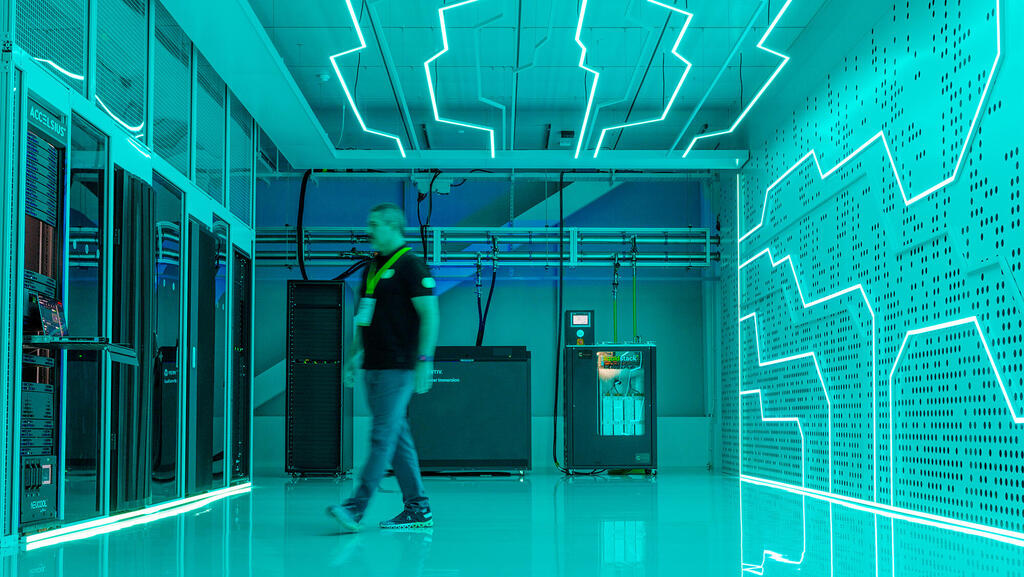
Today, there are more than 11,800 data centers worldwide, with the United States accounting for roughly 50% of global capacity. Global occupancy rates are projected to reach 97% by the end of 2025, while 77% of the facilities currently under construction have already been pre-leased under long-term agreements. With demand significantly outstripping supply, rental prices are rising, with average annual increases of around 5% expected by the end of the decade. In the United States, the world’s largest data center market, rental growth is forecast to be even higher.
Rising rents are only one sign of a market under intense pressure. The JLL report highlights several other trends reshaping the sector, particularly the growing importance of energy access. According to the report’s authors, the primary barrier to developing new facilities is no longer the price of land or location, but rather the ability to connect to the electricity grid.
In major markets, developers may face waiting times of several years to secure grid connections. As a result, the availability of power has become the single most important factor when selecting new sites. Developers who can generate electricity independently or integrate advanced energy storage solutions into their facilities are likely to gain a significant competitive advantage.
At the same time, the importance of location itself is evolving. The report predicts that beginning in 2027, data centers will increasingly move closer to major population centers to reduce network latency and prevent performance bottlenecks. This shift marks a reversal from the previous trend of building massive server farms in remote areas.
The new model will drive demand for facilities within urban perimeters and for thousands of smaller edge computing sites embedded within cities. By 2028, more than 15,000 micro–data centers are expected to be deployed globally to support this architecture.
Despite the surge in demand, construction is becoming slower and more expensive. Compared with the period before 2020, the average construction timeline for a standard data center has extended to around 18 months, while equipment delivery times have increased by roughly 50%.
Costs are rising sharply as well. The average price of building a facility’s shell and infrastructure, excluding land and technological equipment, is expected to reach $11.3 million per megawatt this year, up from $7.7 million in 2020. As a result, the barriers to entry are rising, leaving the sector increasingly dominated by the largest global players.
The shift toward locating data centers closer to cities also introduces new social and political challenges. Although the report finds that 93% of the public supports artificial intelligence technologies and the development of data centers, only 35% are willing to have such facilities built near their homes.
A survey recently cited by the Financial Times found that residents in areas experiencing a surge in data center construction are increasingly concerned about the impact on their quality of life. Among the most common worries are higher household electricity prices, increased water consumption, and the strain on local infrastructure.
The backlash is already affecting planning decisions. In Missouri, for example, residents have raised concerns after several massive facilities were built nearby. “I voted for this administration and didn’t really think about AI until it started to affect me,” Lisa Garrett, a Missouri resident living near a $6.6 billion data center construction site, told the Financial Times last month.
Following local protests, the city of St. Charles became the first municipality in the United States to impose a one-year moratorium on new data center construction, and officials are now considering making the restriction permanent.
Meanwhile, development across the sector continues at a rapid pace. In Louisiana, Amazon plans to build a massive data center campus with an investment of $12 billion, while Google has announced new facilities in Texas and Minnesota. In Wisconsin, Microsoft’s large data center campus is nearing completion.
In Europe, developers are also accelerating projects. New data center campuses are planned in Frankfurt, Amsterdam, and Paris, with construction expected to begin in mid-2026.
“Zero margin for error”
In Israel, however, the shortage of available land presents a particular challenge.
“From a performance perspective, a data center has long since ceased to be a classic real estate project,” says Shimrit Magen Admoni, director of the projects division at JLL Israel. “It is a complex engineering system that must operate with a level of precision that leaves zero margin for error.”
“We are currently managing facilities with levels of reliability and performance that would have been unimaginable a decade ago,” she adds. “In Israel, projects of this type are becoming increasingly difficult because of the severe shortage of available land.”
One solution, according to Magen Admoni, is vertical construction, building multi-story data centers in order to maximize land use. Such projects require overcoming significant technical challenges, including cooling large computing loads in a hot Mediterranean climate, while meeting some of the world’s strictest sustainability and security standards.
JLL’s global footprint
JLL, founded more than 200 years ago and operating in over 80 countries, advises clients on buying, building, occupying, managing, and investing in a wide range of real estate assets, including commercial, industrial, residential, hotel, retail, infrastructure, and energy projects. The company manages hundreds of millions of square meters of property worldwide, is a member of the Fortune 500, and is listed on the New York Stock Exchange with a market value of approximately $12.8 billion.
The firm’s Israeli office, established in 1997 and led by Yaniv Lotringer, works with international technology companies entering the Israeli market as well as Israeli firms expanding overseas.
According to Mor Ziv, director of real estate investments at JLL Israel, the current market dynamics are creating unique opportunities for investors.
“Our expertise in large-scale transactions allows us to take advantage of the fact that 77% of projects currently under construction have already been pre-leased, and turn the strong demand into a strategic investment opportunity,” she says.



