










As high-tech cuts back, defense companies expand their footprint
Elbit's latest real estate deal reflects a broader shift in demand across Israel's office market.
The surge in orders flowing to Israel's leading defense companies is also driving enormous demand for office space, laboratories, and manufacturing facilities. Among the companies that have expanded significantly are Rafael, Israel Aerospace Industries (IAI), and Elbit Systems.
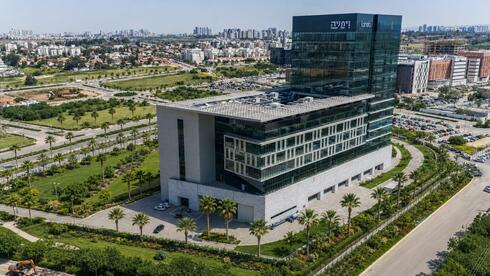
Now, real estate company Vitania has reported that Elbit Systems has signed a lease for a 40,000-square-meter building, along with 617 parking spaces, in the Vitania-Landa project in Ness Ziona. The total value of the lease agreement is approximately NIS 544 million ($194M).
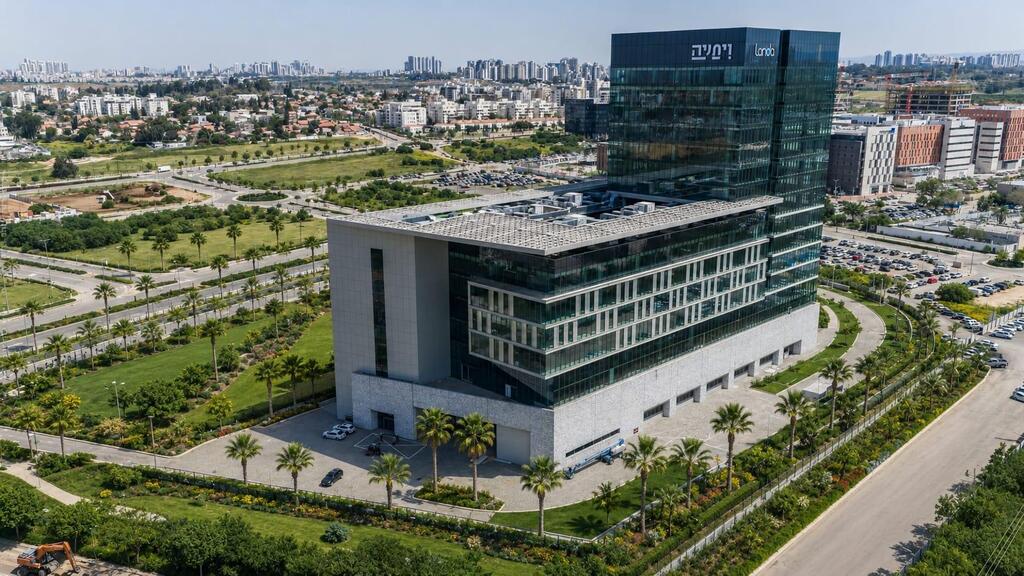
The project is located in the Ness Ziona Science Park and is designed to accommodate industrial facilities, laboratories, offices, and commercial space. Once fully completed, the complex is expected to comprise up to 105,000 square meters of built space on a 35-dunam site. The building leased by Elbit combines manufacturing areas, laboratories, and office space, while the underground parking facility covers an additional 23,000 square meters.
Vitania was represented in the transaction by attorney Eyal Marom of Gornitzky & Co., while Elbit was represented by attorney Ilan Kemer of Firon Law Firm.
According to the lease agreement, Elbit will occupy the entire building for a period of 24 years and 11 months. The company will have its first termination option only after 17 years and 9 months.
Vitania did not disclose the exact rental rate. However, a Calcalist review indicates that average rents in the Ness Ziona Science Park stood at approximately NIS 76 per square meter during the second half of 2025, according to data from brokerage firm Natam. Based on the overall value of the agreement, it appears Vitania was relatively flexible on pricing, even before accounting for the parking spaces, suggesting the effective rent may be below the park's average rate.
This is Vitania's second major leasing agreement for the building, which has not yet been occupied and is jointly owned by Vitania and the Landa Group, each holding a 50% stake. Under previous agreements, Landa Printing, one of the subsidiaries of the Landa Group, was expected to lease most of the building. However, following the company's collapse, the agreement was never implemented.
As a result, Vitania was forced to write down the value of the property by approximately NIS 80 million, reflecting the assumption that the tenant would ultimately not occupy the project, which indeed proved to be the case.
Elbit's lease highlights the growing demand for real estate from defense companies at a time when many technology firms are reducing office footprints or preparing to do so.
Elbit itself has expanded its manufacturing network significantly in recent years, including the establishment of a new production facility in Ramat Beka in the Negev. In 2024, Calcalist also reported that the government allowed Elbit to delay the evacuation of the IMI complex in Ramat Hasharon in order to avoid disrupting ammunition production.
Israel Aerospace Industries has also expanded its footprint, announcing in 2024 the establishment of new facilities in Ofakim and Be'er Sheva.
Rafael has likewise significantly increased its office holdings. In 2025, the company purchased 6.5 floors in the Cosmopolitan project in Tel Aviv's Yitzhak Sadeh district. The move followed the leasing of approximately 5,000 square meters in the Midtown towers on HaArba'a Street in Tel Aviv in 2018 and an additional 3,000 square meters in the Village Beachfront Tower in Hadera in 2023.
Alongside the major defense contractors, smaller defense and drone-related companies have also been expanding. Firms involved in drone manufacturing, autonomous systems, and defense technologies have leased multiple facilities across northern and central Israel.
A defining characteristic of these defense-sector leases is their long-term nature. Many combine office space with clean rooms, laboratories, testing facilities, and production areas. For property owners, these agreements offer a high degree of stability and visibility, making defense companies increasingly attractive tenants at a time when traditional technology firms are becoming more cautious about their real estate needs.



