









“The world of work is a zombie concept”
Prof. Noa Lavie argues that the institutions and assumptions built around 20th-century employment are struggling to survive in the age of AI.
What happens to a society in which a growing number of workers discover that the skills they have acquired are no longer enough? For Prof. Noa Lavie, the answer goes far beyond the question of who might lose their job. If the education system fails to prepare people for a new world of work, and if AI deepens the divide between the educated and skilled and those left behind, the result could be a profound social and political crisis.
For decades, the narrative of working life was relatively simple: learn a profession, find a job, advance, and build a career, all while hoping to achieve some measure of security along the way. But that narrative, largely constructed in the 20th century, is now unraveling. A linear career path is no longer a given, job security has eroded, young people move between jobs and occupations, and education no longer guarantees a profession or a livelihood for the long term.
According to Lavie, a sociologist and dean of the School of Government and Society at The Academic College of Tel Aviv-Yaffo, the changes taking place in the labor market are merely a manifestation of a much broader upheaval.
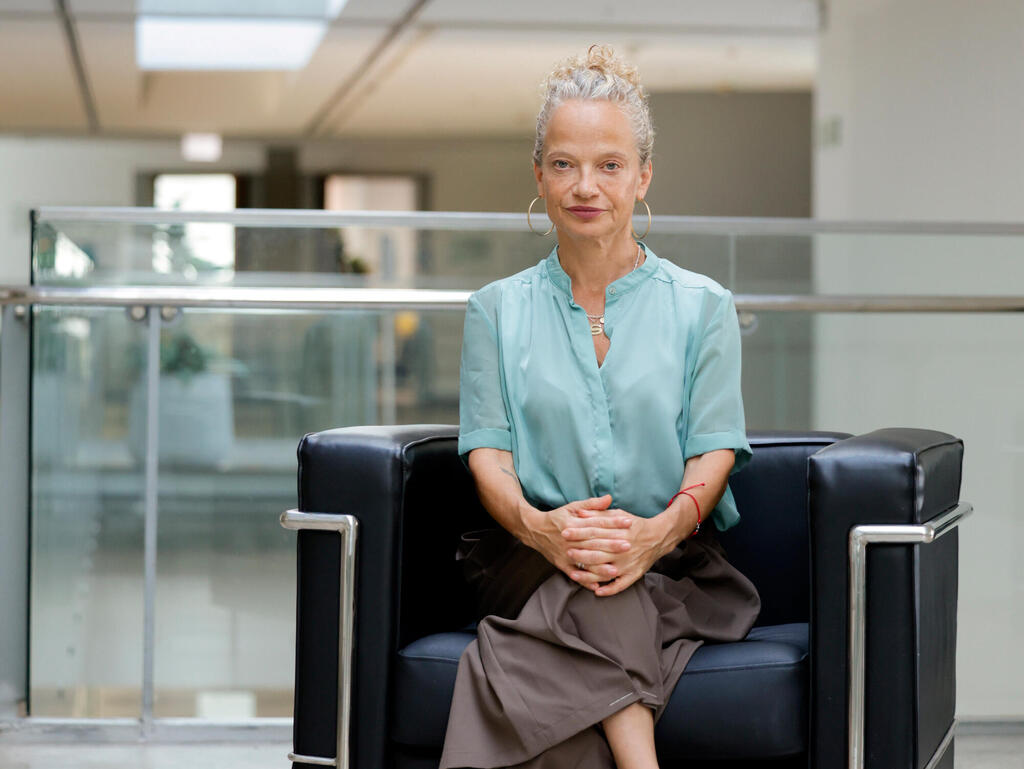
"Asking what the single biggest change in the world of work is today is a narrow question, because it is part of a chain of radical revolutions transforming the world as humanity knew it in the 20th century," she says in an interview with Calcalist.
The labor market, which we tend to view through the lens of the 20th century and the modern era, has undergone a fundamental shift in both how people are employed and the nature of that employment. As Lavie notes, "Some jobs are disappearing, while others, which we cannot yet envision, are emerging. When the labor market is viewed as a realm of uncertainty, preparing for it becomes difficult."
She argues that the changes reshaping the labor market require society to renegotiate the very meaning of work.
"We are living through an era of profound transformation. AI represents a revolution on the scale of the Industrial Revolution, perhaps even greater. Yet, unlike the Industrial Revolution, which created jobs and demanded a vast workforce, the current revolution renders work obsolete."
The concern that skills acquired today may prove insufficient within just a few years is supported by data. According to the World Economic Forum's Future of Jobs 2025 report, which draws on the views of more than 1,000 employers worldwide, 39% of workers' core skills are expected to change by 2030.
"We do not know what humans will need in the future labor market, and uncertainty plunges people into a state of crisis, a kind of limbo where they are unsure if they will possess the knowledge, opportunities, or capabilities to earn a living down the line. This is a profound crisis for humanity. As a sociologist, I always examine how the AI revolution will impact the various strata and populations within society; some will inevitably benefit more than others, while some will be left completely behind."
More than before?
"Clearly. Because this is a different kind of change, one occurring at a much faster pace. It isn't just a transition from a typewriter to a computer operated by humans; we are dealing with a tool that, seemingly, thinks instead of humans. The educated and the wealthy will know how to leverage this technology to become better workers. Those who lack basic skills and knowledge, who fail to acquire the fundamental literacy from the education system needed to cope with this, or to manage AI rather than being managed by it, will be left behind."
"Democracy is in crisis because of AI."
These disparities, Lavie warns, could pose a major challenge to democracy.
"Democracy relies on both the labor market, where people earn a living, and the education system, which prepares people for that market. Twentieth-century capitalist democracy is facing a major crisis, driven by both AI and social media. AI presents an additional challenge to a system built on a capitalist economy and a workforce educated within the school system. When primary and secondary education fail to prepare people for the future labor market, we end up with a growing number of individuals who are uninformed and lack the skills required for the new world of work. A large segment of the population lacking the necessary workforce skills creates fertile ground for the rise of populism and fascism."
Are we witnessing the end of the work model based on a single profession, a single employer, a full-time job and a linear career path?
"The linear career no longer exists. Young people today are what are known as 'slashers', individuals who juggle multiple occupations simultaneously. Someone might go on military reserve duty for two months, then work as a bartender, then as a flight attendant, and then translate documents. In an era of instability, you take whatever opportunities arise, and there are many positive aspects to this. You can be an artist and a lawyer, and then become something else entirely.
"Since Gen Z understands this world much better, they realize it is inherently unstable. They are sometimes referred to as 'Doomers', a generation that views the future with pessimism against the backdrop of the climate crisis, the employment crisis, wars and the crisis of democracy. Consequently, they try to earn as much as possible and live in the here and now."
Does the workplace no longer guarantee security?
"That hasn't been the case for years. These trends began in the early 21st century, affecting policy, the education system and the labor market. Those managing these institutions failed to prepare in time or devise strategies to cope with these changes. The concept of job tenure has gradually disappeared due to the rise of neoliberalism in the late 20th century."
If there is no job security, why commit to a single workplace for a lifetime?
"Today, these processes are reaching a boiling point driven by AI. We need to view the labor market as fragmented and unstable, an environment where young people actually grasp reality much better than we do. Yet, this can also be seen as a time of opportunity. Every crisis offers a choice: to collapse or to grow. I believe in humanity's resilience; I believe this will lead to growth and the shaping of a model that will likely sustain us for decades to come. Right now, we are caught in a whirlwind of change, and no one can predict where it's all heading."
When discussing neoliberalism, Lavie refers to the shift that began in the 1980s toward greater reliance on markets and a reduced role for the state. She points to privatization, the scaling back of the welfare state, and the erosion of the protections and stability that characterized the old labor market.
"It is a combination of factors; you can't attribute it solely to AI or to any specific government. These are societal trends that have been unfolding since the mid-1980s," she says.
Lavie also addresses the rise of social media.
"The social media phenomenon is raising generations of young people who live in a 'like' economy and crave immediate gratification, making it difficult for them to accept criticism in the job market. Technology is gradually replacing humans, and the AI boom is upon us, yet no state, social or global mechanism was prepared for this. This is how we arrive at the perfect storm."
"Psychologists will always be needed"
The fantasy of stability, cultivated in the 20th century but increasingly undermined in recent years, is also influencing the academic choices made by young people. Some are foregoing higher education altogether, while others are choosing paths different from those considered most desirable until recently. Computer science, for example, is losing some of its appeal in the wake of the AI revolution, while a simultaneous shift toward the social sciences and fields such as social work, psychology and philosophy is emerging.
"These are professions that won't disappear," says Lavie. "We will always need philosophers to think ahead of the machines. In an era where one in three young people worldwide takes medication for anxiety and depression, there will obviously always be a need for psychologists. Young people are asking themselves what is required today to make a living. They need emotional support, psychological containment and social workers."
"We are seeing a 'recalculation of the route' here as well. In my opinion, computer science won't disappear; rather, it will recalibrate to meet future demands in the face of the AI revolution. Right now, we are witnessing a reorganization within this field."
She describes the concept of the "world of work" as a "zombie concept." Sociologist Ulrich Beck wrote about societies entering the 21st century with institutions and concepts that had failed to keep pace with a changing world.
"'State,' 'democracy' and 'world of work' are zombie concepts, the walking dead," she says.
Beyond money and a livelihood, employees also gain learning opportunities, mental flexibility and a sense of purpose from their workplace. What becomes of all that?
"Employers are aware of this, but human resources departments aren't yet calibrated for the 21st century. Today's employees want two things: money and meaning. They won't stay at a job if they don't get both. That is one reason why employee retention is a major issue across all professions today.
"Employees today also crave emotional inclusion, authenticity and intimacy. This is a generation that grew up on social media and screens, where eye contact is missing, yet we are, ultimately, social creatures; we seek that connection. They are very sensitive to whether a manager is authentic and open with them, or if they fail to make eye contact. They want to be seen as human beings."
These are things that did not exist in the 20th-century workplace, Lavie argues, and many employers find them difficult to navigate. To modern ears, "intimacy" can sound almost like harassment, but she is not referring to sexual intimacy.
"Do you want to retain an employee? Really see them. Ask what they need, set boundaries, and explain the reasons behind them. This goes far beyond a crisis in the world of work; it is a human crisis."
How does Generation Z differ from Generation Y?
"Generation Y is a generation of digital immigrants. Social media entered our lives in 2008 and changed the world. Generation Z are digital natives; they were born into this world, making them the experts in their own domain. Young people entering the workforce understand it far better than we do and know how to define what they want. They come to job interviews with questions and interview the employer—and if it doesn't feel right to them, they simply get up and leave."
Is the high-tech world any different?
"The high-tech world is part of the working world. High-tech companies will still need people, but in different roles. Right now, we are in the midst of the revolution, and at this stage, there is no one to provide training for these future roles, some of which we don't even know yet."
Are you optimistic?
"I am always optimistic, because humanity has always experienced both horrific times and periods of revolution. Humanity has known how to grow from crises; so, if I take a broad, sweeping, historical and philosophical view, I remain optimistic."



