










AITAN raises $41 million to take Israeli combat drone technology global
The company, whose systems have been used by Israeli forces since October 7, has accumulated more than 500,000 operational flight hours. Its new funding will help expand technology developed through combat experience in Israel to the country’s allies.
Drone company AITAN, formerly known as eyesAtop, has raised $41 million in its first significant funding round. The round was co-led by Deep33 and Dell Technologies Capital, with participation from Gokul Rajaram, a board member at Pinterest and Coinbase. Other investors include Benjamin Ling of Bling Capital and Kevin Weil of Scribble Ventures. Including previous funding, AITAN has raised a total of $54 million.
AITAN develops artificial intelligence-based combat systems that have been used by Israeli forces since October 7 in highly challenging combat conditions. Its technology is designed to enable robotic forces to carry out complex combat missions while reducing the exposure of soldiers to risk.
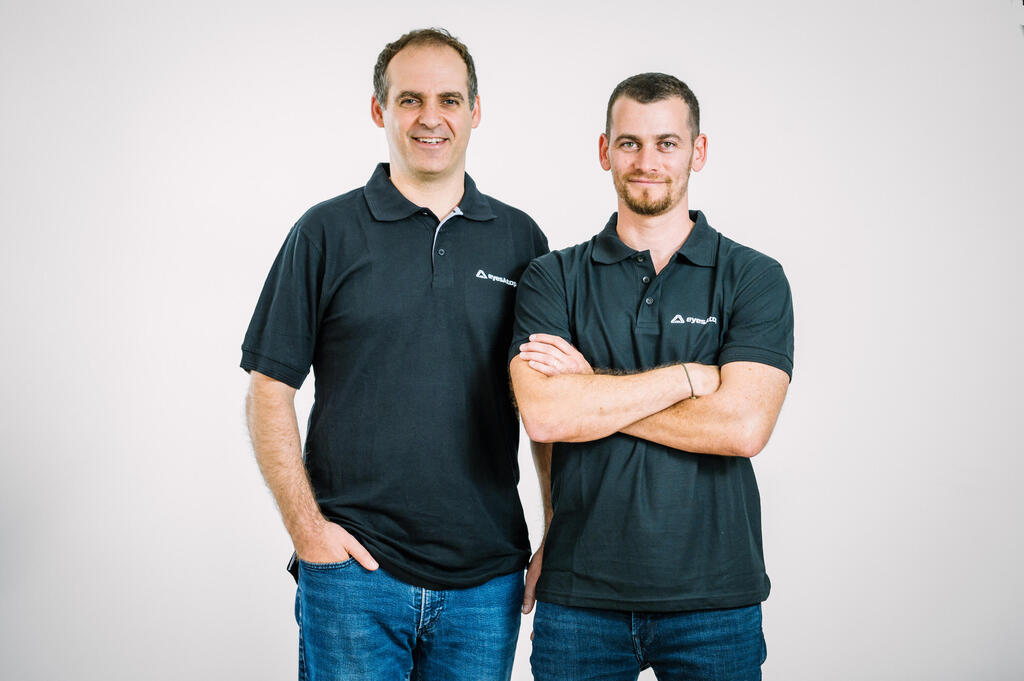
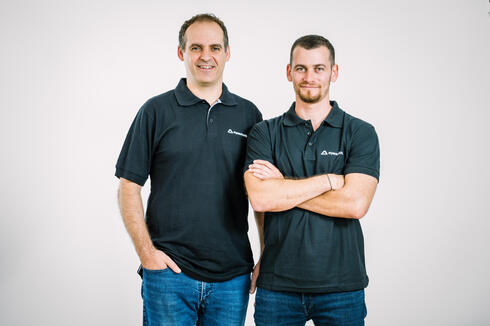
The company was built on the technology of eyesAtop, a small veteran startup founded more than a decade ago by Yinon Atzmon, Idan Yitzhak, Ben Barkay, and Einav Harazi. In 2025, entrepreneurs Udi Oster and Daniel Almog acquired the company’s technology, seeking to capitalize on the surge in demand for drone technologies following the war in Israel. The two serve as AITAN’s joint CEOs, and the company employs about 50 people at its offices in Ramat Gan.
A few months ago, the company changed its name to AITAN in memory of Oster’s younger brother, Eitan, an Egoz officer who was killed in Lebanon in September 2024.
Oster and Almog met while serving together in Unit 8200 and, after leaving the military in 2014, founded the startup Tapingo. The company developed an online food-ordering management platform and was sold to U.S. delivery company Grubhub for $150 million in 2018.
AITAN’s main product is an operating system for drones that allows militaries to deploy and operate robotic combat systems at scale while maintaining operational continuity even when supply chains are disrupted.
The experience of the wars in Israel and Ukraine has highlighted the operational and logistical challenges involved in deploying robotic combat systems on a large scale. Unlike traditional weapons systems, which can be manufactured and stored for years, robotic systems can evolve during a conflict, sometimes from week to week, in response to changing battlefield requirements and disruptions to supply chains.
Militaries must also be able to manufacture the systems in large volumes, operate them in complex combat environments and make different platforms work together as a coordinated force rather than as a collection of separate systems.
“With the outbreak of the Swords of Iron War, it was clear to us that the only goal before us was to help our friends and family win and return safely from captivity and the battlefield. Three years later, with our technology already having a broad operational impact in the field, it is the right time to expand our reach and bring these capabilities to Israel’s allies around the world,” Oster said.
AITAN’s systems are in daily use by the IDF and the Ministry of Defense and have accumulated more than 500,000 operational flight hours across a wide range of robotic combat missions.
The company recently won a joint tender to develop the IDF’s command-and-control platform for the next generation of attack drones, as well as major design contracts for robotic weapons systems.
Many of AITAN’s employees are reservists and veterans of Israel’s defense establishment, bringing significant operational experience to the company. Its close proximity to day-to-day military operations allows the system to be regularly updated based on feedback and lessons from the battlefield.
“Robotic warfare is becoming a central part of the ability of countries to maintain their security independence, and more and more of them understand that they must develop and maintain these capabilities themselves,” said Lior Prosor, general partner at Deep33.
“To this end, control of the entire process is required, from supply and production chains, through software development and force training, to the operation of the systems in the field, their maintenance and their ongoing adaptation to operational needs. Israel and Ukraine are among the few countries in the world that have gained significant operational experience operating robotic systems, along with many flight hours in combat conditions. This experience gives AITAN a unique advantage and allows it to expand its activities and offer its technology and capabilities to Israel’s allies,” he said.
“We believe that Physical AI will be one of the most significant technological areas in the coming decade,” said Yair Snir, managing director at Dell Technologies Capital. “One of the key challenges on the way there is the ability to connect complex autonomous systems and allow them to operate together in a coordinated manner, even in complex terrain conditions.”
AITAN, he said, recognized early that the future of the security industry depends on the ability to connect different systems and smart networks so they can communicate, make decisions and act together. “The technology it has developed has already proven itself in security environments on the ground, and illustrates the growing importance of these capabilities,” Snir said.



