










Voltify raises $30 million Seed round to build ‘Tesla of rail’ for energy infrastructure
The Israeli startup targets $11 billion diesel market with in-motion charging technology.
Voltify, a startup developing technology to convert diesel trains to electric, has raised $30 million in a Seed round led by venture capital fund Aleph and global mining company Fortescue. The round also included participation from the Menomadin fund of entrepreneur Haim Taib, the Jimpact and The Dock funds, and additional investors including Yasmin Lukatz and Chemi Peres.
Voltify is developing a comprehensive solution that enables railway companies to transition from diesel to electric power without requiring massive infrastructure investments. The system aims to reduce energy costs by around 20% while significantly lowering emissions. Its platform combines battery-powered locomotives, dynamic fast-charging technology, and a network of microgrids designed to supply energy to trains.
Unlike traditional electric rail systems, which rely on costly overhead power lines or require trains to stop for charging, Voltify’s solution enables dynamic charging while trains are in motion. This eliminates downtime and helps maintain operational continuity. The system integrates microgrids installed along railway tracks, generating and storing energy locally through solar power, batteries, and dedicated software that manages energy distribution to locomotives.
By producing and managing energy at the local level, Voltify reduces dependence on fossil fuels and mitigates volatility in energy costs. It also allows railway operators to operate independently of centralized power grids, improving resilience and reliability.
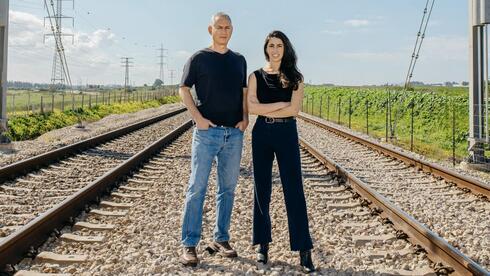
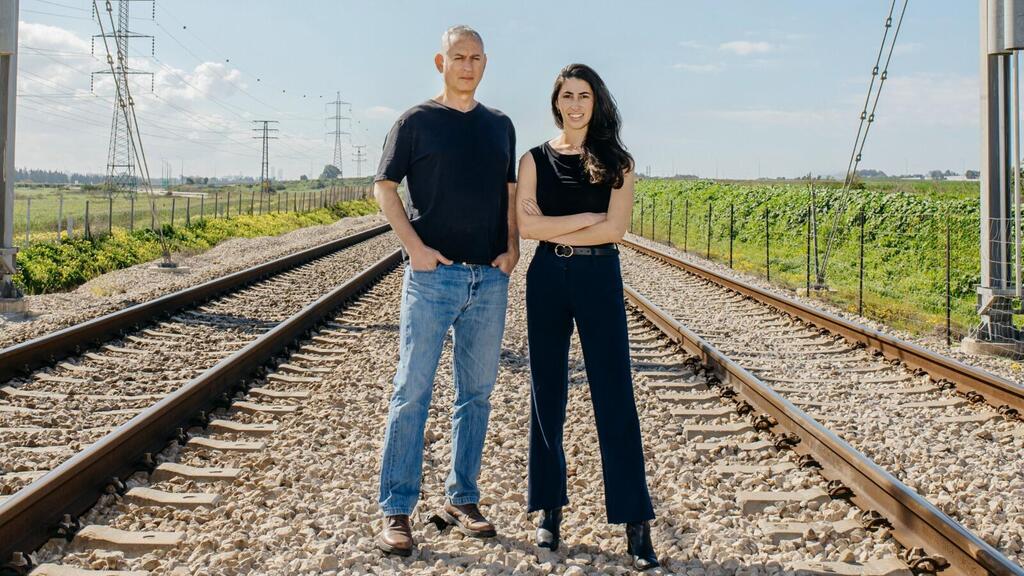
Voltify was founded in 2024 by CEO Dafna Langer and CTO Alon Kessel, a co-founder and director at Doral Energy Group. The company has signed a paid pilot agreement with one of the world’s largest rail operators, with deployment expected to begin in the coming months. It also reports a growing backlog of orders from regional rail operators in the United States. A full launch of its platform, including locomotives, charging systems, and energy networks, is planned for later this year.
Freight rail is one of the largest energy consumers in global logistics. The six largest rail operators in the United States alone spend approximately $11 billion annually on diesel. While electrification could significantly reduce these costs, traditional solutions, such as installing overhead power lines, require investments exceeding $1 trillion, making them economically unfeasible for most operators.
Voltify estimates that its technology could help reduce more than 50 million tons of carbon emissions annually from rail operations within a decade. Its microgrid network also has the potential to ease pressure on polluting power plants during peak demand.
“Our goal is to reduce energy costs for railway companies, which currently spend about $11 billion annually on energy, mostly diesel,” said Langer. “Energy is their largest expense, accounting for roughly 20% of total costs. If they switch to electricity, that figure could drop to around $3 billion.”
She added that the main barrier to adopting battery-powered locomotives has been operational efficiency, particularly driving range and charging time. “By enabling fast and dynamic charging, including charging while the train is in motion, we fundamentally change the equation. This allows companies operating on thin margins to significantly reduce their largest cost component.”
Voltify operates offices in Los Angeles, Florida, and Israel. The company currently employs eight software engineers in Israel and is expanding its U.S. team, with plans to hire around 20 additional employees in Los Angeles. Langer noted that talent in mechanical and electrical engineering, as well as industry-specific sales roles, is primarily based in the United States.
Before founding Voltify, Langer served as an officer in the Israeli military and later worked in international relations within the defense establishment. She also managed Reichman University’s accelerator and founded a previous startup as part of the Zell program. “I realized that building a startup requires full commitment,” she said. “My passion lies in energy and climate. After exploring multiple ideas, I met Alon and we began working on this problem. We quickly understood both its global impact and its economic potential.”



