










After the ceasefire, the real war begins
From missiles to markets, the battle over narrative and leverage reshapes the Middle East.
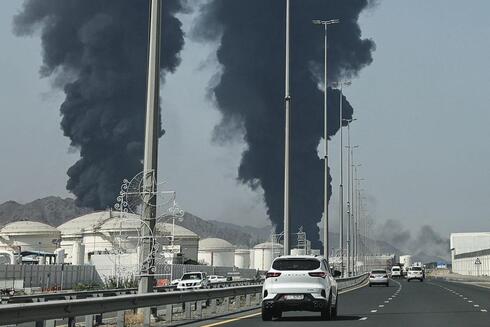
The United States announced a ceasefire in Iran on Tuesday night, but the real battle is merely shifting arenas. After missiles, drones, tankers, and fires at energy facilities, the fight now turns to narrative: who won, who lost, who yielded, and who reshaped the rules of the game.
This phase is no less critical than the fighting itself. In the Middle East, narrative is not just about perception, it shapes negotiating positions, energy prices, investor confidence, maritime insurance costs, and the ability of states to project stability long after the shooting stops.
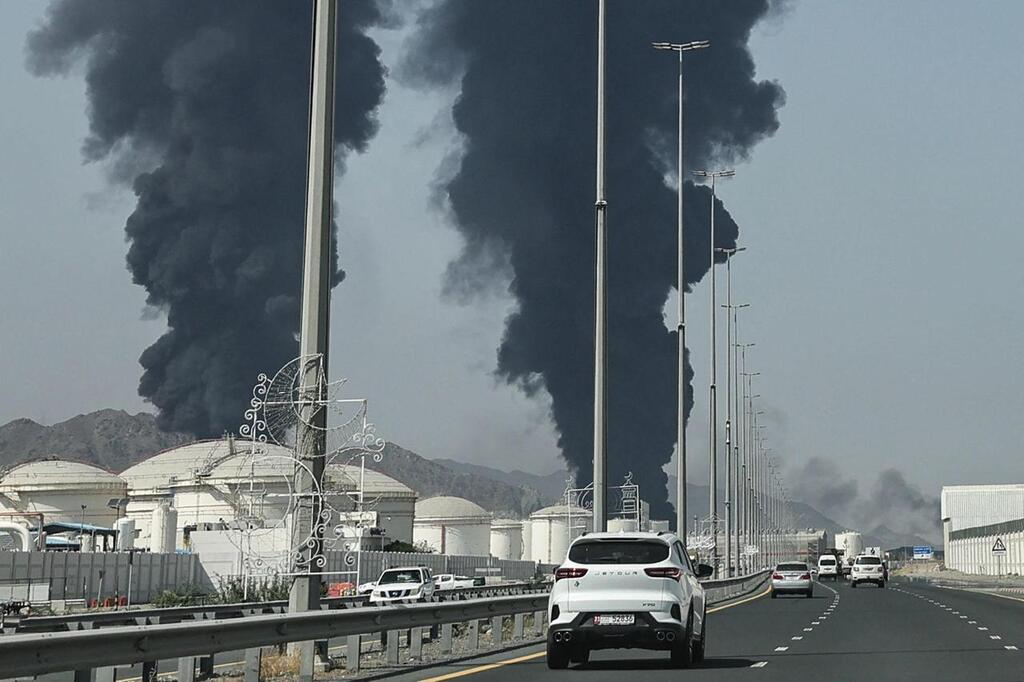
From Iran’s perspective, the story it seeks to tell is already taking shape. The regime has suffered significant blows: senior officials have been killed, infrastructure damaged, key energy sites struck, and sensitive economic assets disrupted. And yet, it has not collapsed. From Tehran’s viewpoint, that alone constitutes a major achievement, not because it negates the damage, but because it allows Iran to claim it absorbed an extraordinary assault while maintaining continuity of governance, operational capability, and political maneuverability. In a region where regimes often crumble before military defeat, survival itself becomes a narrative of victory.
But Iran is unlikely to settle for a story of survival alone. It will also attempt to project strength, not in terms of air superiority or battlefield dominance, but through its ability to disrupt global markets, transform the Strait of Hormuz into a strategic choke point, expose the vulnerability of Gulf infrastructure, and demonstrate that the cost of confronting Iran extends far beyond its borders. The central lesson of this conflict is not that Iran is invulnerable, but that even when weakened, it retains the capacity to inflict systemic regional and global damage.
This is where the real economic consequences begin. A ceasefire may halt hostilities, but it does not erase market memory. Shipping companies, insurers, banks, and investors have now witnessed that the Strait of Hormuz is not a theoretical risk, it can be disrupted, slowed, and weaponized. Even if energy flows resume and Gulf markets recover, the risk premium will not disappear quickly. Relief may be visible, but confidence has not fully returned.
The Gulf states themselves must internalize another key lesson: the region is not a single economic unit. Some countries can partially offset disruptions or benefit from higher prices; others are deeply dependent on a single maritime route. Some possess logistical depth; others remain highly exposed. This divergence may prove to be one of the most enduring economic consequences of the conflict.
Qatar illustrates this dynamic clearly. While some states primarily faced higher insurance and transport costs, Doha experienced a more severe challenge, damage to its ability to export gas. For a country whose global influence rests on the reliability of its energy supply, this represents not just an operational disruption but a reputational one. Elevated prices cannot fully compensate for lost output, infrastructure damage, or diminished confidence.
At the same time, portraying the Gulf solely as a victim would be incomplete. Some states benefited from rising prices, others reinforced their strategic importance to the West, and all were reminded of the world’s continued dependence on the region. Yet this is precisely the paradox: the more essential the Gulf becomes, the more costly any disruption within it.
As for Iran, two seemingly contradictory realities coexist. On the one hand, it will approach negotiations with a sense of victory, having demonstrated resilience and retaliatory capability. On the other hand, its economy emerges battered. Energy assets have been damaged, exports disrupted, and industrial and logistical systems strained, all against a backdrop of inflation, sanctions, and years of underinvestment.
Iran is therefore entering the next phase not from a position of economic strength, but from a position of geopolitical leverage. It cannot sustain a prolonged conflict without severe internal consequences, yet it can argue that continued pressure on it carries escalating global costs. Its objective now will be to convert disruption into diplomatic gains, sanctions relief, economic breathing space, and implicit recognition of its strategic role.
This is where the details become decisive. The ceasefire itself matters, but so do its terms: enforcement mechanisms, guarantees, sanctions policy, and the definition of “stability” in a region already preparing for the next confrontation. If Iran emerges believing it has gained both survival and legitimacy, it will frame the outcome as a strategic success. If not, the perception of victory may prove fleeting.
The war, then, is not truly over, it has simply changed form. The battlefield has shifted from airspace and sea lanes to negotiation rooms, insurance contracts, investment flows, and energy markets. For global markets, this is not a return to calm but a period of reassessment. For the Gulf, it is a lesson in vulnerability and the cost of dependence. And for Iran, it is a test of whether military endurance can be translated into lasting strategic advantage.



