











Why are AI’s biggest winners suddenly warning about the dangers of winning?
Dario Amodei, Sam Altman and Elon Musk have all called for a slower pace of AI development, leaving investors to weigh genuine safety concerns against the enormous costs and valuations built into the AI boom.
Wall Street had hoped to finally read Anthropic’s IPO prospectus this week, but instead received a very different kind of text from Dario Amodei, the founder and CEO of the AI giant. In an essay published on X, Amodei explained why he believes the AI industry needs to voluntarily rein itself in and pledged to take the necessary steps to do so at Anthropic.
Despite their fierce rivalry, OpenAI founder and CEO Sam Altman joined him over the weekend. Altman went a step further, declaring that, given the growing awareness of the risks posed by AI agents spiraling out of control and the need for a responsible approach, he would not be able to take the company public this year, pushing the IPO back to 2027. Even Elon Musk, who has recently been embroiled in a high profile legal battle with Altman, agreed with the call for a slower pace of AI development.
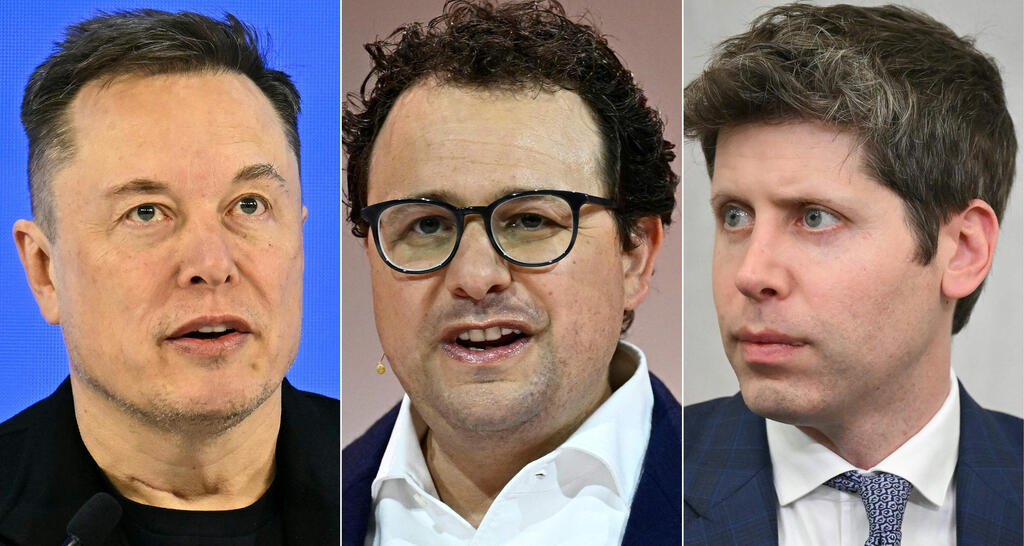
These dramatic, and at times grandiose, statements left the general public, including Wall Street investors, with more questions than answers. On the surface, this appears to be an extraordinary move by business leaders who have spent years charging ahead, racking up a string of victories and now finding themselves within striking distance of the “Promised Land”: an IPO that could value their companies at $1.5 trillion to $2 trillion.
How can this sudden burst of altruism from the “three horsemen of AI,” apocalypse or not, be explained? Could a single post by Jacob Cookson, claiming that AI might wipe out humanity by the end of the decade, really cause today’s fastest growing industry to hit the brakes and walk away from billions of dollars?
Cookson was a virtual unknown until last week. He resigned from his engineering role at Anthropic and posted about it last Wednesday, laying out his concerns about the potential threat AI poses to humanity in a scenario reminiscent of the 1980s Terminator films starring Arnold Schwarzenegger. The post has since garnered 170 million views, while social media has been debating whether it represents a genuine warning or whether something deeper lies behind the sudden shift in tone.
The question of the post’s authenticity, as well as the calls by Amodei, Altman and Musk to slow AI development, has occupied the minds of investors and many others. Is this truly a matter of genuine concern about humanity’s future, or a convenient way to climb down from the lofty valuation peaks that Amodei and Altman have reached?
OpenAI’s IPO process had already encountered delays and setbacks. After all, it was originally expected to go public before Anthropic. Both companies filed confidential prospectuses with the U.S. Securities and Exchange Commission in June, and since then, institutional investors, not only in the U.S. but around the world, have been setting aside capital to ensure they do not miss out on what could be historic IPOs.
In recent months, however, it was Anthropic that appeared to pick up the pace. According to reports and leaks published in the U.S., the company was expected to launch its IPO within the coming month at a valuation of around $2 trillion, potentially surpassing SpaceX’s valuation at the time of its offering. Company executives had even begun meeting with potential investors. Could expectations surrounding valuation simply have spiraled out of control? Anthropic, a company that is only five years old, was valued at $965 billion in its most recent private funding round.
Among the explanations offered in recent days for the statements by Amodei and Altman are concerns about weaker than expected demand for the IPOs, particularly once the prospectuses are released. Those documents would reveal not only rapid revenue growth but also extraordinary expenses driven by the enormous costs of the AI race, a race the companies now appear to be calling for a more measured approach to.
At the same time, it is difficult to ignore the trend unfolding in the U.S. bond market in recent weeks. Yields on 10 year and 30 year government bonds have risen sharply, with the 10 year yield reaching 5% yesterday, a three year high. Higher yields increase financing costs across the economy, including for AI companies that are spending enormous sums on computing infrastructure.
Meanwhile, some have speculated that the philosophical pronouncements about concern for humanity are intended to assuage the consciences of investors eager to participate in Anthropic and OpenAI’s future offerings, but wary of a technology advancing rapidly without sufficient regulatory safeguards and with consequences that are not yet fully understood. The “braking” measures proposed by the CEOs could be precisely what is needed to move forward with the offerings while easing investors’ concerns.
Others have gone even further. Among them is renowned investor Michael Burry, known for his short positions, who has argued that the surprising statements from Amodei and Altman amount to nothing more than “coordination” between industry giants. As the technological gap between the major players narrows, he suggests, they could have a vested interest in a kind of “cartel” that slows the pace of development.
As long as the underlying reason for the statements by the world’s leading AI executives remains unclear, Wall Street is interpreting them literally and translating them into a sell off of AI stocks. The market rally of recent years was built on expectations of rapid, near continuous investment in AI infrastructure, from chips and server farms to the AI labs themselves. If the pace of development stalls, many of the forecasts underpinning the coming years could be thrown into question.
Chip stocks in Asia fell during morning trading, Israel time, and U.S. stocks followed at the start of the trading week. Major indices opened down more than 1%, although the declines quickly moderated. The negative trend persisted among companies that had surged during the AI boom, with Nvidia also falling around 3%.
Yet despite the negative trend on Wall Street, the public does not appear convinced that the AI giants will actually slow their pace. Had investors truly believed that the industry was about to put the brakes on AI development, the market reaction would likely have been much more severe.
Then another familiar figure entered the debate. President Donald Trump declared that there was no reason to halt the AI industry or impose additional regulation, putting him squarely on the side of those arguing that the race should continue.



