










Israel’s Septier sold Mexico a cellphone surveillance system. Then it repeatedly failed.
Mexican Attorney General’s reports obtained by Calcalist detail repeated failures of Septier’s Guardian system, including its inability to reliably locate targets, frequent disconnections and problems operating near cellular antennas.
Mexican government reports obtained by Calcalist document repeated failures in the Israeli company’s Guardian system, including inaccurate location data, disconnections and an inability to reliably detect targets.
The Israeli cyber technology company Septier sold the Mexican government a system designed to track mobile phones and scan cellular signals, but the equipment suffered serious operational and technological failures, according to scathing reports prepared by the attorney general’s office of Mexico’s Ministry of Justice and obtained by Calcalist.
The Mexican government ultimately returned the system to Comercializadora Antsua, the Mexican intermediary in the transaction. Antsua has since initiated legal proceedings against Septier, including a lawsuit in Israel, seeking approximately NIS 2 million ($667,000) in compensation for the failed transaction and the financial damages it says it suffered.
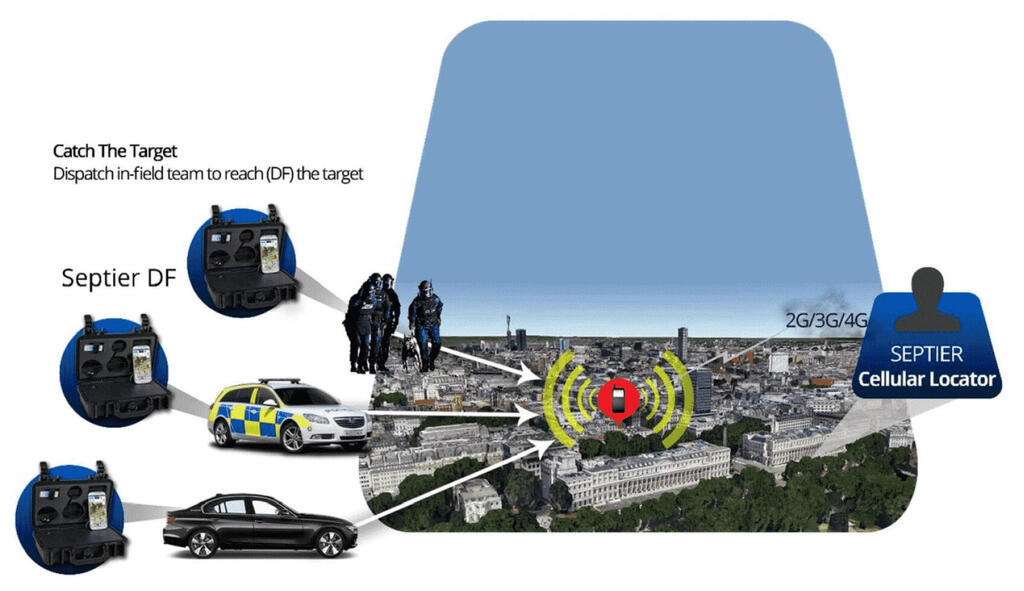
According to reports prepared by Mexico’s Attorney General’s Office, malfunctions in Septier’s Guardian system, designed to locate and block mobile phones, caused “difficulty in locating targets, even when the mobile phone to be located is within a few meters of the system,” as well as “incorrect reports regarding the location of the mobile phones.”
Antsua said in correspondence with Septier representatives that the malfunctions “led to a risk to the agents who operated the equipment.”
The Attorney General’s reports also documented “repeated disconnections, which required it to be turned off and on again each time, which does not allow for operational activity,” poor battery performance that exceeded Septier’s stated specifications, battery charging times that were less than 50% of the manufacturer’s commitment, and problems involving the interception of communications during operation.
According to an August 2023 Financial Times report, Septier had previously helped India operate a mass surveillance system encompassing the online activity of the country’s 1.4 billion residents. It is not known whether that system was the same technology sold to Mexico.
Documents from Mexico’s Attorney General’s Office that were previously made public also indicate that Antsua marketed NSO Group’s Pegasus spyware in the country.
According to documents attached to correspondence between the companies, Septier and Antsua signed an agreement in 2019 under which the Israeli company’s system would be sold to the Attorney General’s Office of Quintana Roo, a Mexican state with a population of about 2 million. The system was intended for use by law enforcement and intelligence agencies in combating crime.
The agreement was worth 18 million Mexican pesos, or about $1.04 million at the exchange rate cited in the documents. The correspondence indicates that Septier’s system itself cost about $340,000.
Septier’s marketing materials and presentations to the Mexican Ministry of Justice describe the company as developing systems for cellular networks that can precisely locate mobile devices, provide cyber protection and prevent fraud.
According to Israel’s Registrar of Companies, Yaron Baratz owns a 36% stake in Septier, directly and through a company called Upside Financial Management, and serves as the company’s CEO. His brother, attorney Benny Baratz, is a partner at Pearl Cohen, a law firm specializing in commercial and real estate litigation. He also serves as Septier’s lawyer and directly owns about 3% of the company. Septier employs approximately 100 people.
Septier’s presentations indicate that its customers as of 2019 included international telecommunications providers such as AT&T, Verizon and Telefónica, as well as Israeli operators including Cellcom and Pelephone.
According to Antsua, Septier provided Mexico with two Guardian systems capable of identifying the location of mobile phones by scanning cellular signals and blocking their access to the network.
The systems are portable and can be installed in a vehicle, including through a connection to the vehicle’s battery. Their components can also be carried in a user’s pocket and powered by rechargeable batteries. They are marketed for use by law enforcement and intelligence agencies.
The export of such technology to foreign countries requires approval from Israel’s Defense Export Controls Agency at the Ministry of Defense.
The first system entered service on April 2, 2019, but according to Mexican government reports, it suffered significant malfunctions almost immediately.
A report by the Cyber Investigations Division of Mexico’s Attorney General’s Office said the system repeatedly froze during operation and had to be switched off and restarted before it could resume working. The Guardian application also disconnected users and required them to log in again.
Even when the system was operating, the report identified additional problems. Among them were the need to make two calls to a target number before the device could be linked to the system and an inability to detect the target from a distance of more than 20 meters.
The report also claimed that the hardware supplied was not new and suggested that this could have contributed to the malfunctions.
According to correspondence from May 2023 between Septier’s lawyer, attorney Benny Baratz, and Antsua’s lawyer, attorney Assaf Olami, the first system was eventually returned to Septier.
Septier supplied Mexico with a replacement system in May 2019. According to the Mexican reports, however, that system also suffered from a series of malfunctions that ultimately rendered it unusable.
One report from the Attorney General’s Office documents a practical test conducted on May 7, 2019, with the replacement system installed in a Ford pickup truck.
The test began in the underground parking lot of a shopping center. The “target,” a second-generation mobile phone, was placed on the floor above, inside the shopping center, at a distance of approximately 80 to 100 meters.
The equipment was unable to locate the phone. A Septier technician then suggested reducing the distance between the target and the tactical equipment to approximately 50 meters, with the two on the same floor and within direct line of sight.
Only then was the equipment able to locate the phone. Even at that distance, however, the report said, the system could not stabilize the detection and repeatedly lost the target.
The test then moved to a component known as the Hunter. When the Hunter approached the target to within approximately 15 meters, it disconnected and lost the target.
According to the report, Septier attributed the problem to the “physics” of the location and interference from cellular antennas in the shopping center.
Experiments at two other shopping centers produced similar failures. In one case, the equipment was unable to stably locate the target even from a distance of 20 meters with a direct line of sight. The following day, after the system was reconfigured for three hours, it was able to locate targets at a range of approximately 100 meters with a direct line of sight.
Another exercise involved identifying a target whose location was unknown:
“We drove street by street at a speed of about 2 km/h and were able to find it. Immediately afterward, the tactical equipment was activated to pinpoint the location of the device, approaching it by a few meters. We were able to locate the compound where the target device was located, but not the device itself with absolute accuracy. When scanning the site, it appeared that there was an antenna very close to the target, as well as relays within the compound, which is why the equipment regularly lost communication.”
In other words, the system designed to locate cellular devices appeared to have difficulty operating in environments with a high concentration of cellular antennas and other telecommunications equipment.
In another test, conducted on May 11, the system failed to locate the target even when the phone was placed in a parking lot directly in front of the location where it was being operated. The conclusions of the test stated that the equipment needed to be within approximately 60 meters of the target to locate it and that, when operating while in motion, the vehicle needed to travel at a speed of no more than 5 km/h.
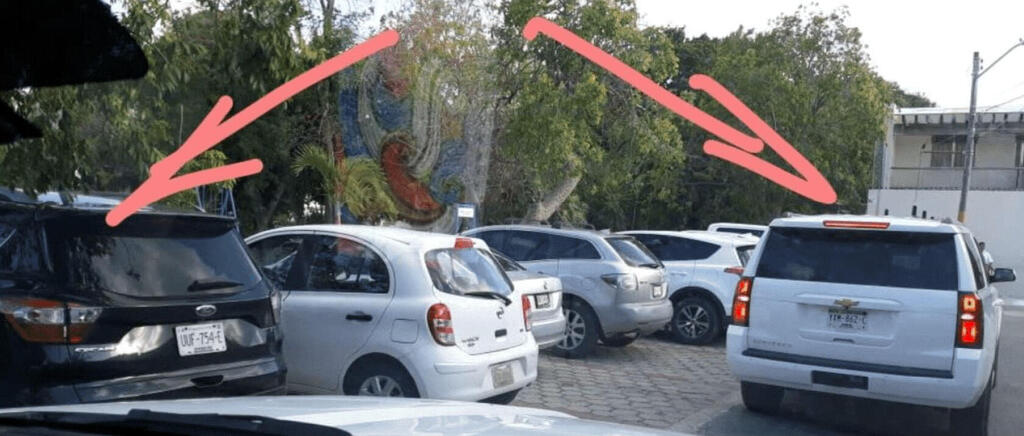
On May 15, another test was conducted, with the system installed in a Chevrolet pickup truck provided by a Septier technician: “The equipment was able to locate the target at a distance of no more than 40 to 50 meters, without being able to stabilize the reception. The equipment approached the target to a distance of about 30 meters, but was still unable to locate the cellphone. Because of this, the technician asked us to change vehicles, arguing that the vehicle did not provide enough power for the equipment to function properly, as the system is connected directly to the vehicle’s battery.
“The equipment was installed in a Ford Police Interceptor vehicle, and we returned to the same scenario. The result was negative because the target could not be detected, neither in traffic nor in the parking lot, even when the target was 30 meters away. At this point, the technician stated that the problem stemmed from the signal being too congested.”
Attorney Benny Baratz, who represents Septier, said: “The company has received the lawsuit, will study it and respond in court in due course.”



