










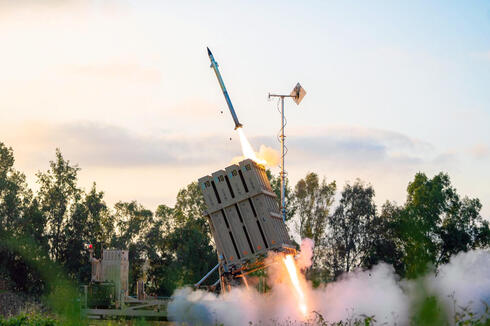
As interceptor shortages loom, Iron Dome production expands beyond Israel
The first Tamir interceptor manufactured at a new Arkansas facility has been delivered to Israel. The U.S. production line adds another source for the Israeli-developed system, as Israeli officials warn that depleted stocks and delays in new procurement orders could affect future readiness.
The first Tamir interceptor manufactured entirely in the United States has been delivered to Israel, marking a new stage in the production of one of the country's most widely used air-defense systems. The milestone comes as Israel and the United States seek to expand interceptor supplies, with the same technology also supporting U.S. Marine Corps air-defense plans.
The interceptor was produced at a facility in Camden, Arkansas, operated by Raytheon-Rafael Protection Systems (R2S), the joint venture between U.S. defense contractor Raytheon and Israeli defense company Rafael. The facility, which opened in late 2025 following a major investment, is the first production site outside Israel to manufacture complete Tamir interceptors.
The delivery to Israel's Missile Defense Organization marks the start of U.S. manufacturing for the Iron Dome system. The joint venture is now working to scale up production to meet demand from Israel and the United States, although it has not disclosed output targets or a timetable for increasing production.
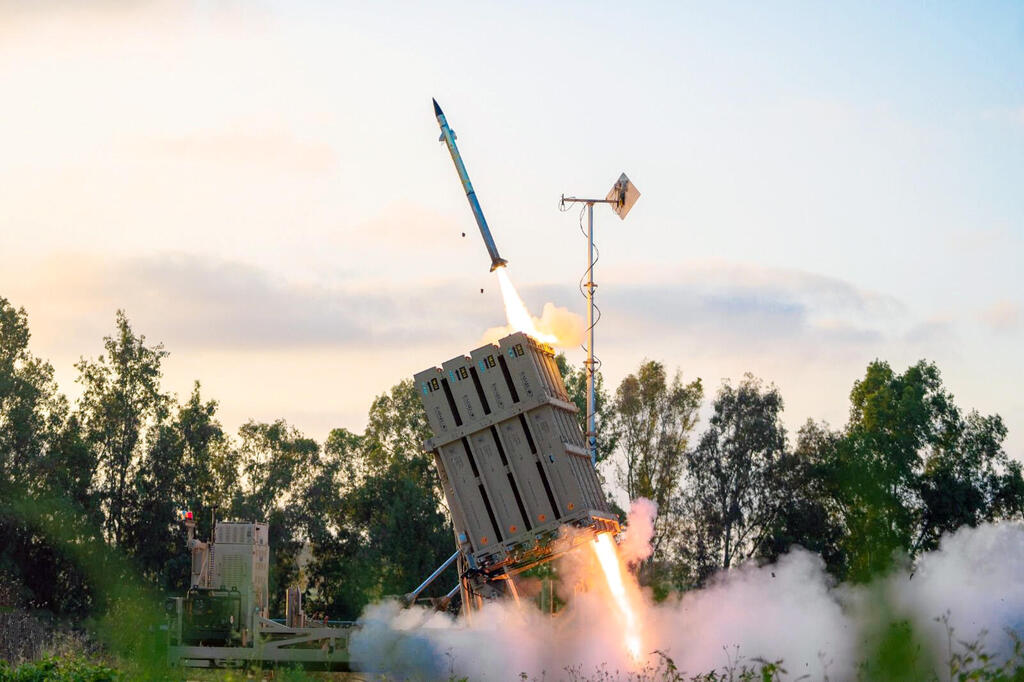
The development is significant beyond the opening of another factory. It gives the two countries a shared manufacturing base for a defensive weapon that has become central to Israel's response to rocket and other aerial threats, while also supporting the expansion of U.S. military capabilities.
Iron Dome uses the Tamir interceptor to destroy incoming threats. According to Rafael and Israel's Ministry of Defense, the system has recorded more than 10,000 operational interceptions over 15 years of service. The companies say the new facility is intended to provide another source of interceptors for customers that depend on the system.
Rafael and Raytheon have worked together on Tamir production for more than a decade under U.S. work-sharing arrangements for Iron Dome. The Camden facility extends that partnership by allowing complete interceptors to be manufactured in the United States rather than relying exclusively on Israeli production.
The arrangement also reflects the growing overlap between Israel's air-defense requirements and U.S. military procurement. The Arkansas plant is expected to manufacture not only Israeli Tamir interceptors but also a U.S. variant intended for the Marine Corps' Medium Range Intercept Capability, or MRIC, program. Rafael refers to the American variant as SkyHunter.
The Marine Corps has already tested the MRIC system, which combines the Israeli-developed interceptor with American radar, command-and-control infrastructure and mobile launchers. During the Valiant Shield 2026 exercise in Guam, Marines successfully fired the system and destroyed an aerial target.
The expansion is also part of a broader effort to establish manufacturing partnerships outside Israel. In July, CTech reported that Rafael was in talks about potentially producing Tamir interceptors in India as part of expanding defense-industrial cooperation between the two countries. Those discussions reflected a growing interest in local production arrangements that can serve customers while broadening the manufacturing footprint of Israeli defense technology.



