









Why Anthropic is willing to pay $6 billion for Decart
The Israeli startup’s technology could help Anthropic make AI models run faster and more efficiently as demand for Claude continues to surge.
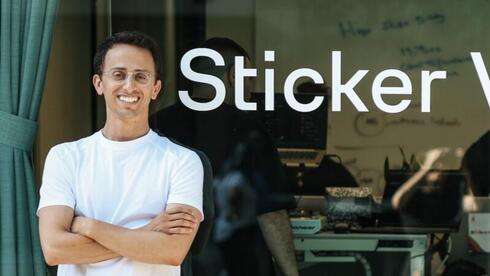
After just three years, Decart is on the verge of fulfilling the mission set by its co-founder Dean Leitersdorf: putting Israel on the AI map. If talks with artificial intelligence giant Anthropic lead to a deal to acquire the Israeli startup for $6 billion, Decart could become the foundation of Anthropic’s development center in Israel.
The Anthropic logo could soon be displayed on the tower on Yitzhak Sadeh Street where Decart operates its relatively small offices, currently employing about 100 people. The $6 billion deal would not rival some of the largest exits in Israeli technology, such as Google’s acquisition of Wiz or Palo Alto Networks’ purchase of CyberArk. But its significance for Israel’s technology industry could be greater in one important respect: it would bring one of the world’s leading AI companies into Israel at a moment when the industry is entering a new phase.
There are several reasons why.
Until now, Israel has not been considered a major player in the market for large language models that underpin the AI revolution. And after AI21 Labs, founded by Amnon Shashua and other leading Israeli researchers, struggled to keep pace with the global frontier, it appeared that Israel’s hopes of producing a major player in the foundation-model race had faded.
Decart, registered as a company on Sept. 7, 2023, just weeks before the outbreak of the war, offered a different possibility. From the beginning, it appeared on lists of the most promising AI companies and was ranked first on Calcalist’s list of promising Israeli startups for 2025. But it was never clear how quickly the company could turn its technological promise into a sustainable business.
The bidding that has emerged around Decart in recent weeks, with some of the biggest names in technology reportedly interested, from Nvidia to Elon Musk, suggests that the company has achieved something significant at precisely the right moment.
The key is efficiency.
As the AI industry moves from the enormous computational demands of training models toward an era increasingly dominated by inference, the ability to extract more performance from existing chips is becoming increasingly valuable. Decart has developed technology designed to make AI hardware work more efficiently, potentially allowing companies to get significantly more computing power from the same infrastructure.
That matters as the cost of AI computing continues to rise.
Demand for products such as Anthropic’s Claude, Google’s Gemini and OpenAI’s ChatGPT is growing rapidly, while the industry is simultaneously preparing for a much broader expansion of AI into business and other applications. Inference could create more commercially valuable uses for AI, but it will also require enormous amounts of computing power.
The scale of the infrastructure race is evident in the extraordinary $500 billion financing agreement announced this week involving Nvidia and major Wall Street investment funds, including Blackstone and Apollo. The deal is another indication of how much capital is being mobilized to expand computing capacity as the AI industry races to meet demand.
Against that backdrop, a company capable of making existing hardware significantly more efficient becomes strategically important.
For Anthropic, acquiring Decart would also be about more than technology. It would bring the company into Israel at a moment when the country is becoming increasingly important to the global AI industry.
When a company such as Anthropic chooses Israel as a destination for a development center, it sends a signal to the rest of the industry. It could encourage other major players to expand their own presence in the country, while strengthening the position of companies already operating here.
There are precedents. Intel’s acquisition of Mobileye helped put Israel’s autonomous-driving and mobility industry on the global map. Nvidia’s acquisition of Mellanox, meanwhile, turned an Israeli networking company into a strategic component of one of the world’s most important AI-chip companies.
This week, Calcalist revealed that Decart was in talks to be sold for approximately $6 billion, with several companies reportedly considered potential buyers.
For Anthropic, the transaction would be its largest acquisition to date. It would also come at an unusually important moment for the company, as it prepares for a potential Wall Street IPO.
The Wall Street Journal reported this week that Anthropic could go public as soon as September or October. The company has reportedly been valued at around $1 trillion in private-market transactions, while the market is already discussing a potential public valuation of $2 trillion.
Acquiring Decart while preparing its prospectus would therefore be a significant decision. It would suggest that Anthropic considers the startup’s technology and talent important enough to secure now, rather than risk losing them to a competitor.
So what exactly is Anthropic buying?
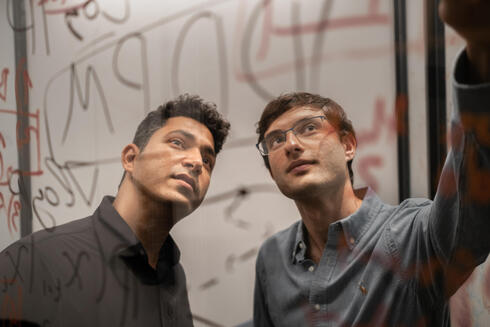
Beyond the concentration of technical talent led by Leitersdorf, a prodigy who earned a doctorate in computer science at 23, Decart has demonstrated an ability to make GPUs and other AI chips operate more efficiently. Its technology is designed to work not only with Nvidia hardware but also with competing chips from Google and Amazon.
According to industry estimates, the technology can allow AI models to run at speeds up to eight times faster than average.
For AI companies whose growth is constrained by the cost and availability of computing power, that is potentially significant. Anthropic is expanding rapidly, but like its competitors it faces the fundamental economic problem of frontier AI: enormous demand for computing comes with enormous costs.
That problem becomes even more important for a company preparing to become public. Once Anthropic begins reporting quarterly results to public-market investors, its ability to convert explosive AI demand into sustainable economics will come under much greater scrutiny.
Decart’s hardware-agnostic approach could also broaden the potential value of the technology. Rather than tying Anthropic to a single chip supplier, it could allow the company to extract greater performance across different types of hardware.
The startup has another asset that could become increasingly relevant: its work in real-time video generation.
Decart initially demonstrated that technology through gaming, most notably with Oasis, a system capable of generating video in real time. But the company quickly began looking beyond gaming, toward what is increasingly being described as the next frontier of AI: physical AI and robotics.
The ability to generate high-quality video in real time and at relatively low cost could eventually be useful for training robots and other autonomous systems, although that potential remains less developed than Decart’s work on AI infrastructure.
For Decart’s founders and investors, a $6 billion sale may not represent the dream exit they originally imagined.
The price would amount to a premium of roughly 50% over the company’s $4 billion valuation in the $300 million funding round it completed only a few months ago. That is a substantial return, but not an extraordinary one by the standards of today’s AI market.
More importantly, the company would be selling after just three years, and before establishing the kind of standalone product and business model its founders originally envisioned.
Leitersdorf and co-founder Moshe Shalev have spoken openly about their ambitions. In an interview with Calcalist, they said they wanted Decart to become “the Google or Apple of AI.”
The company has certainly demonstrated technology capable of attracting the world’s most powerful AI and technology companies. But it remains a business that generates revenue largely through projects rather than a clearly defined, durable commercial model.
In that context, a sale to Anthropic may ultimately make sense for all sides.
Decart would gain access to the resources, infrastructure and global reach of one of the world’s leading AI companies. Anthropic would acquire technology and talent that could help address one of the central constraints on its growth. And Israel would gain something it has so far lacked: a direct foothold for a leading frontier AI company.
There may still be a sense of unfinished business in Decart’s sale. The founders set out to build an independent technology giant, and instead may become part of one.
But the significance of the deal could lie precisely there.
Israel has emerged as a country with exceptionally high AI adoption, a deep concentration of AI talent, a growing number of AI startups and significant investment in the sector. What it has lacked is a major global AI company establishing a substantial development presence in the country.
If Anthropic completes the acquisition and builds its Israeli operation around Decart, that missing piece of Israel’s AI puzzle could finally fall into place.



