









Israeli AI startup Decart nearing $6 billion sale, Musk’s SpaceX circling
Exclusive: The three-year-old startup was close to a deal with Nvidia before a larger bid emerged, with SpaceX, Amazon and Nebius believed to be among those interested in acquiring the company.
A huge deal is taking shape in Israeli high-tech: Calcalist has learned that Decart is in advanced talks to be sold to a major international technology company for approximately $6 billion-$7 billion. The deal is believed to be in advanced draft stages and could be signed in the coming week.
The original negotiations were with Nvidia, which wanted to acquire Decart. But when the two sides were close to reaching an agreement, another giant international player entered the picture, and the founders decided to pursue a deal with the new bidder.
Several high-tech sources speculated that the new bidder could be Elon Musk’s SpaceX. However, according to estimates, Amazon and Israeli-based cloud company Nebius are also among those interested in Decart. The entire process is taking place in the United States, rather than in Israel. Decart declined to comment.
If the negotiations are completed, the deal could have a major impact on Israel’s technology industry. If the buyer is SpaceX, the company would establish an R&D center in Tel Aviv for the first time, using Decart as its base.
Musk has been following Decart since 2024, when the company launched Oasis, a game based on Decart’s technology for generating video in real time. After trying the game, Musk posted “wow” on X. Oasis reached 1 million users within three days and surpassed ChatGPT in downloads.
Calcalist has learned that Musk and Dean Leitersdorf, one of Decart’s two founders, have remained in regular contact since then.
Another connection between Musk and Decart is Shaun Maguire, a Sequoia Capital partner who has backed the company since its unusual $21 million Seed round and is considered close to Musk. Maguire, a vocal supporter of Israel who became increasingly outspoken after the outbreak of the war, organized Musk’s visit to Israel after Oct. 7. During that visit, Musk toured the Gaza border area.
Musk has expressed interest in Israel’s technology industry for years. A little over a month ago, SpaceX raised $75 billion in its IPO, among other things to expand its AI infrastructure and advance its Grok large language model, which is currently competing with Anthropic, Google and OpenAI.
Immediately after its IPO, SpaceX acquired the AI startup Cursor for $60 billion. Adding Decart’s capabilities could represent another layer in that strategy.
Earlier in 2026, Musk merged xAI into SpaceX at a valuation of $250 billion for the AI company. Since then, he has sought to deepen its activities in computing and cloud infrastructure.
When SpaceX published its first financial statements as a public company last week, Musk said: “A revenue rate of $100 billion in December is not a question mark. That’s what we’ll reach if we basically do nothing. I think it will be even higher.”
Decart could fit into that strategy as software capable of extracting more computing power from the same hardware.
Amazon could also be interested in Decart, although Jeff Bezos’ company has historically been reluctant to pay very large sums for acquisitions. In April, the company entered into an unusual $11 billion deal to acquire satellite company Globalstar, which is intended to help it compete with Musk’s Starlink. Globalstar has an annual revenue run rate of approximately $250 million.
Decart, meanwhile, is estimated to have revenue of several tens of millions of dollars, with uneven growth driven largely by projects carried out for chip manufacturers.
Until recently, Decart was negotiating with Nvidia, which also invested in the company in its most recent funding round. Those talks collapsed after higher offers emerged.
A sale would represent a remarkably quick exit for a company founded in 2023 by Dean Leitersdorf and Moshe Shalev. But compared with the founders’ ambitions, it would not necessarily represent the outcome they originally envisioned.
Just three months ago, Decart completed a $300 million funding round at a valuation of approximately $4 billion, with Israeli venture capital firm Aleph joining its list of shareholders.
During its short life as an independent company, Decart has raised approximately $450 million and employs only about 100 people.
For investors, a sale at $6 billion-$7 billion would represent a substantial return. But Leitersdorf, a child prodigy who completed a doctorate in computer science at the age of 23, has long spoken about ambitions that go far beyond building a successful startup.
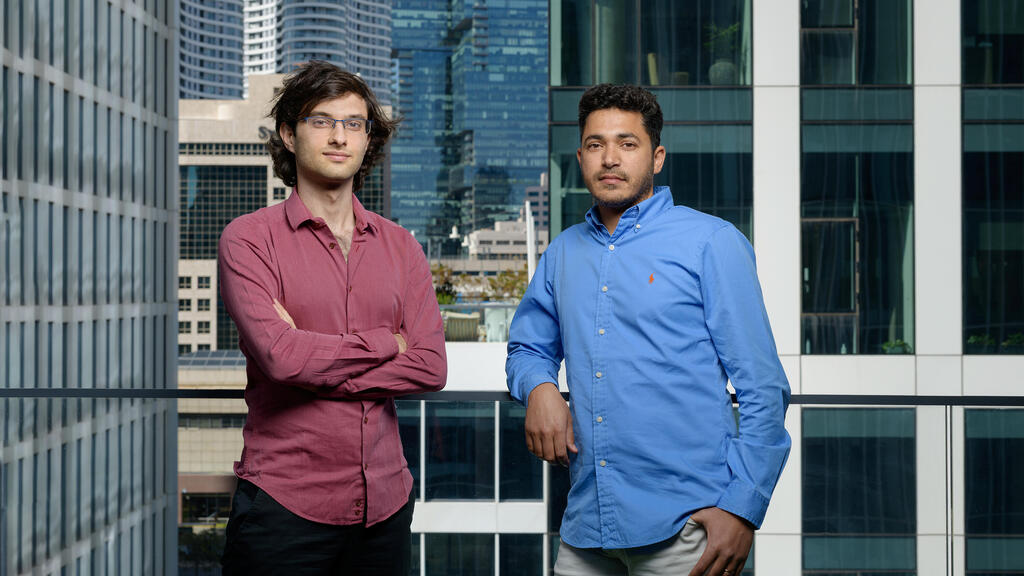
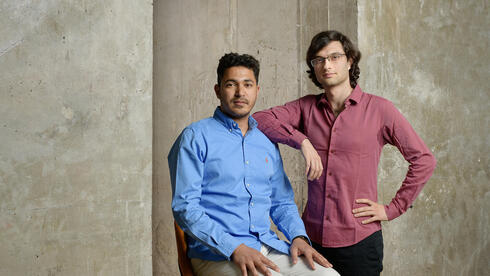
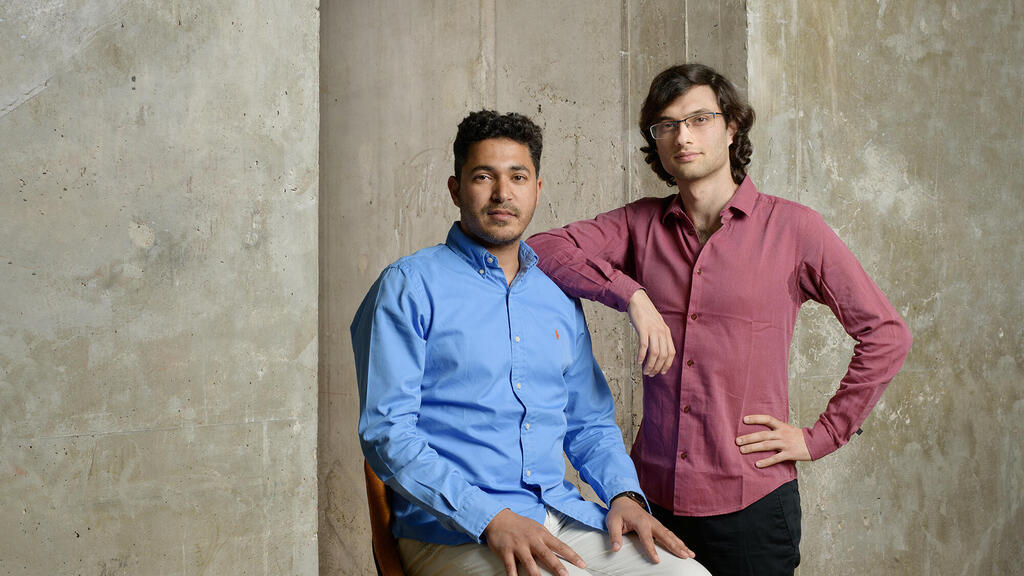
Leitersdorf, 27, serves as CEO, while Shalev, 38, is CPO. The two met while serving in Unit 8200. They recently brought in Yossi Sariel, who commanded the unit during their time there and retired following the Oct. 7 attack.
Decart is one of the few Israeli companies developing its own large AI models, with a particular focus on technology capable of generating video in real time.
The company gained international attention before it was even a year old when it released a demonstration of Oasis, a game that generates video in real time and allows each player to create a different virtual reality.
The technology quickly generated revenue for Decart, but the company did not want to become a gaming company. Over the past two years, it has been searching for a business direction that could turn its underlying technology into a broader product.
Its main technological advantage is the ability to generate video at significantly lower costs than competing models, making the technology potentially attractive to companies across the AI industry.
Decart has worked closely with chip manufacturers. It initially ran its technology on Nvidia GPUs, but has more recently significantly deepened its cooperation with Amazon.
The company’s funding history reflects the extraordinary investor interest it attracted almost from the moment it was founded.
Its unusual $21 million Seed round was led by Sequoia Capital with the participation of Oren Zeev. Just one month later, the company raised another $25 million at a valuation of approximately $500 million. That round was led by Benchmark, one of the major American venture capital firms that had barely operated in Israel until then.
Less than a year later, Decart raised another round at a valuation of $3.1 billion. That round brought its total funding to $153 million, before the additional $300 million round announced in May.
“We want to be the Google, Apple or Facebook of AI”
Leitersdorf’s ambitions were also clear from the beginning.
In an interview with Calcalist after Decart was named the most promising Israeli startup of 2025, Leitersdorf and Shalev said: “When we founded Decart, we decided that the goal was to establish a company that would solve a huge challenge because we lived in a time that was bigger than us.”
They said it took them a year to recognize that they would need to invest five years in building a company that could fundamentally change the world.
“We want to be Google, Apple or Facebook in the field of AI,” they said, describing their ambition to create a company after which the world would be different from the one that existed before it.
Leitersdorf has also spoken about his desire to put Israel on the global AI map. A year ago, he said: “Israel must be one of the five leading countries in AI. Only then will we become a powerhouse.”
That ambition makes the possibility of a sale particularly significant. A conventional acquisition by a chipmaker or cloud company that already has a presence in Israel would produce a fast financial return for investors. A deal with Musk, however, could potentially give Decart a different role in the global technology landscape and bring a major new technology company into Israel.
Leitersdorf is a member of a prominent Israeli financial family that also includes his brother Yoav, founder of venture capital fund YL, which specializes in cybersecurity.
He began studying computer science at 17. He subsequently completed a master’s degree and earned a doctorate in computer science at 23. His dissertation received a prestigious award and led to an opportunity to complete a postdoctoral fellowship at the National University of Singapore.
Shalev, 12 years older than Leitersdorf, came to Unit 8200 from a very different background.
While Leitersdorf’s family moved between Switzerland and the United States following his father, senior physician Eran Leitersdorf, Shalev grew up in a Haredi household in Bnei Brak.
After graduating from Haredi educational institutions, already married and the father of two children, Shalev began studying for a bachelor’s degree in accounting through evening classes while working to finance his studies.
At 23, he decided to enlist in the IDF. Through a program for integrating Haredim into technological military units, he joined Unit 8200, where he served for 13 years in a variety of roles.
Leitersdorf and Shalev met by chance at the base a week after Operation Guardian of the Walls in 2021. Their first conversation centered on what they described at the time as a “classified technological issue.”
They registered Decart as a company on Sept. 7, 2023. Exactly one month later, both were called up for reserve duty for many months following the outbreak of the war.
At that point, the two founders were not yet entirely sure what Decart would become. They knew only that they wanted to build something revolutionary in generative artificial intelligence.
Now, less than three years after that conversation, the company they envisioned could be on the verge of one of the largest exits in the history of Israeli technology, potentially at a valuation that would put Decart in the same league as some of the world’s most closely watched AI companies.



