









Anthropic in talks to acquire Israeli AI startup Decart for $6 billion
The reported deal would be the largest acquisition in Anthropic's history and follows advanced talks between Decart and Nvidia.
Anthropic is in talks to acquire Israeli artificial intelligence startup Decart for about $6 billion, Bloomberg and Reuters reported, confirming Calcalist's report earlier this week that the company was in advanced discussions to be sold at a valuation of roughly $6 billion-$7 billion.
The potential deal would be the largest acquisition in Anthropic's history and would come as the Claude developer prepares for a major public offering while racing to expand computing capacity and make its AI models faster and more efficient.
The talks are still at an early stage and could fall apart, according to Bloomberg. Reuters reported that Decart's team could join Anthropic's inference and performance organization if a deal is completed. An Anthropic spokesperson declined to comment, while Decart did not immediately respond to requests for comment.
The reports also narrow the field of potential buyers that had emerged around Decart. Calcalist reported this week that Nvidia had held advanced negotiations to acquire the company before another major technology player entered the process. Amazon, Nebius and SpaceX were among the companies identified as potential buyers.
Elon Musk, however, has now said that SpaceX will not acquire Decart. Sources involved in Decart's negotiations had previously insisted to Calcalist that SpaceX was among the interested parties.
The Anthropic talks nevertheless confirm that Decart has attracted interest beyond the chip manufacturers and cloud companies with which it has worked since its founding. The attraction is largely tied to a problem confronting the entire AI industry: how to get more performance from increasingly expensive computing infrastructure.
Decart develops AI infrastructure and optimization technology designed to help AI developers maximize the performance of a wide range of chips. It also develops its own AI models, including technology for generating and modifying video in real time.
Its Lucy model can edit live video in real time, according to the company's website, while Oasis, another model developed by Decart, generates simulated environments that can be used to train and test robotics and autonomous-driving systems.
For Anthropic, Decart's infrastructure and optimization capabilities could help address the growing demand for Claude. Reuters reported that the company could use Decart's technology to absorb more demand as it expands its computing capacity.
The timing is significant. Anthropic is preparing for a major public offering and has been moving aggressively to increase the computing power available to its services. Last week, the company said it was hiring engineers with experience across the hardware and software stack to work on custom chips and AI models designed to make Claude run faster and more efficiently.
That puts Decart's technology squarely in an area that has become strategically important for the largest AI companies. The race is no longer only about building more powerful models. It is increasingly about the cost and efficiency of running them at scale.
From Nvidia talks to Anthropic
Decart's latest negotiations follow a rapid escalation in its valuation.
In May, the company announced a $300 million funding round led by Radical Ventures, with Nvidia joining as a new investor. The financing valued Decart at approximately $4 billion and brought the company's total funding to about $450 million.
Calcalist reported earlier this week that Nvidia had been in advanced negotiations to acquire Decart, but that those talks collapsed after higher offers emerged.
A transaction at approximately $6 billion would therefore represent a substantial premium to the valuation assigned to Decart just three months ago.
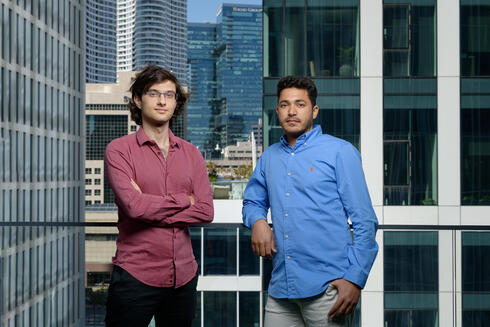
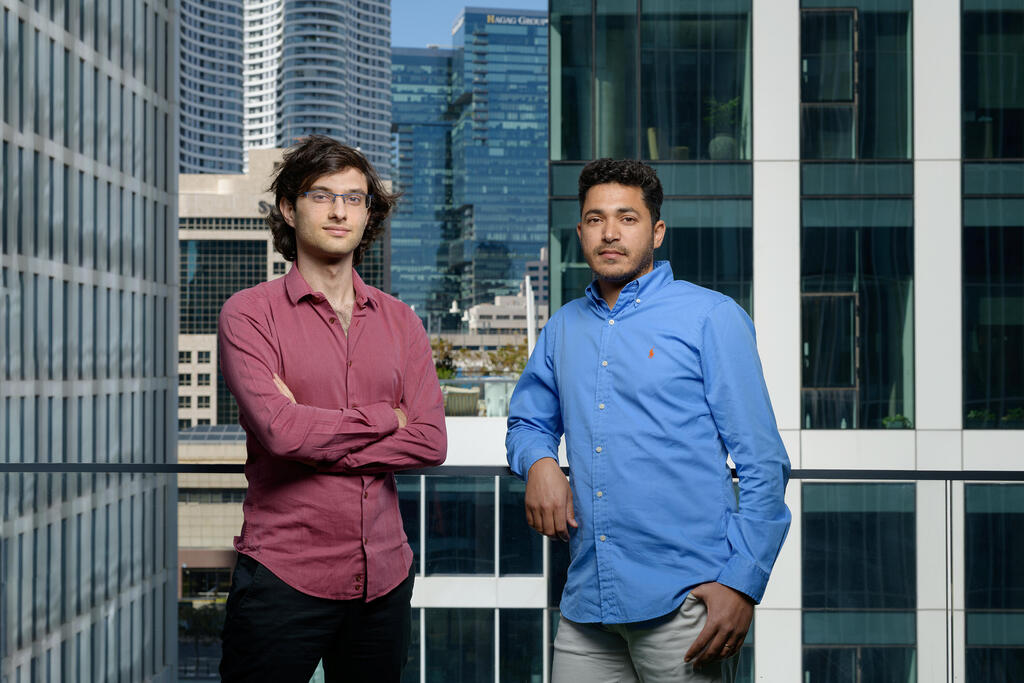
It would also be an unusually fast exit for a company founded in 2023 by Dean Leitersdorf and Moshe Shalev. Decart employs about 100 people and has spent much of its short existence searching for a business model that could turn its underlying technology into a large-scale company rather than a successful but narrower product.
The company first attracted global attention with Oasis, a game built around its ability to generate video in real time. Oasis reached 1 million users within three days and surpassed ChatGPT in downloads, according to the information previously provided by the company.
But Decart did not intend to become a gaming company. Its broader ambition has been to use the underlying technology in applications across the AI industry.
One of the company's main technological advantages is its ability to generate video at significantly lower costs than competing models. That has made its technology potentially attractive to companies trying to reduce the enormous computing costs associated with generative AI.
Decart initially ran its technology primarily on Nvidia GPUs and has since deepened its cooperation with Amazon.
Decart's potential sale would cap one of the fastest valuation increases in Israeli technology.
The company was founded by Leitersdorf and Shalev in 2023. They met while serving in Unit 8200 and built the company around their ambition to tackle what they saw as one of the defining technological challenges of the AI era.
Decart's funding history quickly reflected the interest in that ambition. Its first $21 million round was led by Sequoia Capital, followed only a month later by another $25 million round at a valuation of approximately $500 million. Less than a year later, the company raised another round at a valuation of $3.1 billion.
The $300 million round announced in May brought its valuation to approximately $4 billion.
A sale for around $6 billion would therefore deliver a substantial return to investors only months after the latest financing.



