










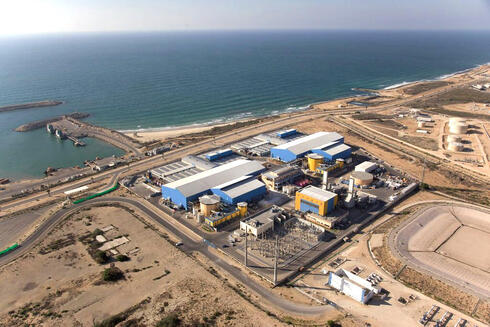
Israel built a water system around desalination. Now it is testing its limits
An unusual algae bloom has forced five of the country's six desalination plants to halt or reduce operations, disrupting agriculture while household water supplies remain intact. The episode is raising questions about whether Israel has become too dependent on a technology that is itself vulnerable to environmental, cyber and security threats.
For decades, Israel has built one of the world's most advanced water systems around a technological success story: desalination. But this week's algae bloom has exposed the vulnerability that comes with that success.
Five of Israel's six desalination plants along the Mediterranean coast have been operating at reduced capacity or not at all since Monday, forcing the Water Authority to halt irrigation of public gardens and instruct farmers in the south to stop irrigating their fields. The supply of water to households and industry has continued as normal, but the disruption has raised a more difficult question: how prepared is Israel for a prolonged interruption to its desalinated water supply?
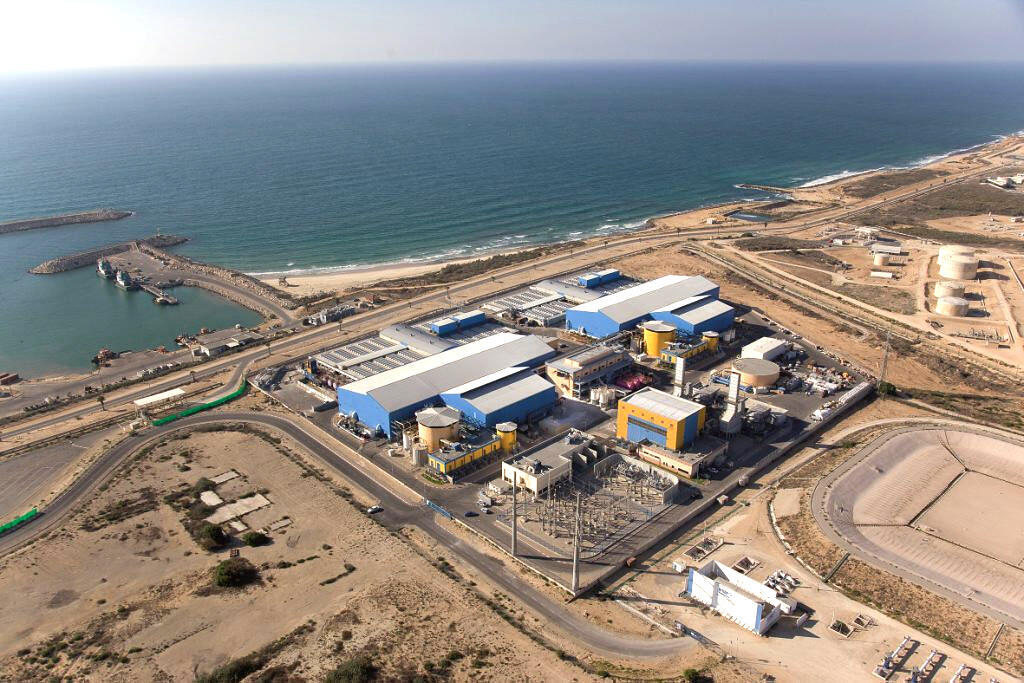
About 80% of Israel's drinking water comes from large desalination plants. Some farmers, particularly in the south, also depend on desalinated water for irrigation. That dependence has grown as the Kinneret, the coastal aquifer and other natural water sources have provided less water over the years, particularly during prolonged droughts.
Israel entered the current crisis with groundwater reserves depleted and the Kinneret below its red line. The country's operational water reserves were also not full when the disruption began, adding to the pressure on the system.
The immediate cause was an unusual marine event following the stormy weather that hit the region over the weekend. Turbidity in the Mediterranean, combined with a bloom of microalgae originating in the Nile Delta, forced the desalination plants to suspend normal operations.
The phenomenon is natural and is influenced by weather, sea currents and the amount of organic material in the water. But the algae are small enough to pass through the filtration systems at the plants' seawater intakes. The plants can continue operating under those conditions, but doing so could eventually damage their membranes, potentially requiring replacements costing several million shekels.
Calcalist has learned that three plants received approval on Tuesday to resume partial operations as the disruption dragged on and authorities struggled to predict when the algae bloom would end. The decision reflects a trade-off between maintaining desalinated water production and avoiding potentially costly damage to the plants' membranes. If the membranes are damaged, the state will compensate the operators.
The Ministry of Energy and Infrastructure, the Water Authority and Mekorot said the water system is “excellently prepared for these scenarios,” noting that water continues to flow from household taps even as agriculture faces restrictions.
The algae bloom has spread across dozens of kilometers and could disappear within hours or continue for days.
“We know for certain that these are algae,” said Alon Zask, director of the Israel Oceanographic and Limnological Research Institute. “This is an unprecedented event. I've never seen anything like it. I haven't seen a bloom at this intensity along Israel's coast.”
Zask said it is impossible to predict how long the phenomenon will last. If turbidity remains high, he said, Israel will need to find a way to reduce it sufficiently to allow desalination to continue.
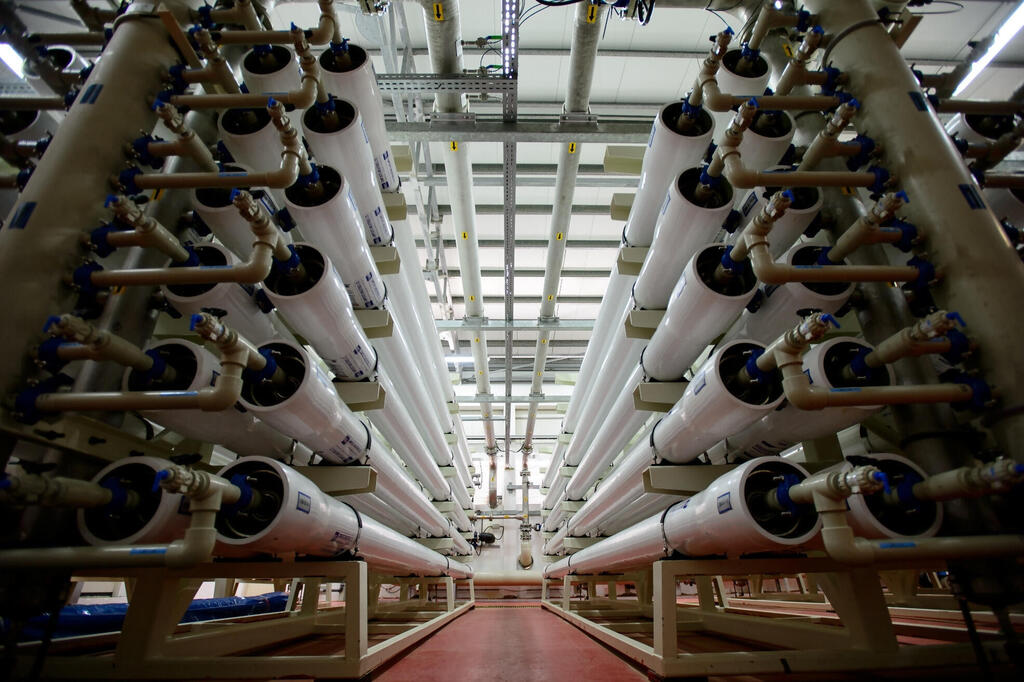
There is also concern that events of this kind could become more frequent as a result of climate change.
“It’s possible the frequency of this kind of event will increase because of climate change, which intensifies events,” Zask said. “Warmer water provides more ideal conditions for algae blooms.”
There are technologies used elsewhere to deal with algae before seawater enters desalination systems. One approach is pretreatment, in which a coagulant is added to the water and millions of tiny air bubbles are pumped through it. The bubbles attach to the algae, causing them to float to the surface, where they can be collected.
The Israel Oceanographic and Limnological Research Institute uses this method in the Kinneret. Calcalist has learned that the Water Authority is now examining whether the technology could also be deployed to address algae blooms affecting desalination plants.
For farmers, however, the disruption is already causing damage.
Many farms in southern Israel depend entirely on desalinated water, and even a single day without irrigation can seriously damage crops. According to the Israel Farmers Federation, the damage to many crops is already severe and irreversible, particularly for vegetables and orchards that are only days from harvest.
“The decision endangers hundreds of farms, most of them family farms,” the federation said, calling on the government to immediately reduce disruptions to the water supply and establish a compensation plan for affected farmers.
The episode is not the first time an environmental event has forced Israel's desalination plants to shut down. Between 2007 and the end of 2023, there were 14 contamination incidents that halted operations for periods ranging from several hours to five days, according to data cited by the State Comptroller. About 57% were caused by microbial contamination, while 29% resulted from marine pollution by fuel and oil. The remaining 14% were turbidity events during storms or earthquakes.
That history raises questions about whether the system is sufficiently resilient to disruptions that may become more frequent or severe.
What would happen if a similar incident occurred at a time when Israel's reservoirs were less full and desalination output was lower? Why were technologies for dealing with algae blooms, a phenomenon known internationally, not already being tested for use at the country's desalination plants? And if a natural event can simultaneously disrupt most of the country's desalination capacity, how resilient would the system be to a deliberate attack on the plants?
No one anticipated this particular algae bloom. But as extreme weather and other environmental events become more frequent, the incident is forcing a broader discussion about whether Israel's water system has become too dependent on a single technological solution.
According to the Water Authority, Israel's natural water supply is expected to decline by about 15% by 2050 as a result of climate change, driven by less rainfall, greater evaporation and more frequent drought years.
At the same time, Israel's growing reliance on desalination has coincided with decades of pressure on its natural water sources. The coastal and mountain aquifers have suffered from over-extraction, seawater intrusion and contamination from nitrates, fuels and chemicals, some of which is irreversible.
Rehabilitation has proceeded slowly. Some wells have been permanently shut down, while the government has not approved a comprehensive plan to address the problem.
“This is a severe warning call to the water sector about Israel's massive dependence on desalination plants,” said Mor Gilboa, CEO of the environmental organization Zalul. “We have to prepare for disruptions to desalinated water production. This time it's a sea contamination event from sewage or oil spills, and next time it could be a cyberattack or a missile strike.”
Gilboa called for closed wells to be rehabilitated, for the municipal and private sectors to be encouraged to drill new wells, and for the soil contamination that causes wells to be shut down to be prevented.
He also called for greater emphasis on water conservation, including demand management and a third-tier water tariff for excessive consumption.
“In a country where the population is growing at a rate of 1.8% a year, there's no way around conservation, so that we don't have to build a new desalination plant every two years, with a massive waste of energy and use of valuable coastal land,” he said.
Prof. Adi Wolfson, a sustainability expert at Sami Shamoon College of Engineering, said the incident highlighted the importance of what he called environmental resilience, the ability to withstand environmental changes, maintain operations, recover quickly and adapt.
“The state can't keep planning tomorrow's water sector based on yesterday's assumptions and environmental conditions,” he said.
The Water Authority, for its part, argues that the response to the crisis demonstrates precisely the resilience of the system.
“We are dealing with an unprecedented event in the national water system, in which we were forced to shut down five desalination plants along the Mediterranean coast following a massive bloom of microalgae,” the authority said. “Israel's water sector was designed precisely for these extreme scenarios, and we are managing the event transparently, responsibly, and with full control over the continuity of the water supply.”
The authority said it immediately increased pumping from the aquifers and the Kinneret into the National Water Carrier to compensate for the temporary loss of desalination capacity. It also instructed water corporations and local authorities to avoid using freshwater for irrigation and public landscaping.
Mekorot and the Water Authority are managing water stored in reservoirs and regulating pressure in the network to maintain stability and prevent interruptions to consumers, the authority said.
“At this stage there is no impact on the ongoing water supply to households and industry, aside from isolated faults that are being addressed immediately,” it said.
Two desalination plants have since resumed operations in a controlled manner, with the state providing compensation for any damage caused to their systems. The authority said the objective is to return the plants to full and safe operation once algae concentrations in the sea fall sufficiently.
The immediate crisis may therefore pass without households running out of water. But the episode has exposed a more fundamental vulnerability: a water system built to overcome Israel's natural scarcity may itself become increasingly dependent on infrastructure that can be disrupted by events outside its control.



