










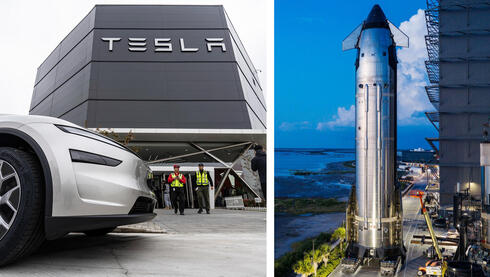
SpaceX’s AI boom puts Tesla merger on the table as Musk confirms formal talks
SpaceX’s revenue surged 161% to $14.6 billion in the third quarter as its AI business expanded and the company swung to a $4.4 billion profit. Musk says a merger with Tesla could combine their strengths in AI, robotics and chip design, though no agreement has been reached.
Elon Musk is considering bringing two of his biggest companies together just as SpaceX’s business is being reshaped by artificial intelligence. The rocket maker generated $7.56 billion in AI revenue in the third quarter, helping it swing to a $4.4 billion profit, while Musk confirmed that SpaceX and Tesla have established committees to examine a potential merger.
Musk described a combination as “a good idea,” pointing to opportunities to bring together the companies’ work in AI software, chip design, robotics and connectivity. But he cautioned that a deal is far from certain, with the committees yet to agree on terms.
The confirmation marks a new stage in speculation about a possible merger between the companies. Musk has previously highlighted their growing technological overlap, and the prospect of SpaceX acquiring Tesla has gained traction in recent weeks. Barclays suggested last week that an announcement could come before Tesla’s annual meeting in December.
The discussions began in recent weeks and could result in SpaceX acquiring Tesla, a person familiar with the matter told Reuters. Tesla has been working with an investment bank to advise it on the discussions, the person said, speaking on condition of anonymity because they were not authorized to discuss the matter publicly.
Both companies have formed committees of independent directors at shareholders’ request, Musk said during an investor call. He said he was not participating in their discussions because of his conflict of interest. Shareholders would ultimately need to approve a transaction.
Musk owns nearly a fifth of Tesla and just under half of SpaceX. Analysts have said a merger could give him control of the combined company.
SpaceX’s latest results help explain why a merger could be attractive. Revenue climbed 161% year over year to $14.58 billion in the three months ended September 30, while the company reported net income of $4.4 billion, reversing a loss of $1.1 billion a year earlier.
The biggest change is the scale of its AI business. Revenue in the segment surged nearly tenfold to $7.56 billion, largely from renting computing capacity to developers including Anthropic, Google parent Alphabet and Reflection AI, rather than selling access to its own AI models.
The results suggest SpaceX is increasingly functioning as a major computing infrastructure provider alongside its traditional space and satellite businesses. Its AI activities span the Grok models, social media platform X and a rapidly expanding data-center operation.
The growth, however, requires substantial investment. Capital expenditure nearly tripled to $19.6 billion in the third quarter, and Chief Financial Officer Bret Johnsen said the company expects to spend between $35 billion and $40 billion in the fourth quarter.
Adjusted earnings came to 45 cents per share, according to IBES calculations, beating analysts’ average estimate of 13 cents. Analysts had expected net income of $1.57 billion, well below the $4.4 billion SpaceX reported.
Musk argued that combining SpaceX and Tesla could create opportunities across several areas, including AI software, semiconductor design, robotics and connectivity. He also cited Terafab, the chip manufacturing venture involving the two companies, as a potential area of cooperation.
Terafab is expected to produce its first test chip around May or June next year, with volume production targeted for the third quarter of 2028, Musk said. He also referred to plans involving robotics and the deployment of computing infrastructure in space.
Despite his support for a merger, Musk stressed that the committees may never reach an agreement.
SpaceX’s satellite internet business remains a central part of its operations. Starlink had 13.6 million subscribers in the third quarter, exceeding analysts’ forecast of 12.19 million, as additional satellite launches and new services supported expansion across consumer, enterprise, aviation, maritime and government markets.
That growth has come with pressure on average revenue per user. Monthly revenue per subscriber fell to $69 in the third quarter from $99 in 2023, reflecting the company’s expansion into international markets with lower-priced plans. SpaceX has said that entering markets beyond the wealthiest countries could further reduce average revenue per user.
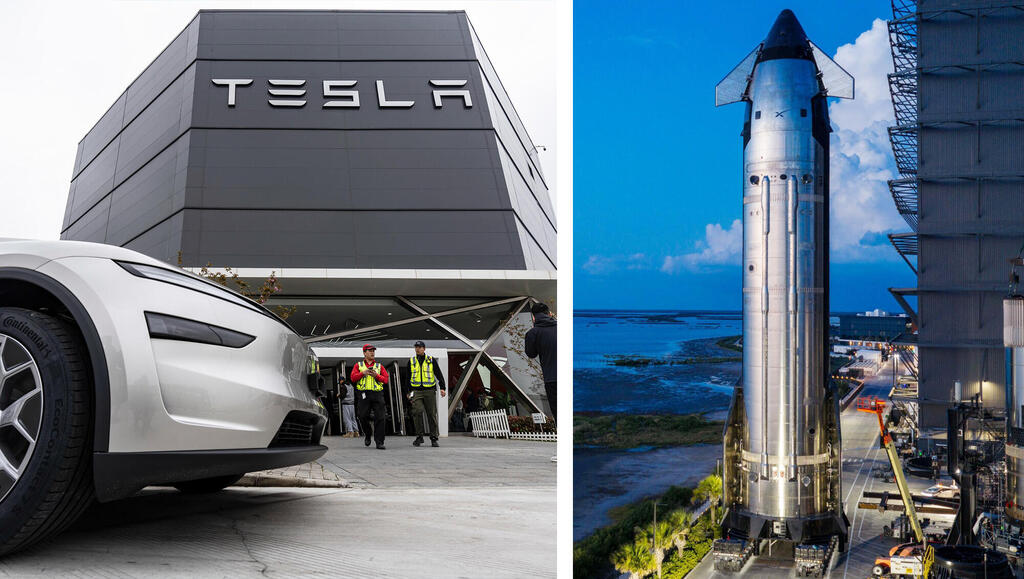
The company’s longer-term plans also depend on Starship, its next-generation reusable rocket system. The vehicle has yet to enter commercial service, but SpaceX expects it to support the deployment of higher-bandwidth Starlink satellites and, eventually, orbital AI computing infrastructure.
Starship development, government missions and commercial launches remain significant sources of cost and uncertainty. Making the rocket reliably reusable is central to SpaceX’s strategy, including its ambitions to expand its satellite network and computing operations.



