










Israel’s tourism industry is recovering, but it still depends on a fragile aviation lifeline
Visitor arrivals jumped 28.6% in July from a year earlier, but tourism remains well below 2025 levels, with the vast majority of visitors still arriving by air.
The Central Bureau of Statistics has published data on incoming tourism showing a modest recovery in the industry, while highlighting its continued reliance on air travel to Israel at a time when the country’s aviation sector is facing heavy demand this summer.
According to the bureau’s data, 110,900 visitor arrivals were recorded in Israel in July 2026, including 109,300 tourist arrivals and 1,600 day visitors. That compares with approximately 85,000 tourist arrivals and another 1,000 day visitors in July 2025, representing a 28.6% increase in total visitor arrivals.
The increase points to a gradual recovery in inbound tourism, but the industry remains well below its prewar levels. In the first seven months of 2026, 611,300 visitor arrivals were recorded, compared with 707,900 during the same period in 2025, a decline of 13.6%. The figure was also 22.2% lower than in the corresponding period of 2024.
Tourists accounted for 603,200 of the arrivals during January-July, down 11% from the same period a year earlier.
The United States remained the largest source of visitors, accounting for 35.5% of arrivals during the first seven months of the year. France accounted for 11.4%, the United Kingdom for 7.6% and Russia for 5.1%.
The overwhelming majority of tourists arrived by air. Some 537,100 tourists entered Israel by air during the first seven months of 2026, underscoring the industry's dependence on international aviation and the vulnerability of inbound tourism to disruptions in air connectivity.
The end of Operation “Roaring Lion” was followed by a gradual increase in inbound tourism. An analysis of the bureau’s data shows that an average of approximately 76,000 visitor arrivals were recorded each month between May and July, compared with an average of 51,300 per month during February-April.
The improvement is significant, but it has not yet brought tourism back to anything resembling normal levels. The number of arrivals in January-July remained well below both 2025 and 2024, while the industry continues to contend with the effects of disruptions to aviation.
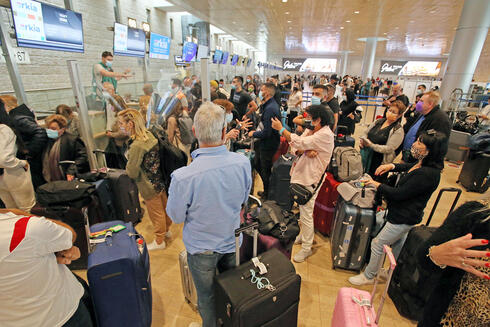
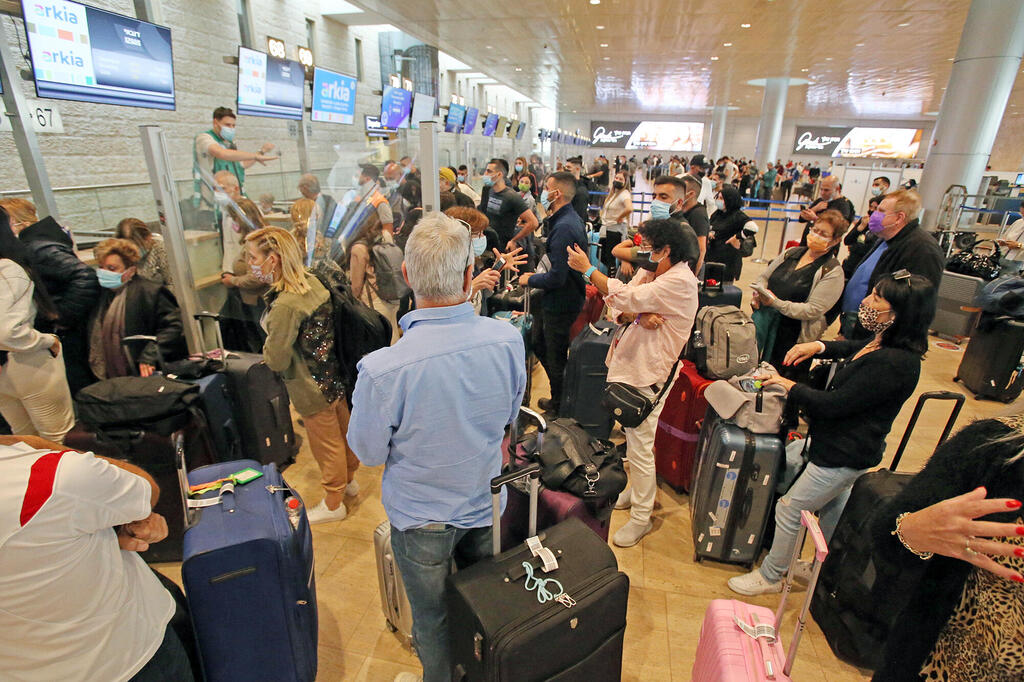
Operation “Roaring Lion” led to the closure of Israeli airspace and the cancellation of regular flights to and from the country, severely disrupting international travel. While the May-July figures show that visitor traffic began recovering after the disruptions, the pace of recovery remains insufficient to restore the industry to its previous scale.



