









VC Survey 2027
"Today, go-to-market is the moat, and GTM is capital intensive"
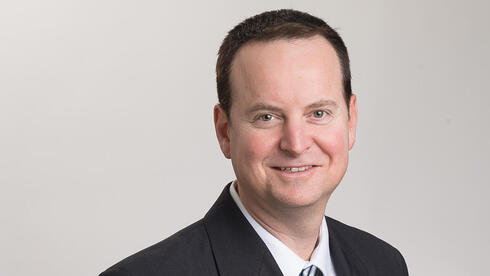
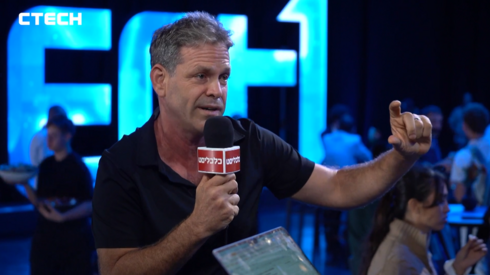
Almog Golod, Partner at Merlin, joined CTech for its 2027 VC Survey.
"The old benchmark of doubling ARR, from $1M to $2M to $4M, won’t cut it anymore. Investors are looking for high flyers: companies that go from zero to meaningful ARR within their first year and triple or more after that," said Almog Golod, Partner at Merlin, when asked how AI is changing the fund's investment strategy.
"Growth speed has become the main signal, because in AI-driven categories the market tends to consolidate around one or two winners quickly. If you’re growing at 2x while a competitor grows at 5x, you’re not a smaller version of the winner. You’re the company that gets acquired or left behind."

With AI reshaping how startups are built and funded, and Israel's tech ecosystem adjusting to a new economic and geopolitical reality, investors are rethinking their playbooks. Golod joined CTech to share insights for its VC Survey 2027, which invites prominent investors to discuss the trends, challenges and opportunities expected in the year ahead.
You can read the entire interview below.
ID CARD
Fund Name: Merlin
Total Assets Under Management: 150m+
Partners/Managers: Almog Golod, Shay Michel
Notable Portfolio Companies: Neo Security, Above Security, Clutch
Notable Exits: Dig Security, Talon Security, Veriti
How is AI changing the way you evaluate companies, from business models and capital needs to valuations and competitive advantage? Is this a fundamental shift in how companies are built and scaled, and are parts of the market overheating?
Yes, this is a fundamental shift in how companies are built and scaled.
AI has made building a product cheap and fast. A small team can ship in months what used to take two years and a large R&D org. So the product alone is no longer much of a moat. When everyone can build, the edge moves to distribution: how fast you reach customers, how many logos you win, and how quickly you become the default in your category. Today, go-to-market is the moat, and GTM is capital intensive. You need sales teams, channel partnerships, marketing and customer success at scale, and you need them early.
That changes the capital requirements and who funds them. The startups that win will raise big and fast to race to the top of their category. Their backers will be the funds that can write those checks: the $1B+ AUM platforms that can lead a $50M–$100M round straight out of stealth and keep supporting the company afterward. Companies emerging from stealth with $50M or $100M on day one is now normal, not an outlier. Seed and early-stage funds like ours need to be the ones that find these companies first and get them ready for that next stage.
It has also changed how we evaluate companies. The old benchmark of doubling ARR, from $1M to $2M to $4M, won’t cut it anymore. Investors are looking for high flyers: companies that go from zero to meaningful ARR within their first year and triple or more after that. Growth speed has become the main signal, because in AI-driven categories the market tends to consolidate around one or two winners quickly. If you’re growing at 2x while a competitor grows at 5x, you’re not a smaller version of the winner. You’re the company that gets acquired or left behind.
Related articles:
- "Israel has always won on deep technical moats, but in enterprise AI, vertical AI, and fintech, the real moat is now distribution."
- "Being an Israeli company in the current atmosphere is not helping and in many cases decreases the valuation."
- Beyond the AI hype: what investors are looking for in startups today
Does Israel's mix of AI, cybersecurity, defense tech and deep tech give it a new competitive edge, or is its traditional advantage eroding? How will foreign investors' appetite, early-stage fundraising and the election results affect its ability to build global companies?
Israel’s main advantage has always been its people, and that hasn’t changed. If anything, it’s stronger now. The overlap of AI, cybersecurity, defense tech and deep tech isn’t a collection of separate sectors. It’s one advantage: engineers and founders who learned to build under real operational pressure, often in elite military technology units, and who come out understanding both offense and defense.
On the other hand, there are real risks to the ecosystem. The biggest is Israel’s image abroad. Extreme political voices get amplified on global TV and social media, and that damages how Israel is seen. It spills over into the tech ecosystem. Most foreign investors still separate Israeli founders from Israeli politics, but not all of them. Some LPs and funds are more hesitant, some ask more questions, and in a tight fundraising market every bit of friction counts.
How will the VC industry in Israel and globally evolve over the next three to five years? How will changes in fundraising, fund structures, secondary transactions and exits reshape it, and what will funds need to do to stay competitive?
The industry is splitting into two models that work in my opinion.
On one side are the tier-1 platforms with $1B+ AUM. In a market where category winners take most of the value, the funds that can keep backing those winners as they become truly big ones (leading $100M rounds, coming back for follow-ons, holding through to exit) will dominate. Their edge is scale: they can put serious capital to work exactly where the returns are concentrated.
On the other side are vertical funds. A focused fund with real domain depth, a strong network and the right access can be very attractive, provided it backs the right companies. In cybersecurity, for example, a specialist fund that knows the buyers, the CISOs and the acquirers can spot the winners earlier and help them more than a generalist can. Specialization is a real advantage now, not a niche.
Funds without either scale or specialization will find it hardest to raise their next fund and to win the best deals.
Tranched rounds are changing how deals get done.
A clear new pattern is the tranched round: investors commit a large amount up front but release it in stages based on performance milestones. It’s mostly used for strong founders, often second- and third-time founders with a track record, where investors are betting on the team before the product is proven. The founder gets a big headline commitment and the runway to move fast. The investor gets downside protection and keeps most of the capital for when the company has shown it’s working. I expect this to become standard for top-tier founding teams, and it shows a broader shift: the founder is the main asset being underwritten.
Finally, name 2-3 startups that, in your opinion, are worth watching this year.
Above Security - Insider risk is one of the oldest problems in security, and the tools for it have barely changed: they’re rule-based, they raise a lot of false positives, and they need large analyst teams to work through alerts. Above replaces that with AI investigators. They follow behavior across identity, endpoint, SaaS and AI tools, work out intent, and produce case timelines that security, legal and HR can act on. The timing is what makes this sector exciting: AI agents are “becoming insiders in everything but name.” Every enterprise is about to have thousands of non-human actors with real access, and nobody is watching what they do. In 2026 Above came out of stealth with a $50M round.
NEO Security - Today’s enterprise software stack is very different from the one security teams were built to protect. New AI features and agents get switched on inside existing SaaS tools every week, often without security ever knowing. Neo gives security teams a real-time control layer: an inventory of every tool and AI capability running in the organization, an assessment of its risk and configuration, and enforcement of policy before risky activity happens. The founding team comes from SentinelOne, Wiz and Palo Alto Networks, and they came out of stealth in July with $100M led by a16z and Bessemer and Merlin, building the next generation of EDR, competing with giants like CRWD, PANW and S1.
Irregular Labs - Irregular tests the frontier models themselves. It runs simulated attack-and-defense environments to stress-test models before release and to find new kinds of dangerous behavior before attackers do. As models get more capable, and as regulators and enterprises demand proof that they’re safe to deploy, independent security evaluation becomes critical infrastructure.



